FSI's research on the origins, character and consequences of government institutions spans continents and academic disciplines. The institute’s senior fellows and their colleagues across Stanford examine the principles of public administration and implementation. Their work focuses on how maternal health care is delivered in rural China, how public action can create wealth and eliminate poverty, and why U.S. immigration reform keeps stalling.
FSI’s work includes comparative studies of how institutions help resolve policy and societal issues. Scholars aim to clearly define and make sense of the rule of law, examining how it is invoked and applied around the world.
FSI researchers also investigate government services – trying to understand and measure how they work, whom they serve and how good they are. They assess energy services aimed at helping the poorest people around the world and explore public opinion on torture policies. The Children in Crisis project addresses how child health interventions interact with political reform. Specific research on governance, organizations and security capitalizes on FSI's longstanding interests and looks at how governance and organizational issues affect a nation’s ability to address security and international cooperation.
Stacie grew up in Minnesota where she decided to become a physician after watching her grandfather survive metastatic cancer with the support of his medical team. She honored in Human Biology at Stanford, where her senior thesis investigated community beliefs around childhood malaria in rural Tanzania. She continued to pursue global health work with nonprofits in India and Tanzania prior to medical school that sought to scale the capacity of health worker training programs.
Stacie returned to Stanford School of Medicine to complete her medical degree where she focused on cost-effectiveness research for a genetic screening tool. Recognizing the increasing importance of market dynamics in healthcare delivery, Stacie also chose to pursue her MBA at the Graduate School of Business where she gained additional experience in the private sector with Medtronic and McKinsey & Company. Stacie completed her medical training at UCSF-affiliate Santa Rosa Family Medicine and is a practicing board-certified family physician. She is currently pursuing the Stanford-Intermountain Fellowship in Population Health Sciences.
Stacie’s current research seeks to bring rigorous methodologies to answer those questions most relevant to the hospital C-suite: How to effectively manage physicians and other healthcare workers? How to achieve the quadruple aim of improving patient outcomes, lowering cost, and improving the physician and patient experience? How to transition from a fee-for-service to a value-based health system? Her work is based in implementation science, using quantitative and qualitative methodologies to answer the above questions. Her ongoing projects relate to physician incentives, physician burnout, policy impacts on population health, corporate benefit management strategies, medical assistant turnover, and social determinants of health.
A U.S. foreign policy that cuts money to nongovernmental organizations performing or promoting abortions abroad has actually led to an increase in abortions, according to Stanford researchers who have conducted the most comprehensive academic study of the policy’s impact.
Eran Bendavid and Grant Miller — both associate professors at Stanford University School of Medicine and core faculty members at Stanford Health Policy — and doctoral candidate Nina Brooks find that abortions increased among women living in African countries where NGOs, such as the International Planned Parenthood Federation, were most vulnerable to the policy’s requirements.
The policy, widely known as the Mexico City Policy, explicitly prohibits U.S. foreign aid from flowing to any NGO that will not abide by the policy’s main condition: no performing or discussing abortion as a method of family planning, even if just in the form of education or counseling.
The policy has been a political hot potato since its inception. Enacted under Ronald Reagan in 1984, it’s been enforced by subsequent Republican administrations while Democrats in the White House revoked the policy within days of taking office.
The study by Brooks, Bendavid and Miller, published June 27 in The Lancet Global Health, looked at the policy’s effects in more than two dozen African countries over a span of 20 years under three presidents: Bill Clinton, George W. Bush and Barack Obama. It finds that, when the policy was in place during the Bush years, abortions were 40 percent higher relative to the Clinton and Obama administrations.
When the policy was suspended during Obama’s two terms, the research shows that the upward trend in abortion rates reversed.
A key reason for the uptick in abortions is that many NGOs affected by the policy also provide contraceptives – and funding cuts mean birth control is harder to get, said Brooks.
“By undercutting the ability to supply modern contraceptives, the unintended consequence is that abortion rates increase,” she said.
And the policy’s scope has expanded under the Trump administration. While it originally restricted aid directed only toward providing family planning and reproductive health services, President Trump has extended the policy to cover any group engaged in global health, including organizations providing services for HIV or child health – not just family planning.
Groundbreaking Research
The stakes are high. America is the world’s largest provider of development assistance and spent about $7 billion on international health aid in 2017. Many women in sub-Saharan Africa depend on this aid for contraceptives.
In sub-Saharan Africa, NGOs are often primary providers of family planning services. Two of the world’s largest family planning organizations – International Planned Parenthood Federation and Marie Stopes International – have forfeited large sums of U.S. cash for refusing to comply with the policy, according to news reports.
The research findings were based on records of nearly 750,000 women in 26 sub-Saharan African countries from 1995 to 2014. When the policy was in effect under George W. Bush, contraceptive use fell by 14 percent, pregnancies rose by 12 percent and abortions rose by 40 percent relative to the Clinton and subsequent Obama years – an impact sharply timed with the policy and in proportion to the importance of foreign assistance across sub-Saharan Africa.
The paper is the second study of the rule’s impact by Bendavid and Miller, who are both faculty members of Stanford Health Policy. The research is also one of the very few evidence-based analyses of the policy.
Their earlier research, the first quantitative, large-scale effort to examine the policy’s impacts, looked at a smaller set of African countries during the Clinton and Bush administrations and also found an increase in abortion rates when the policy was enacted in 2001.
“Our latest study strengthened our earlier findings because we were able to look at what happens when the rule was turned off, then on, and then off again,” said Bendavid, referring to the policy’s whipsawing under Clinton, Bush and then Obama.
Miller, who is the director of the King Center and a SIEPR senior fellow, says the team’s research reveals a deeply flawed policy.
“We set out to provide the best and most rigorous evidence on the consequences of this policy,” he said. “What we found is a clear-cut case of government action that everyone on all sides of the abortion debate should agree is not desirable.”
Signs of a Global Pushback
Brooks also notes that their findings may underestimate the rule’s full impact.
“The excess abortions performed due to the policy are more likely to be performed unsafely, potentially harming women beyond pregnancy terminations,” she said.
Under Trump, the international response to U.S. funding cuts has shifted. Norway, Canada and several other countries have pledged to increase funding of international NGOs affected by the policy – though not by enough to cover the expected shortfall, says Miller.
“This shows us,” he said, “that despite the intense partisanship in the U.S. over the rule and its implementation, there are ways that policymakers around the world can offset its effects – by ensuring higher levels of family planning funding, for example.”
The IHEA awarded the 27th annual Arrow Award to Alsan, a core faculty member at Stanford Health Policy, a senior fellow at FSI and SIEPR, and co-author Wanamaker of the University of Tennessee for their paper, “Tuskegee and the Health of Black Men” published in the Quarterly Journal of Economics.
The infamous Tuskegee study began in 1932 when the U.S. Public Health Service began following approximately 600 African-American men, some of whom had syphilis, for the stated purpose of understanding the natural history of the disease. The government willingly withheld treatment even after penicillin became an established magic bullet for treating the illness.
The medical doctors and staff of the CDC followed the men for four decades, until ultimately the study was halted in 1972 when it was brought to the attention of the media by law student Peter Buxtun.
As noted in this story about the research, Alsan and Wanamaker found that the public disclosure of the study in 1972 was associated with an increase in medical mistrust and mortality among African-American men in the immediate aftermath of the revelation.
“The award is an immense honor for both Marianne and me. First, it sheds light on the importance of history for understanding health disparities. Second, it reaffirms the “expected behavior of the physician” that Professor Arrow eloquently described in his seminal 1963 paper on the distinctive features of the market for medical care and the externalities associated with deviating from those expectations.”
African-American men today have the worst health outcomes of all major ethnic, racial and demographic groups in the United States. Life expectancy for black men at age 45 is three years less than their white male peers, and five years less than for black women.
When their working paper was first published by the National Bureau of Economic Research, it became part of the national discussion about the lasting impact of the Tuskegee study.
“The story that Alsan and Wanamaker uncovered is even deeper than the direct effects of the Tuskegee Study,” wrote Vann R. Newkirk II in The Atlantic. “Their research helps validate the anecdotal experiences of physicians, historians, and public health workers in black communities and gives new power to them.”
Most studies that look at whether democracy improves global health rely on measurements of life expectancy at birth and infant mortality rates. Yet those measures disproportionately reflect progress on infectious diseases — such as malaria, diarrheal illnesses and pneumonia — which relies heavily on foreign aid.
A new study led by Stanford Health Policy's Tara Templin and the Council on Foreign Relations suggests that a better way to measure the role of democracy in public health is to examine the causes of adult mortality, such as noncommunicable diseases, HIV, cardiovascular disease and transportation injuries. Little international assistance targets these noncommunicable diseases.
When the researchers measured improvements in those particular areas of public health, the results proved dramatic.
“The results of this study suggest that elections and the health of the people are increasingly inseparable,” the authors wrote.
“Democratic institutions and processes, and particularly free and fair elections, can be an important catalyst for improving population health, with the largest health gains possible for cardiovascular and other noncommunicable diseases,” the authors wrote.
Templin said the study brings new data to the question of how governance and health inform global health policy debates, particularly as global health funding stagnates.
“As more cases of cardiovascular diseases, diabetes and cancers occur in low- and middle-income countries, there will be a need for greater health-care infrastructure and resources to provide chronic care that weren’t as critical in providing childhood vaccines or acute care,” Templin said.
Image
Free and fair elections for better health
In 2016, the four mortality causes most ameliorated by democracy — cardiovascular disease, tuberculosis, transportation injuries and other noncommunicable diseases — were responsible for 25 percent of total death and disability in people younger than 70 in low- and middle-income countries. That same year, cardiovascular diseases accounted for 14 million deaths in those countries, 42 percent of which occurred in individuals younger than 70.
Over the past 20 years, the increase in democratic experience reduced mortality in these countries from cardiovascular disease, other noncommunicable diseases and tuberculosis between 8-10 percent, the authors wrote.
“Free and fair elections appear important for improving adult health and noncommunicable disease outcomes, most likely by increasing government accountability and responsiveness,” the study said.
What Templin and her co-authors found was democracy was associated with better noncommunicable disease outcomes. They hypothesize that democracies may give higher priority to health-care investments.
HIV-free life expectancy at age 15, for example, improved significantly — on average by 3 percent every 10 years during the study period — after countries transitioned to democracy. Democratic experience also explains significant improvements in mortality from cardiovascular disease, tuberculosis, transportation injuries, cancers, cirrhosis and other noncommunicable diseases, the study said.
Watch: Some of the authors of the study discuss the significant their findings:
What Templin and her co-authors found was democracy was associated with better noncommunicable disease outcomes. They hypothesize that democracies may give higher priority to health-care investments.
HIV-free life expectancy at age 15, for example, improved significantly — on average by 3 percent every 10 years during the study period — after countries transitioned to democracy. Democratic experience also explains significant improvements in mortality from cardiovascular disease, tuberculosis, transportation injuries, cancers, cirrhosis and other noncommunicable diseases, the study said.
Foreign aid often misdirected
And yet, this connection between fair elections and global health is little understood.
“Democratic government has not been a driving force in global health,” the researchers wrote. “Many of the countries that have had the greatest improvements in life expectancy and child mortality over the past 15 years are electoral autocracies that achieved their health successes with the heavy contribution of foreign aid.”
They note that Ethiopia, Myanmar, Rwanda and Uganda all extended their life expectancy by 10 years or more between 1996 and 2016. The governments of these countries were elected, however, in multiparty elections designed so the opposition could only lose, making them among the least democratic nations in the world.
Yet these nations were among the top two-dozen recipients of foreign assistance for health.
Only 2 percent of the total development assistance for health in 2016 was devoted to noncommunicable diseases, which was the cause of 58 percent of the death and disability in low-income and middle-income countries that same year, the researchers found.
“Although many bilateral aid agencies emphasize the importance of democratic governance in their policy statements,” the authors wrote, “most studies of development assistance have found no correlation between foreign aid and democratic governance and, in some instance, a negative correlation.”
Autocracies such as Cuba and China, known for providing good health care at low cost, have not always been as successful when their populations’ health needs shifted to treating and preventing noncommunicable diseases. A 2017 assessment, for example, found that true life expectancy in China was lower than its expected life expectancy at birth from 1980 to 2000 and has only improved over the past decade with increased government health spending. In Cuba, the degree to which its observed life expectancy has exceeded expectations has decreased, from four-to-seven years higher than expected in 1970 to three-to-five years higher than expected in 2016.
“There is good reason to believe that the role that democracy plays in child health and infectious diseases may not be generalizable to the diseases that disproportionately affect adults,” Bollyky said. Cardiovascular diseases, cancers and other noncommunicable diseases, according to Bollyky, are largely chronic, costlier to treat than most infectious diseases, and require more health care infrastructure and skilled medical personnel.
The researchers hypothesize that democracy improves population health because:
When enforced through regular, free and fair elections, democracies should have a greater incentive than autocracies to provide health-promoting resources and services to a larger proportion of the population;
Democracies are more open to feedback from a broader range of interest groups, more protective of media freedom and might be more willing to use that feedback to improve their public health programs;
Autocracies reduce political competition and access to information, which might deter constituent feedback and responsive governance.
Various studies have concluded that democratic rule is better for population health, but almost all of them have focused on infant and child mortality or life expectancy at birth.
Over the past 20 years, the average country’s increase in democracy reduced mortality from cardiovascular disease by roughly 10 percent, the authors wrote. They estimate that more than 16 million cardiovascular deaths may have been averted due to an increase in democracy globally from 1995 to 2015. They also found improvements in other health burdens in the countries where democracy has taken hold: an 8.9 percent reduction in deaths from tuberculosis, a 9.5 percent drop in deaths from transportation injuries and a 9.1 percent mortality reduction in other noncommunicable disease, such as congenital heart disease and congenital birth defects.
“This study suggests that democratic governance and its promotion, along with other government accountability measures, might further enhance efforts to improve population health,” the study said. “Pretending otherwise is akin to believing that the solution to a nation’s crumbling roads and infrastructure is just a technical schematic and cheaper materials.”
The other researchers who contributed to the study are Matthew Cohen, Diana Schoder, Joseph Dieleman and Simon Wigley, from CFR, the University of Washington-Seattle and Bilkent University in Turkey, respectively.
Funding for the research came from Bloomberg Philanthropies and the Bill & Melinda Gates Foundation. Stanford’s Department of Health Research and Policy also supported the work.
Hero Image
Election officials count the votes at a polling station on February 24, 2019 in Dakar, Senegal. | Xaume Olleros/Getty Images
The two-day forum, part of a project of the American Academy of Arts and Sciences, led by the Freeman Spogli Institute’s Karl Eikenberry and Stephen Krasner, gathered experts to examine trends in civil wars and solutions moving forward.
Image
The Council on Foreign Relations presently tracks six countries in a state of civil war, including three (South Sudan, Afghanistan, and Yemen) where the situation is currently worsening. Furthermore, three states (Central African Republic, Myanmar, and Nigeria) are experiencing sectarian violence with the potential to become larger conflicts. With two months still remaining in 2018, the combined fatalities in Afghanistan, Syria, and Yemen alone is fast approaching 100,000 for the year.
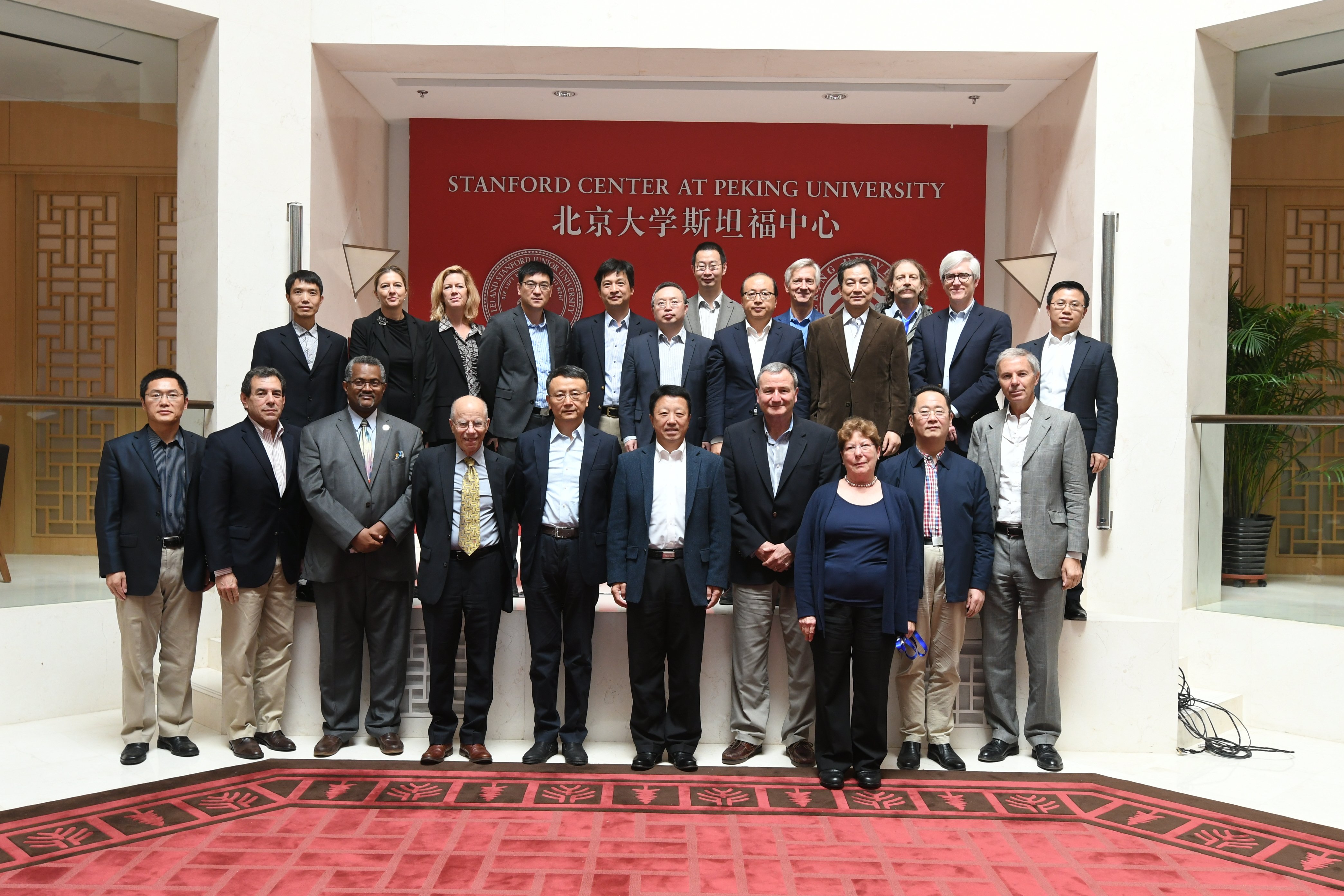
It was against this backdrop that Shorenstein APARC’s U.S.-Asia Security Initiative (USASI), the American Academy of Arts and Sciences (AAAS), and the School for International Studies at Peking University recently co-hosted the security workshop “Civil Wars, Intrastate Violence, and International Responses.” Held in Beijing, on October 22-23, the workshop brought together thirty-five U.S. and international experts to gain a wider perspective on intrastate violence and consider the possibilities for, and limits of, intervention. The workshop is the latest activity of the AAAS project on Civil Wars, Violence, and International Responses, chaired by Ambassador Karl Eikenberry, director of USASI, and by Stephen Krasner, senior fellow at the Freeman Spogli Institute for International Studies (FSI) and professor of international relations.
“Some of the major discussion topics included the appropriate political and economic development models to apply to fragile states recovering from internal conflict, justifications for intervention, and the likely impact of great power competition on the future treatment of civil wars." - Karl Eikenberry
Workshop participants included academics and professionals with expertise in political science, global health, diplomacy, refugee field work, United Nations, and the military. Countries represented at the table included the United States, Ethiopia, France, and China. Throughout the two-day session, they examined three crucial questions: What is the scope of intrastate conflicts and civil wars, and to what extent is it attributable to domestic or international factors? What types of threats to global security emanate from state civil wars? What policy options are available to regional powers and the international community to deal with such threats?
Image
USASI Director Karl Eikenberry addresses one of the sessions
China’s Emerging Role in Addressing Intrastate Violence
The workshop’s timing and location was prescient. Over the past two decades, China’s global exposure–through trade, investment, and financing–has increased dramatically. Coupled with a growing number of its citizens living abroad, China’s equity in other states has reached the point where it has a direct interest in those experiencing or are at risk of political instability and internal violence. Indeed, through its ambitious Belt and Road Initiative, China has the opportunity to help stabilize fragile states by stimulating economic development.
“The workshop revealed, at least for me, that China is backing away from its absolute defense of sovereignty and non-intervention,” said Stephen Krasner. “As Chinese interests have expanded around the world, and as both its investments and the number of its citizens living abroad have increased, the Chinese have become more concerned with political conditions in weakly governed countries.”
With China’s growing policy and academic interests in addressing civil wars and intrastate violence, as well as its higher international profile in places like United Nations peacekeeping operations, the Beijing event provided an excellent opportunity for Chinese experts to exchange views with their international colleagues.
The Beijing workshop was arranged into four sessions, with themes focusing on trends in intrastate violence, the threats it poses to international security, the limits of intervention, and advice to policymakers.
Each panel included presentations of prepared papers, moderator comments, and an open discussion by all participants. A fifth and final session provided an opportunity to summarize the preceding discussions. The workshop then closed out with an open conversation, where participants offered insight and policy recommendations developed over the preceding two days of dialogue.
Image
“The workshop,” observed Martha Crenshaw (shown above), a Senior Fellow at FSI, “was a unique opportunity to exchange views with Chinese colleagues on the subject of civil conflict in the contemporary world. A valuable learning experience for all of us."
The "Civil Wars, Intrastate Violence, and International Responses” workshop marks the second phase of the AAAS project by the same name that launched in 2015. The first phase of the project culminated in the publication of 28 essays across two volumes of the AAAS quarterly journal Dædalus. The ongoing second phase consists of a series of roundtables and workshops in which project participants engage with academics and with government and international organization officials to build a larger conceptual understanding of the threats posed by the collapse of state authority associated with civil wars, and to contribute to current policymaking. Project activities have included meetings with the United Nations leadership and staff; academic activities in the United States; sessions with the U.S. executive and legislative branches; and a visit to Nigeria.
Throughout the workshop, Chatham House Rule of non-attribution applied to all dialogue. A workshop report will be published by the co-hosts in early 2019.
The U.S.-Asia Security Initiative is part of Stanford University’s Walter H. Shorenstein Asia-Pacific Research Center (APARC). Led by former U.S. Ambassador and Lieutenant General (Retired) Karl Eikenberry, USASI seeks to further research, education, and policy relevant dialogues at Stanford University on contemporary Asia-Pacific security issues.
There are 30 civil wars underway around the globe, where civilians are dealing with death and destruction as well as public health emergencies exacerbated by the deadly march of conflict.
Yemen is battling an unprecedented cholera outbreak which has killed more than 2,150 people this year, with another 700,000 suspected cases of the water-borne disease. The government and a rival faction have been fighting for control of the country, taking 10,000 lives since 2015.
Some 17 children in Syria have been paralyzed from a confirmed polio outbreak in northeastern districts, with 48 cases reported in a country that had not had a case of polio since 1999. The cases are concentrated in areas controlled by opponents of President Bashar al-Assad.
And in the Democratic Republic of Congo — where the civil war officially ended years ago, but thousands of people still suffer from recurrent uprisings and scant infrastructure — a yellow fever outbreak was met last year with a lack of vaccines. The WHO was forced to give inoculations containing a fifth of the normal dose, providing protection for only one year.
And yet today, of the nearly 200 countries on this planet, only six nations — three rich ones and three poor ones — have taken steps to evaluate their ability to withstand a global pandemic.
“The bottom line is that despite the profound global threat of pandemics, there remains no global health mechanism to force parties to act in accordance with global health interests,” write FSI’s Paul Wise and Michele Barry in the Fall 2017 issue of Daedalus.
“There also persists inherent disincentives for countries to report an infectious outbreak early in its course,” the authors write. “The economic impact of such a report can be profound, particularly for countries heavily dependent upon tourism or international trade.”
China, for example, hesitated to report the SARS outbreak in 2002 for fear of instability during political transition and embarrassment over early mishandling of the outbreak. Reporting cases of the 2013 Ebola outbreak in West Africa were slow and the virus killed some 11,300 people in Sierra Leone, Guinea and Liberia before the epidemic was declared over in January 2016.
Image
“Tragic delays in raising the alarm about the Ebola outbreak in West Africa were laid at the doorstep of the affected national authorities and the regional WHO committees, which were highly concerned about the economic and social implications of reporting an outbreak,” Wise and Barry write in the journal published by the American Academy of Arts and Sciences.
The Daedalus issue, “Civil War & Global Disorder: Threats and Opportunity,” explores the
factors and influences of contemporary civil wars. The 12 essays look at the connection of intrastate strife and transnational terrorism, the limited ambitions of intervening powers, and the many direct and indirect consequences associated with weak states and civil wars.
“Wise and Barry, both medical doctors with extensive field experience in violence-prone developing countries, analyze the relationship between epidemics and intrastate warfare,” write FSI’s Karl Eikenberry and Stephen D. Krasner in their introduction to the issue that includes eight essays by Stanford University faculty.
“Their discussion is premised on the recognition that infectious pandemics can threaten the international order, and that state collapse and civil wars may elevate the risk that pandemics will break out,” they wrote.
Eikenberry and Krasner are hosting a panel discussion about the new volume of Daedalus with FSI senior scholars, including Wise and Barry, on Oct. 23. Members of the Stanford community and the public are invited and can RSVP here. Podcasts with the authors will also be available at FSI’s World Class site over the next few weeks.
Prevention, Detection and Response
Barry and Wise believe there is significant technical capacity to ensure that local infectious outbreaks are not transformed into global pandemics. But those outbreaks require some level of organized and effective governance — and political will.
Prevention, detection, and response are the keys to controlling the risk of a pandemic. Yet it’s almost impossible for these to coincide in areas of conflict.
Prevention includes solid immunization programs and efforts to reduce the risk of animal-to-human spillover associated with exposure to rodents, monkeys and bats.
Then, early detection of an infectious outbreak with pandemic potential is crucial, through a methodical surveillance structure to collect and test samples drawn from domestic and wild animals, a capacity sorely lacking in areas of conflict and weak governance.
Image
“Civil wars commonly disrupt traditional means of communication,” they write. “The Ebola virus outbreak in West Africa exposed glaring weaknesses in the global strategy to control pandemic outbreaks in areas with minimal public health capacity.”
New strategies that utilize satellite or other technology to link remote or insecure areas to surveillance are urgently needed, they said.
Then there is the response in countries where civil war not only makes it difficult, but politically treacherous.
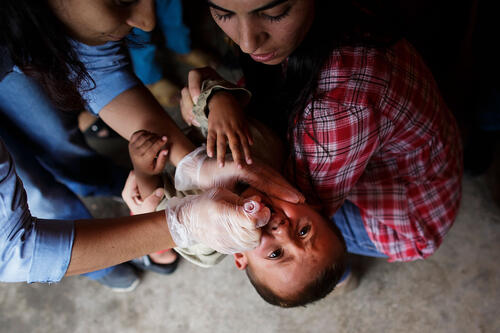
In Syria, there had not been a case of polio reported since 1999. In 2013, health workers began to see children with the kind of paralysis that is associated with a highly contagious polio outbreak.
“However, the government and regional WHO office have been intensely criticized for their slow and uneven response,” the authors note, particularly the government’s resistance to mobilizing immunization efforts in areas sympathetic to opposition forces.
Pressure from international health organizations and neighbors in the region ultimately led to the reinstatement of vaccination campaigns throughout Syria.
“The Syrian polio outbreak is an important reminder that health interventions, though technical in nature, can be transformed into political currency when certain conditions are met,” they write. “At the most basic level, the destruction or withholding of essential health capabilities can be used to coerce adversaries into political compliance, if not complete submission.”
Image
Strengthening Global Oversight
The only comprehensive global framework for pandemic detection and control, the authors write, is the International Health Regulations treaty, which was signed in 2005 by 196 member-nations of the World Health Organization to work together for global health security.
The IHR imposed a deadline of 2012 for all states to have in place the necessary capacities to detect, report and respond to local infectious outbreaks. But only a few parties have reported meeting these requirements, and one-third has not even begun the process. There have also been efforts to enhance state reporting of health systems capacities through voluntary assessments of countries working through the Global Health Security Agenda consortium.
But both frameworks, Barry said in an interview, need financial and political support.
Image
“I see a stronger IHR with more than words — but actual money behind it in order for it to become stronger,” said Barry, noting the Global Health Security Agenda ends in 2018 and she has been asked to sit on a NAAS task force to form its next iteration. “I’m hoping we can move the needle to put money into bio-surveillance and health security, especially in conflict areas.”
Why should Americans care?
“Pathogens know no borders,” Barry said. “And with climate change, we have tremendous movement of vectors; with globalization and billions of people routinely in flight, we have tremendous health threats traveling first class and coach.”
Twenty Countries at High Risk
Meanwhile, some 20 countries are at high risk for pandemic emergence. The two Stanford professors are urgently calling for “new approaches that better integrate the technical and political challenges inherent in preventing pandemics in areas of civil war.”
Wise and Barry note that human factors, such as the expansion of populations into previously forested areas, domesticated animal production practices, food shortages, and alterations in water usage and flows, have been the primary drivers of altered ecological relationships.
So globalization with climate change brews the perfect storm.
“There is substantial evidence that climate change is reshaping ecological interactions and vector prevalence adjacent to human populations,” they said. “Enhanced trade and air transportation have increased the risk that an outbreak will spread widely. While infectious outbreaks can be due to all forms of infectious agents, including bacteria, parasites, and fungi — viruses are of the greatest pandemic concern.”
Science suggests the greatest danger of pandemic lies in tropical and subtropical regions where human and animals are most likely to interact. Most of the estimated 400 emerging infectious diseases that have been identified since 1940 have been zoonoses, or infections that have been transmitted from animals to humans. The human immunodeficiency virus (HIV), for example, is believed to have emerged from a simian host in Central Africa.
Recent analyses have suggested that the “hotspots” for emerging infectious diseases overlap substantially with areas plagued by civil conflict and political instability.
The U.S. Agency for International Development and the Centers for Disease Control and Prevention have been working on the Emerging Pandemic Threats Program to improve local pandemic detection and response capacities by directing resources and training to countries thought to be at high risk for pandemic. However, it is not clear that this and related programs are addressing the political dynamics at the local level that will determine the essential cooperation of local communities with any imposed global health security response.
“The unpredictability of a serious infectious outbreak, the speed with which it can disseminate, and the fears of domestic political audience can together create a powerful destabilizing force,” Wise and Barry write in their conclusion. “Current discussions regarding global health governance reform have largely been preoccupied by the performance and intricate bureaucratic interaction of global health agencies. However, what may prove far more critical may be the ability of global health governance structures to recognize and engage the complex, political realities on the ground in areas plagued by civil war.”
Hero Image
A Liberian Red Cross burial team in Ebola protectant clothing collects the body of a toddler from a home in the West Point township on January 28, 2015, in Monrovia, Liberia. | John Moore/Getty Images
The new United States administration’s first budget proposal, previewed in March and released in May, 2017, includes deep cuts to foreign aid, cycling this thorny issue back into the American limelight. The stated reasons for the cuts are that “the United States currently pays more than its fair share,” and to ensure that “foreign aid supports American interests and values.” The budget proposal is not specific on which types of development assistance will undergo the largest budget cuts but, at 20% of all US foreign aid, the health sector may undergo substantial changes if the budget is implemented.
Associate Professor in Medicine (Biomedical Informatics), Surgery, and Biomedical Data Science
hernandez-boussard.jpg
PhD, MPH, MS
Dr. Hernandez-Boussard is an Associate Professor in Medicine (Biomedical Informatics), Surgery, and Biomedical Data Science at the Stanford University School of Medicine. Dr. Hernandez-Boussard's background and expertise is in the field of computational biology, with concentration on accountability measures, population health, and health policy. A key focus of her research is the application of novel methods and tools to large clinical datasets for hypothesis generation, comparative effectiveness research, and the evaluation of quality healthcare delivery.
The ongoing decline in under-5 mortality ranks among the most significant public and population health successes of the past 30 years. Deaths of children under the age of 5 years have fallen from nearly 13 million per year in 1990 to less than 6 million per year in 2015, even as the world's under-5 population grew by nearly 100 million children. However, the amount of variability underlying this broad global progress is substantial. On a regional level, east Asia and the Pacific have surpassed the Millennium Development Goal target of a two-thirds reduction in under-5 mortality rate between 1990 and 2015, whereas sub-Saharan Africa has had only a 24% decline over the same period. Large differences in progress are also evident within sub-Saharan Africa, where mortality rates have declined by more than 70% from 1990 to 2015 in some countries and increased in others; in 2015, the mortality rate in some countries was more than three times that in others.
What explains this remarkable variation in progress against under-5 mortality? Answering this question requires understanding of where the main sources of variation in mortality lie. One view that is implicit in the way that mortality rates are tracked and targeted is that national policies and conditions drive first-order changes in under-5 mortality. This country-level focus is justified by research that emphasises the role of institutional factors in explaining variation in mortality—factors such as universal health coverage, women's education, and the effectiveness of national health systems. It is argued that these factors, which vary measurably at the country level, fundamentally shape the ability of individuals and communities to affect more proximate causes of child death such as malaria and diarrhoeal disease.
An alternate view has focused on exploring the importance of subnational variation in the distribution of disease. In the USA, studies on the geographical distribution of health care and mortality have been influential for targeting of resources and policy design. Similar studies in developing regions have shown the substantial variability in the distribution and changes of important health outcomes such HIV, malaria, and schistosomiasis—information that can then be used to improve the targeting of interventions. Nevertheless, the relative contribution of within-country and between-country differences in explaining under-5 mortality remains unknown. Improved understanding of the relative contribution of national and sub-national factors could provide insight into the drivers of mortality levels and declines in mortality, as well as improve the targeting of interventions to the areas where they are most needed.
This event has reached capacity. Please join us to watch the live-stream at this link.
The symposium will focus on the key questions that impact health through the year 2020. How could the 2016 election affect health care in the U.S.? How will payment reform affect health systems, physicians and patients? Are the insurance exchanges viable? What challenges pose the biggest threat to global health? Experts from Stanford and beyond address these topics and more as they discuss the future of health policy.
Lloyd Minor, Dean, Stanford University School of Medicine
Image
Minor, MD, is a scientist, surgeon and academic leader. He is the Carl and Elizabeth Naumann Dean of the Stanford University School of Medicine, a position he has held since December 2012. Minor leads more than 1,500 faculty and 1,000 students at the oldest medical school in the West and has made precision health — the prevention of disease before it strikes — a hallmark of research, education and patient care at Stanford Medicine.
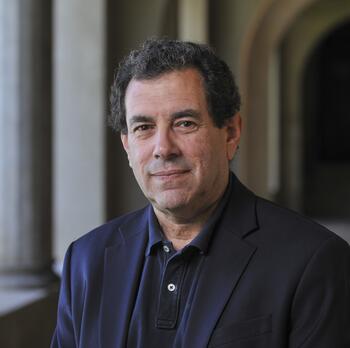
Bob Kocher,a partner at the Silicon Valley venture capital firm, Venrock
Bob Kocher
Kocher, MD, is a partner at Venrock who focuses on healthcare IT and services investments and is a consulting professor at Stanford University School of Medicine. He served in the Obama Administration as special assistant to the president for health care and economic policy and was one of the key shapers of the Affordable Care Act.
David Entwistle, President and CEO, Stanford Health Care
Image
Entwistle joined Stanford Health Care as its President and CEO in July, bringing extensive executive experience at leading academic medical centers. Most recently he served as CEO of the University of Utah Hospitals & Clinics, the only academic medical center in the Intermountain West region. While serving at UUHC, Entwistle received the Modern Healthcare “Up and Comers Award,” for significant contributions in health-care administration, management or policy.
Chris Dawes, President and CEO, Lucile Packard Children’s Hospital
Image
Christopher G. Dawes became President and Chief Executive Officer of Lucile Packard Children’s Hospital Stanford in 1997 after five years of service as Chief Operating Officer. Under his guidance, the hospital, research center and regional medical network has been ranked as one of the best in the nation, as an industry leader in patient safety and innovation in providing a full complement of services for children and expectant mothers.
Panelists:
Marcella Alsan, Assistant Professor of Medicine, Stanford University
Marcella Alsan’s research focuses on the relationship between health and socioeconomic disparities with a focus on infectious disease. Another vein of research focuses on the microfoundations of antibiotic overuse and resistance. She received a BA degree in cognitive neuroscience from Harvard University, a master’s degree in international public health from Harvard School of Public Health, a medical degree from Loyola University, and a PhD in economics from Harvard University. She is board-certified in both internal medicine and infectious disease. She trained at Brigham and Women’s Hospital, completing the Hiatt Global Health Equity Residency Fellowship in internal medicine. She combined her PhD with an Infectious Disease Fellowship at Massachusetts General Hospital. She currently is an infectious disease specialist at the Department of Veterans Affairs, Palo Alto.
Laurence Baker, Chair of Health Research and Policy, Stanford University
Laurence Baker is an economist interested in the organization and economic performance of the U.S. health-care system, and his research has investigated a range of topics including financial incentives in health care, competition in health-care markets, health insurance and managed care and health-care technology adoption. Baker is a past recipient of the ASHE medal from ASHEcon and the Alice Hersch Award from AcademyHealth. He received his BA from Calvin College, and his MA and PhD in economics from Princeton University.
Eran Bendavid, Assistant Professor of Medicine, Stanford University
Eran Bendavid is an infectious diseases physician. His research interests involve understanding the relationship between policies and health outcomes in developing countries. He explores how decisions about foreign assistance for health are made, and how those decisions affect the health of those whom assistance aims to serve. Dr. Bendavid is also a disease modeler, and uses that skill to explore issues of resource allocation in low and middle-income countries with cost-effectiveness analyses. His recent research projects include an impact evaluation of the US assistance program for HIV in Africa, and an exploration of the association between drug prices, aid and health outcomes in countries heavily affected by HIV.
Jay Bhattacharya, Professor of Medicine, Stanford University
Jay Bhattacharya’s research focuses on the constraints that vulnerable populations face in making decisions that affect their health status, as well as the effects of government policies and programs designed to benefit vulnerable populations. He has published empirical economics and health services research on the elderly, adolescents, HIV/AIDS and managed care. Most recently, he has researched the regulation of the viatical-settlements market (a secondary life-insurance market that often targets HIV patients) and summer/winter differences in nutritional outcomes for low-income American families. He is also working on a project examining the labor-market conditions that help determine why some U.S. employers do not provide health insurance.
M. Kate Bundorf, Associate Professor of Medicine, Stanford University
M. Kate Bundorf is a Faculty Research Fellow at the National Bureau of Economic Research. She received her M.B.A. and M.P.H. degrees from The University of California at Berkeley and her Ph.D. from The Wharton School. She was a Fulbright Lecturer and Visiting Professor at Fudan School of Public Health in Shanghai, China in 2009 and 2010. Her research, which focuses on health insurance markets, has been published in leading economics and health policy journals and has received funding from the U.S. National Institutes of Health, the Agency for Health Care Research and Quality and the Robert Wood Johnson Foundation. She received the 13th Annual Health Care Research Award from The National Institute for Health Care Management in 2007.
David Chan, Assistant Professor of Medicine, Stanford University
David Chan is a physician and economist whose research focuses on productivity in US health care. His research draws on insights from labor and organizational economics. He is particularly interested in studying what drives physician behavior, how this explains differences in productivity in health care delivery, and what the implications are for the design of health care. He is the recipient of the 2014 NIH Director’s High-Risk, High-Reward Early Independence Award to study the optimal balance of information in health information technology for patient care. David Chan is also an investigator at the Department of Veterans Affairs and a Faculty Research Fellow at the National Bureau of Economic Research.
Kathryn M. McDonald, Executive Director of the Center for Health Policy and the Center for Primary Care and Outcomes Research, Stanford University
Kathryn McDonald, MM, is the Executive Director of the Center for Health Policy (CHP) and Center for Primary Care and Outcomes Research (PCOR) and a senior scholar at the Centers. She is also Associate Director of the Stanford-UCSF Evidence-based Practice Center (under RAND). Her work focuses on measures and interventions to achieve evidence-based patient-centered healthcare quality and patient safety. Mrs. McDonald has served as a project director and principal investigator on a number of research projects at the Stanford School of Medicine, including the development and ongoing enhancement of the Quality and Patient Safety Indicators for the Agency for Healthcare Research and Quality. She has authored numerous peer reviewed articles and government reports, including several with wide enough followership to merit recent updates: Care Coordination Measures Atlas, Closing the Quality Gap, and Patient Safety Practices.
Michelle Mello, Professor of Law and of Health Research and Policy, Stanford University
Michelle Mello is Professor of Law at Stanford Law School and Professor of Health Research and Policy at Stanford University School of Medicine. She conducts empirical research into issues at the intersection of law, ethics, and health policy. She is the author of more than 150 articles and book chapters on the medical malpractice system, medical errors and patient safety, public health law, research ethics, the obesity epidemic, pharmaceuticals, and other topics. From 2000 to 2014, Dr. Mello was a professor at the Harvard School of Public Health, where she directed the School’s Program in Law and Public Health. In 2013-14 she completed a Lab Fellowship at Harvard University’s Edmond J. Safra Center for Ethics. Dr. Mello teaches courses in torts and public health law. She holds a J.D. from the Yale Law School, a Ph.D. in Health Policy and Administration from the University of North Carolina at Chapel Hill, an M.Phil. from Oxford University, where she was a Marshall Scholar, and a B.A. from Stanford University. In 2013, she was elected to the National Academy of Medicine (formerly known as the Institute of Medicine).
Grant Miller, Associate Professor of Medicine, Stanford University
Grant Miller is Director of the Stanford Center for International Development, an Associate Professor of Medicine at the Stanford University School of Medicine, a Core Faculty Member at the Center for Health Policy/Primary Care and Outcomes Research, a Senior Fellow at the Freeman Spogli Institute for International Studies (FSI) and the Stanford Institute for Economic Policy Research (SIEPR), and a Research Associate at the National Bureau of Economic Research (NBER). His primary interests are health economics, development economics, and economic demography. As a health and development economist based at the Stanford Medical School, Dr. Miller’s overarching focus is research and teaching aimed at developing more effective health improvement strategies for developing countries. His agenda addresses three major interrelated themes. (1) First, what are the major causes of population health improvement around the world and over time? (2) Second, what are the behavioral underpinnings of the major determinants of population health improvement? (3) Third, how can programs and policies use these behavioral insights to improve population health more effectively?
Douglas K. Owens, Director of the Center for Health Policy and the Center for Primary Care and Outcomes Research, Stanford University
Douglas K. Owens, MD, MS, is the Henry J. Kaiser, Jr., Professor at Stanford University, where he is a professor of medicine. He is director of the Center for Health Policy in the Freeman Spogli Institute for International Studies and director of the Center for Primary Care and Outcomes Research (PCOR) in the Department of Medicine. He is a general internist and associate director of the Center for Innovation to Implementation at the Veterans Affairs Palo Alto Health Care System. A past member of the U.S. Preventive Services Task Force, he has helped lead the development of national U.S. guidelines on screening for HIV, hepatitis C, hepatitis B, lung cancer, colorectal cancer, breast cancer, and use of aspirin and statins to prevent cardiovascular disease.
Maria Polyakova, Assistant Professor of Health Research and Policy, Stanford University
Maria Polyakova, PhD, is an Assistant Professor of Health Research and Policy at the Stanford University School of Medicine. Her research investigates questions surrounding the role of government in the design and financing of health insurance systems. She is especially interested in the relationships between public policies and individuals’ decision-making in health care and health insurance, as well as in the risk protection and re-distributive aspects of health insurance systems. She received a BA degree in Economics and Mathematics from Yale University and a PhD in Economics from MIT.
David M. Studdert, Professor of Medicine and of Law, Stanford University
David M. Studdert is a leading expert in the fields of health law and empirical legal research. His scholarship explores how the legal system influences the health and well-being of populations. A prolific scholar, he has authored more than 150 articles and book chapters, and his work appears frequently in leading international medical, law and health policy publications. Professor Studdert has received the Alice S. Hersh New Investigator Award from AcademyHealth, the leading organization for health services and health policy research in the United States. He was awarded a Federation Fellowship (2006) and a Laureate Fellowship (2011) by the Australian Research Council. He holds a law degree from University of Melbourne and a doctoral degree in health policy and public health from the Harvard School of Public Health.






 Bob Kocher

