
The Rosenkranz Prize

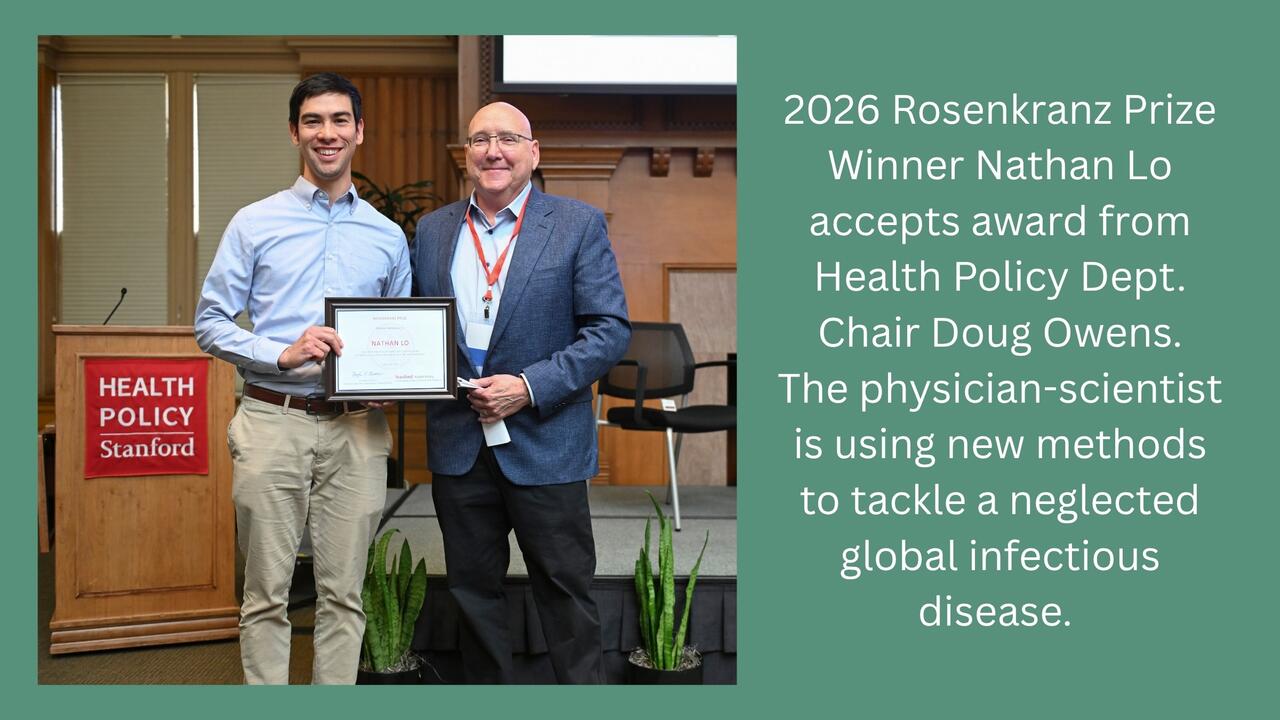
The 2026 Dr. George Rosenkranz Prize will be awarded to a Stanford researcher doing innovative work to improve health in low- or middle-income countries. Dr. Rosenkranz committed his career to reducing health disparities across the globe, and this prize honors his legacy. Aimed at fostering innovative new research, the Rosenkranz Prize is a stipend of US $100,000 awarded over a two-year period. Moreover, the Prize is not simply a financial resource—it will also provide its recipients with an incubating network of like-minded unconventional global health scholars and a seat at the table for such events as the Rosenkranz Global Health Policy Research Symposium.
Background
Dr. Rosenkranz devoted his career to improving health care access across the world. Born in Hungary in 1916 and trained in chemistry by Nobel Prize winner Leopold Ruzicka, Dr. Rosenkranz helped first synthesize Cortisone in 1951. This remarkable discovery—made in Mexico by Dr. Rosenkranz and a team of similarly youthful scientists—shaped Dr. Rosenkranz’s career of far-reaching, innovative work. In that same decade, Dr. Rosenkranz’s team would synthesize the active ingredient for the first oral birth control. Partnering with a Wall Street investor for further drug development, Dr. Rosenkranz became CEO of Syntex, a position he held until 1981.
Committed to the country where he started his career, Dr. Rosenkranz helped found the Mexican National Institute for Genomic Medicine. His work was honored by the President in Mexico in 2001 with the Eduardo Liceaga Medal. An inductee into the Bridge Hall of Fame in 2000, Dr. Rosenkranz lived with his wife in Menlo Park, CA, until his death in 2019 at age 102, and has three children.
What the Prize Entails
The Rosenkranz Prize Award Committee will convene to choose a Stanford researcher whose work fulfills the vision of the award. The Rosenkranz Award winner will receive US$100,000 to support such expenses as research costs, the defrayment of travel expenses and publication fees.
Eligibility
Eligible recipients include Stanford instructors, research associates, postdoctoral students, and faculty at any career stage from any discipline (including, but not limited to, the basic sciences, engineering, medicine, health policy, environmental and earth sciences, political science, economics, law, business, and the humanities). All applicants must be enrolled or employed at Stanford during the duration of the two-year award.
Researchers at any career stage, including senior faculty, are eligible to apply—but strong preference will be given to more junior scholars. We also encourage applications from members of groups that are traditionally underrepresented in academic research.
Submission Requirements
Current CV
Research Proposal (3 page maximum)
1 Letter of Support (for applicants below the rank of tenured faculty)
Dates and Deadlines:
Submission Deadline: Friday, February 27, 2026, 11:59 PM PST.
How to Apply
Application Link
Fellowship Coordinator:
Soomin Li
615 Crothers Way
Stanford, CA 94305-6019
soominli@stanford.edu
Learn More About Previous Rosenkranz Prize Winners
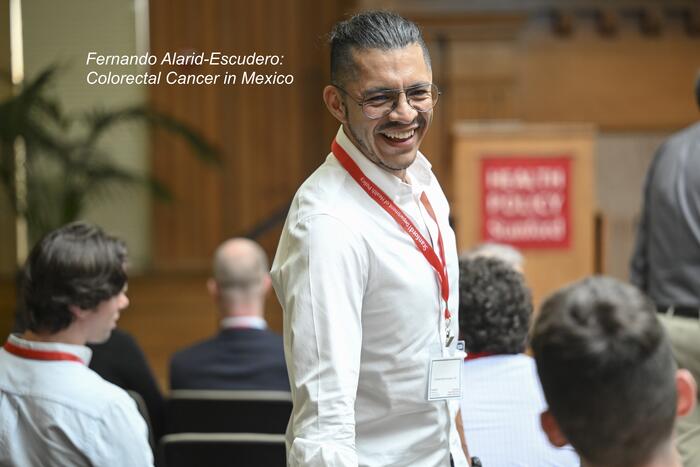
2025 Rosenkranz Prize Honors Innovators Tackling Public Health in Mexico
2024 Rosenkranz Prize Winner Natalia Serna Investigates Impact of Price Controls on Contraceptives
2023 Rosenkranz Prize Winners: Helping Children Grow in Bangladesh and Preventing Blindness in West Africa
2021 Rosenkranz Prize Winners Focus on Child and Maternal Health
2020 Rosenkranz Prize Winner Ashley Styczynski Investigates Epidemiology Behind Alarmingly High Rate of Stillbirths in Bangladesh
Prasanna Jagannathan Hopes to Develop Malaria Vaccine Targeting Pregnant Women With 2018 Rosenkranz Prize
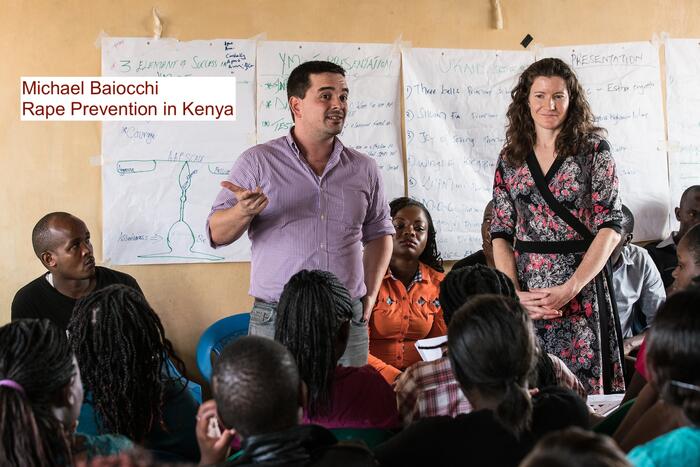
Statistician Mike Baiocchi Brings Statistics to Rape Prevention in Kenya as 2017 Rosenkranz Prize Winner
2016 Rosenkranz Prize Winner Ami Bhatt to Launch Microbiome Research Project in Africa
2015 Rosenkranz Prize Winners Marcella Alsan and Jason Andrews Devoted to Innovative Health Care in Developing Countries


