FSI's research on the origins, character and consequences of government institutions spans continents and academic disciplines. The institute’s senior fellows and their colleagues across Stanford examine the principles of public administration and implementation. Their work focuses on how maternal health care is delivered in rural China, how public action can create wealth and eliminate poverty, and why U.S. immigration reform keeps stalling.
FSI’s work includes comparative studies of how institutions help resolve policy and societal issues. Scholars aim to clearly define and make sense of the rule of law, examining how it is invoked and applied around the world.
FSI researchers also investigate government services – trying to understand and measure how they work, whom they serve and how good they are. They assess energy services aimed at helping the poorest people around the world and explore public opinion on torture policies. The Children in Crisis project addresses how child health interventions interact with political reform. Specific research on governance, organizations and security capitalizes on FSI's longstanding interests and looks at how governance and organizational issues affect a nation’s ability to address security and international cooperation.
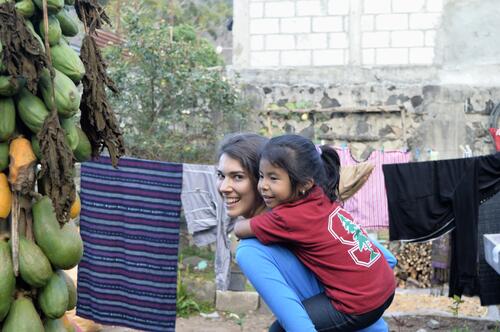
“Vic-TOR-ia!” Fátima cried, a grin lighting up her face. The 5-year-old had become fast friends with Stanford medical student Tori Bawel almost instantly after Bawel arrived in San Lucas Tolimán. After giving piggy-back rides to Fátima, a career in global pediatrics changed from a distant wish to a developing reality for Bawel.
Bawel is one of a few lucky medical students to travel with Stanford pediatrician Paul Wise, MD, MPH, to San Lucas Tolimán, a town in the mountains of rural Guatemala that serves as a base for his work to improve nutrition for local children. Once she completes her medical training, Bawel plans to devote her life to improving health in underserved areas.
“As an elementary school student, I was really compelled by issues of social justice,” she said. “I hope that over the course of my lifetime, I’m able to make a difference like physicians have done here in Guatemala and around the world.”
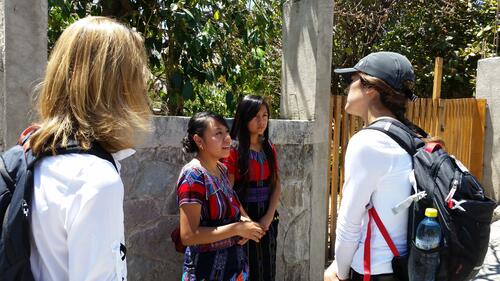
Every summer, Wise, a professor of pediatrics and a Stanford Health Policy core faculty member, takes a handful of undergraduates to the communities around San Lucas to learn about the Rural Guatemala Child Health and Nutrition Program. A collaboration between Stanford and a group of local health promoters, the program uses nutritional supplements and health education to save the lives of children under five. The students follow the promoters on house visits, help them measure the weight and height of children and gain an understanding of how the program helps the rural communities.
“We feel it is part of our educational mission,” said Wise. “We want to grow people who will make a difference, and part of that is providing them opportunities to do so.”
Bawel’s experience reinforced her desire to engage in global health work: “It’s inspired me and motivated me to want to give my life, like Wise, to… serving in areas of the world with the greatest need.”
Meeting Guatemalan students who overcame economic difficulties to study medicine — like Flor Julajuj — was also deeply moving for Bawel. Very few in rural Guatemala have the opportunity to pursue higher education or good health care. But with some help from Wise, Julajuj was able to attend medical school; just this month, she graduated from the University of San Carlos in Guatemala City.
Image
“It’s been a great opportunity,” said Julajuj. “It’s changed my life.”
Most, though, are not so lucky; Bawel also encountered two young women who dream of becoming physicians but cannot afford medical school. Meeting the young, ambitious women “makes me want to empower them with the education and opportunities I have had,” said Bawel.
Wise, meanwhile, will continue to each Stanford students about ways to help these communities.
“They see the poverty, but they also begin to understand why being a great doctor or a great diplomat or a great economist will serve the interests of people down here if done well,” he said. “We want them to go back to whatever field they’re interested in, committed to gaining skills and then using them to serve the needs and the rights of people in places like San Lucas.”
Geir H. Holom, MD, is a Visiting Scholar at Stanford School of Medicine (CHP/PCOR) from the University of Oslo. His research focuses on the expansion of private for-profit hospitals in the Nordic countries and its effect on prices, quality of care and selection of patients. He received a BSc in Economics and Business Administration from the Norwegian School of Economics and an MD from the University of Bergen. While in medical school, he conducted research on patients diagnosed with head and neck cancer who underwent head and neck reconstruction using microsurgery. Since receiving his MD, he has worked as a physician in both primary care and specialized health services. Prior to entering the field of medicine, he worked in the business and finance sector.
Adjunct Affiliate at the Center for Health Policy and the Department of Medicine
Stanford pediatrician Paul Wise stooped below the black tarp roof of a cinderblock house in Guatemala to offer his condolences to a mother who had just lost her child.
“Doctor Pablo,” as he is known in the communities around San Lucas Tolimán, talked softly as he relayed his sympathies to the mother, whose 9-year-old son had been a patient of his.
Stanford’s Children in Crisis Initiative seeks to save the lives of children in areas of poor governance. In Guatemala, their efforts work toward eliminating death by malnutrition for children under 5.
The boy’s genetic disorder would have been terminal anywhere, but thanks to Wise and local health promoters, the boy’s family had years with him instead of months.
While Wise spoke to the heartbroken mother, his Stanford research assistant Alejandro Chavez helped the promoters set up inside a local community center to measure the weight and height of local kids to determine their nutrition level.
Chavez and the promoters had worked together for months to create an app for tablets that will make it easier to find malnourished children.
The app they designed will decrease training time for new health promoters and allow the program to expand. The goal is to distribute the app globally to help programs in other countries tackle malnutrition.
Children in crisis
As recently as 2005, about one of every 20 children in this rural area of Guatemala died before their 5th birthday. Almost half the deaths were associated with severe malnutrition.
“The death of any child is always a tragedy, but the death of any child from preventable causes is always unjust,” said Wise, a Stanford Health Policy core faculty member.
Along with other faculty from the Freeman Spogli Institute for International Studies (FSI) and the School of Medicine, Wise created the Children in Crisis Initiative to save the lives of children in areas of poor governance. The program brings together Stanford researchers and students across disciplines.
Nowhere are their efforts better illustrated than in the rural communities around San Lucas Tolimán, in the central mountains of Guatemala.
The program’s effectiveness rests on a deep respect for the local communities merged with innovation by Stanford researchers.
“It’s absolutely essential to any program that the people in need be part of the solution,” said Wise. Unlike many nongovernmental organizations and health programs, Wise believes the way to create a sustainable health system is for the locals to run it, so the health promoters manage the program’s day-to-day activities.
Image
This leaves the Stanford team free to focus on innovation – such as the new app. They believe the technology could change child health programs around the world. Wise’s team has partnered with Medic Mobile – a nonprofit that creates open-source software for health care workers – which plans to distribute the app to other areas suffering from malnutrition.
The six Android tablets purchased by Children in Crisis are enough to monitor the program’s 1,500 kids through the app.
Role of nutrition
When done well, nutrition surveillance is very effective at decreasing child mortality in poor countries.
“Nutrition contributes enormously to health and well-being,” Wise said as he walked through Tierra Santa, a small community near San Lucas, making house calls. “So the focus of our work turned to improving young child nutrition. It’s not an easy thing to do in a place that’s extremely poor.”
Wise and his colleagues – Stanford medical student Tori Bawel and Stanford professor of pediatrics Lisa Chamberlain – made their rounds during their visit in March. Evidence of poverty was everywhere.
Here, clean tap water is a dream and even the sturdier homes often lack four walls or paned windows, though the children were neatly dressed in T-shirts or colorful traje, traditional Mayan clothing.
It’s hard to provide proper nutrition when most families can’t find enough work to buy adequate food. But a little help can make a big difference.
Bawel, a first-year medical student who plans a career improving health in areas of poverty, was struck by the impact the promoter program has had on the community.
“There are children who need supplements and nutrition to stay alive,” she said. “Without this program, that infrastructure does not exist.”
With FSI’s assistance, the nutrition program distributes Incaparina, a supplement of cornmeal, soy and essential nutrients. The sweet, mealy drink helps the program’s most malnourished children get back on track.
Image
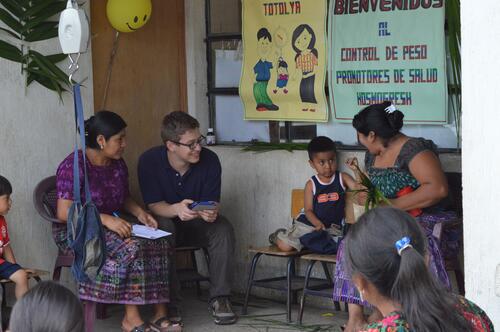
Every two months, the promoters gather each community’s children to measure their weight and height. Children and their mothers sit patiently, waiting for their turn. The children enjoy a cup of Incaparina, and their mothers eagerly listen to the promoters’ tips for keeping their children healthy.
“It’s very important to me,” said Elsira Rosibel Samayoa, who brought her 2-year-old to be measured. “There are mothers who don’t understand the importance of monitoring their children’s weight, but I do.”
Since its implementation in 2009, the Stanford program has slashed nutrition-based mortality in the participating communities by about 80 percent and decreased severe malnutrition by more than 60 percent – saving hundreds of children’s lives.
However, nutrition surveillance and intervention isn’t easy. Tracking nutrition takes training and expertise, and when the local population rarely exceeds a fourth-grade education, learning these skills is especially challenging. Detailed graphs on a standard growth chart are essential to identifying malnourished children.
“The community health workers are extremely capable and smart, but some have never seen a graph before,” said Wise. “Think about what it is to try to explain a graph to someone for the first time.”
It takes the health workers about three years to learn to graph and then interpret the results for intervention.
Wise said, “So we all got together and said, ‘How do we make this easier to do?’”
The app was the answer.
‘Let’s create an app’
Enter Alejandro Chavez, a recent Stanford computer science graduate and Stanford Health Policy research assistant. He developed the app to collect child health data, then determine the child’s degree of malnutrition and suggest intervention.
“The major goal was to lower training requirements and make programs like this simpler to start and maintain,” said Chavez, who now lives and works in Guatemala, where he gets daily feedback from the health promoters.
“I feel like they’ve been very honest with me about things I need to improve,” he said.
Cesia Lizeth Castro Chutá is a senior coordinator for the program who has worked with Chavez to ensure that the app meets the promoters’ needs.
“The tablet automatically generates the information we need to know,” she said. “It becomes easier to confirm that a child is malnourished and needs supplements.”
Looking forward
Image
With the app’s launch, it looks like training time for the promoters will be reduced from three years to less than six months. That means new communities can be incorporated into the program quickly, creating broader access to care.
Meanwhile, many health programs around the world are waiting to see how well the Stanford app works in Guatemala.
Josh Nesbit, a Stanford alumnus and Medic Mobile CEO, said, “As more health programs recognize the importance of nutrition and implement community-based interventions, screening and surveillance tools will be critical. We must learn from Dr. Wise’s success.”
The U.S. government has invested $1.4 billion in HIV prevention programs that promote sexual abstinence and marital fidelity, but there is no evidence that these programs have been effective at changing sexual behavior and reducing HIV risk, according to a new Stanford University School of Medicine study.
Since 2004, the U.S. President’s Emergency Fund for AIDS Relief, known as PEPFAR, has supported local initiatives that encourage men and women to limit their number of sexual partners and delay their first sexual experience and, in the process, help to reduce the number of teen pregnancies. However, in a study of nearly 500,000 individuals in 22 countries, the researchers could not find any evidence that these initiatives had an impact on changing individual behavior.
Although PEPFAR has been gradually reducing its support for abstinence and fidelity programs, the researchers suggest that the remaining $50 million or so in annual funding for such programs could have greater health benefits if spent on effective HIV prevention methods. Their findings were published online May 2 and in the May issue of Health Affairs.
“Overall we were not able to detect any population-level benefit from this program,” said Nathan Lo, a Stanford MD/PhD student and lead author of the study. “We did not detect any effect of PEPFAR funding on the number of sexual partners or upon the age of sexual intercourse. And we did not detect any effect on the proportion of teen pregnancy.
“We believe funding should be considered for programs that have a stronger evidence basis,” he added.
A Human Cost
Senior author Eran Bendavid, MD, said the ineffective use of these funds has a human cost because it diverts money away from other valuable, risk-reduction efforts, such as male circumcision and methods to prevent transmission from mothers to their children.
“Spending money and having no effect is a pretty costly thing because the money could be used elsewhere to save lives,” said Bendavid, an assistant professor of medicine at Stanford and a core faculty member at Stanford Health Policy.
PEPFAR was launched in 2004 by President George W. Bush with a five-year, $15 billion investment in global AIDS treatment and prevention in 15 countries. The program has had some demonstrated success: A 2012 study by Bendavid showed that it had reduced mortality rates and saved 740,000 lives in nine of the targeted countries between 2004 and 2008.
However, the program’s initial requirement that one-third of the prevention funds be dedicated to abstinence and “be faithful” programs has been highly controversial. Critics questioned whether this approach could work and argued that focusing only on these methods would deprive people of information on other potentially lifesaving options, such as condom use, male circumcision and ways to prevent mother-to-child transmission, and divert resources from these and other proven prevention measures.
Abstinence, Faithfulness Funding Continues
In 2008, when President Barack Obama came into office, the one-third requirement was eliminated, but U.S. funds continued to flow to abstinence and “be faithful” programs, albeit at lower levels. In 2008, $260 million was committed to these programs, but by 2013 by that figure had fallen to $45 million.
Spending money and having no effect is a pretty costly thing because the money could be used elsewhere to save lives.
Although PEPFAR continues to fund abstinence and faithfulness programs as part of its broader behavior-based prevention efforts, there is no routine evaluation of the success of these programs. “We hope our work will emphasize the difficulty in changing sexual behavior and the need to measure the impact of these programs if they are going to continue to be funded,” Lo said.
While many in the medical community were critical of the abstinence-fidelity component, no one had ever analyzed its real-world impact, Lo said. When he presented the results of the study in February at the Conference on Retroviruses and Opportunistic Infection, he received rousing applause from the scientists in the audience, some of whom came to the microphone to congratulate him on the work.
To measure the program’s effectiveness, Lo and his colleagues used data from the Demographic and Health Surveys, a detailed database with individual and household statistics related to population, health, HIV and nutrition. The scientists reviewed the records of nearly 500,000 men and women in 14 of the PEPFAR-targeted countries in sub-Saharan Africa that received funds for abstinence-fidelity programs and eight non-PEPFAR nations in the region. They compared changes in risk behaviors between individuals who were living in countries with U.S.-funded programs and those who were not.
The scientists included data from 1998 through 2013 so they could measure changes before and after the program began. They also controlled for country differences, including gross domestic product, HIV prevalence and contraceptive prevalence, and for individuals’ ages, education, whether they lived in an urban or rural environment, and wealth. All of the individuals in the study were younger than 30.
Number of Sexual Partners
In one measure, the scientists looked at the number of sexual partners reported by individuals in the previous year. Among the 345,000 women studied, they found essentially no difference in the number of sexual partners among those living in PEPFAR-supported countries compared with those living in areas not reached by PEPFAR programs. The same was true for the more than 132,000 men in the study.
Changing sexual behavior is not an easy thing. These are very personal decisions.
The researchers also looked at the age of first sexual intercourse among 178,000 women and more than 71,000 men. Among women, they found a slightly later age of intercourse among women living in PEPFAR countries versus those in non-PEPFAR countries, but the difference was slight — fewer than four months — and not statistically significant. Again, no difference was found among the men.
Finally, they examined teenage pregnancy rates among a total of 27,000 women in both PEPFAR-funded and nonfunded countries and found no difference in rates between the two.
Bendavid noted that, in any setting, it is difficult to change sexual behavior. For instance, a 2012 federal Centers for Disease Control analysis of U.S.-based abstinence programs found they had little impact in altering high-risk sexual practices in this country.
“Changing sexual behavior is not an easy thing,” Bendavid said. “These are very personal decisions. When individuals make decisions about sex, they are not typically thinking about the billboard they may have seen or the guy who came by the village and said they should wait until marriage. Behavioral change is much more complicated than that.”
Level of Education
The one factor that the researchers found to be clearly related to sexual behavior, particularly in women, was education level. Women with at least a primary school education had much lower rates of high-risk sexual behavior than those with no formal education, they found.
“One would expect that women who are educated have more agency and the means to know what behaviors are high-risk,” Bendavid said. “We found a pretty strong association.”
The researchers concluded that the “study contributes to the growing body of evidence that abstinence and faithfulness campaigns may not reduce high-risk sexual behaviors and supports the importance of investing in alternative evidence-based programs for HIV prevention in the developing world.”
The authors noted that PEPFAR representatives have been open to discussing these findings and the implications for funding decisions regarding HIV prevention programs.
Stanford medical student Anita Lowe was also a co-author of the study.
When assistant professor of medicine Eran Bendavid began a study on livestock in African households to determine impact on childhood health, he'd already anticipated common field problems like poorly captured or intentionally misreported data, difficulty getting to work sites, or problems with training local volunteers.
But he'd never gotten that particular question from a fieldworker before. It didn't occur to him that participating families, in reporting their livestock holdings, would completely omit the chickens running around at their feet, thereby skewing the data.
"They didn't consider chickens to be livestock," recalled Bendavid. Along with Scott Rozelle, the Helen F. Farnsworth Senior Fellow at FSI, and associate professor of political science and FSI senior fellow Beatriz Magaloni, Bendavid spoke to a full house last week on lessons learned from fieldwork gone awry. The return engagement of FSI's popular seminar, "Everything that can go wrong in a field experiment” was introduced by Jesper Sørensen, executive director of Stanford Seed, and moderated by Katherine Casey, assistant professor of political economy at the GSB. The seminar is a product of FSI and Seed’s joint Global Development and Poverty (GDP) Initiative, which to date has awarded nearly $7 million in faculty research funding to promote research on poverty alleviation and economic development worldwide.
Rozelle, co-director of the Rural Education Action Program, spoke of the obstacles to accurate data gathering, especially in rural areas where record-keeping is inaccurate and participants' trust is low. Arriving in a Chinese village to carry out child nutrition studies, said Rozelle, "we found Grandma running out the back door with the baby." The researchers had worked with the local family planning council to find the names of children to study, but the families thought the authorities were coming to penalize them for violation of the one-child policy.
Cultural differences make for entertaining and illuminating (if frustrating) lessons, but Beatriz Magaloni, director of FSI's Program on Poverty and Governance at the Center on Democracy, Development and the Rule of Law had a different story to tell. Over the course of three years, her GDP-funded work to investigate and reduce police violence in Brazil - a phenomenon resulting in more than 22,000 deaths since 2005 - has encountered obstacle after obstacle. Her work to pilot body-worn cameras on police in Rio has faced a change in police leadership, setting back cooperation; a yearlong struggle to decouple a study of TASER International’s body worn cameras from its electrical weapons in the same population; a work site initially lacking electricity to charge the cameras or Internet to view the feeds; and noncompliance among the officers. "It's discouraging at times," admitted Magaloni, who has finally gotten the cameras onto the officers' uniforms and must now experiment with ways to incentivize their use. "We are learning a lot about how institutional behavior becomes so entrenched and why it's so hard to change."
Experimentation is a powerful tool to understand cause and effect, said Casey, but a tool only works if it's implemented properly. Learning from failure makes for an interesting panel discussion. The speakers' hope is that it also makes for better research in the future.
The Global Development and Poverty Initiative is a University-wide initiative of the Stanford Institute for Innovation in Developing Economies (Seed) in partnership with the Freeman Spogli Institute (FSI). GDP was established in 2013 to stimulate transformative research ideas and new approaches to economic development and poverty alleviation worldwide. GDP supports groundbreaking research at the intersection of traditional academic disciplines and practical application. GDP uses a venture-funding model to pursue compelling interdisciplinary research on the causes and consequences of global poverty. Initial funding allows GDP awardees to conduct high-quality research in developing countries where there is a lack of data and infrastructure.
Encina Commons,
615 Crothers Way Room 182,
Stanford, California 94305-6006
(650) 498-7528
0
maria.polyakova@stanford.edu
Associate Professor, Health Policy
MS in Health Policy Program Director
maria_4_-_copy.jpg
PhD
Maria Polyakova, PhD, is Associate Professor of Health Policy at Stanford School of Medicine and Associate Professor (by courtesy) in the Department of Economics at Stanford University, where she is also a Senior Fellow at the Stanford Institute for Economic Policy Research (SIEPR). She is a Research Associate at the National Bureau of Economic Research (NBER) and serves as an Editor of the Journal of Health Economics. Her research spans many areas of health economics, including health insurance, healthcare labor markets, and individual decision-making in health and healthcare. A unifying thread is evaluating whether markets and government policy effectively serve individuals and families or introduce distortions. Her ongoing work focuses on how families navigate prolonged health shocks. Maria received her BA in Economics & Mathematics and German Studies (with a concentration in History) from Yale University in 2008 and her PhD in Economics from MIT in 2014.
Michael McFaul, a Stanford political scientist and former U.S. ambassador to Russia, has been selected as the next director of the university’s Freeman Spogli Institute for International Studies.
The announcement was made Wednesday by Stanford Provost John Etchemendy and Ann Arvin, the university’s vice provost and dean of research. McFaul will succeed Mariano-Florentino Cuéllar, who was nominated in July as an associate justice of the California Supreme Court and elected Tuesday.
McFaul takes the helm of FSI in January.
"Stanford has long been a home for scholars who connect academia to policy and public service, and Professor McFaul is the embodiment of that model," Etchemendy said. "We are grateful for Mike's service and confident he will be a strong leader for FSI."
Arvin said McFaul is a strong fit for the position.
“Professor McFaul’s background as an outstanding scholar and his service as an influential ambassador give him a vital perspective to lead FSI, which is Stanford’s hub for studying and understanding international policy issues,” she said. “His scholarship, experience and energy will keep FSI and Stanford at the forefront of international studies as well as some of the most pressing global policy debates."
McFaul has been a faculty member in the department of political science at Stanford since 1994. He joined the Obama administration in January 2009, serving for three years as Special Assistant to the President and Senior Director for Russian and Eurasian Affairs at the National Security Council at the White House. He then served as U.S. Ambassador to the Russian Federation from 2012 to 2014.
McFaul already has a deep affiliation with FSI. Before joining the government, he served as FSI deputy director from 2006 to 2009. He also directed FSI’s Center on Democracy, Development, and the Rule of Law (CDDRL) from 2005 to 2009.
During his four years leading CDDRL, McFaul launched the Draper Hills Summer Fellowship program for mid-career lawyers, politicians, advocates and business leaders working to shore up democratic institutions in their home countries. He also established CDDRL’s senior honors program. From 1992-1994, McFaul also worked as a Senior Research Fellow at FSI’s Center for International Security and Cooperation (CISAC).
“I am thrilled to be assuming a leadership role again at FSI,” McFaul said. “FSI has become one of the premier institutions in the country for policy-relevant research on international affairs. I look forward to using my recent government experience to deepen further FSI’s impact on policy debates in Washington and around the world.”
Arvin said McFaul’s previous positions at FSI and CDDRL will make for a smooth transition in the institute’s leadership.
“His familiarity with FSI’s history and infrastructure will allow him to start this new position with an immediate focus on the institute’s academic mission,” she said.
McFaul is also the Peter and Helen Bing Senior Fellow at the Hoover Institution, and plans to build on his long affiliations with both Hoover and FSI to deepen cooperation between these two premier public policy institutions on campus.
He has written and co-authored dozens of books including Advancing Democracy Abroad: Why We Should, How We Can; Transitions To Democracy: A Comparative Perspective (with Kathryn Stoner); Power and Purpose: American Policy toward Russia after the Cold War (with James Goldgeier); and Russia’s Unfinished Revolution: Political Change from Gorbachev to Putin.
“In so many ways, Mike represents the best of FSI,” said Cuéllar, who has held leadership positions at FSI since 2004 and begins his term on the California Supreme Court in January. “He knows the worlds of academia and policy extremely well, and will bring unique experience and sound judgment to his new role at FSI.”
McFaul currently serves as a news analyst for NBC News, appearing frequently on NBC, MSNBC, and CNBC as a commentator on international affairs. He also appears frequently on The Charlie Rose Show and The Newshour, as well as PBS and BBC radio programs. He has recently published essays in Foreign Affairs, The New York Times, Politico, and Time.
McFaul was one of the first U.S. ambassadors to actively use social media for public diplomacy. He still maintains an active presence on Facebook at amb.mcfaul and on Twitter at @McFaul.
McFaul received his B.A. in International Relations and Slavic Languages and his M.A. in Russian and East European Studies from Stanford University in 1986. As a Rhodes Scholar, he completed his D. Phil. in International Relations at Oxford University in 1991.
“Since coming here in 1981 as 17-year-old kid from Montana, Stanford has provided me with tremendous opportunities to grow as a student, scholar, and policymaker,” McFaul said. “I now look forward to giving back to Stanford by contributing to the development of one of the most vital and innovative institutions on campus.”
Senior Fellow, Freeman Spogli Institute for International Studies
Professor, Management Science & Engineering (by courtesy)
doug-headshot_tight.jpeg
MD, MS
Douglas K. Owens is the Henry J. Kaiser, Jr. Professor, Chair of the Department of Health Policy in the Stanford University School of Medicine and Director of the Center for Health Policy (CHP) in the Freeman Spogli Institute for International Studies (FSI). He is a general internist, a Professor of Management Science and Engineering (by courtesy), at Stanford University; and a Senior Fellow at the Freeman Spogli Institute for International Studies.
Owens' research includes the application of decision theory to clinical and health policy problems; clinical decision making; methods for developing clinical guidelines; decision support; comparative effectiveness; modeling substance use and infectious diseases; cardiovascular disease; patient-centered decision making; assessing the value of health care services, including cost-effectiveness analysis; quality of care; and evidence synthesis.
Owens chaired the Clinical Guidelines Committee of the American College of Physicians for four years. The guideline committee develops clinical guidelines that are used widely and are published regularly in the Annals of Internal Medicine. He was a member and then Vice-Chair and Chair of the U.S. Preventive Services Task Force, which develops national guidelines on preventive care, including guidelines for screening for breast, colorectal, prostate, and lung cancer. He has helped lead the development of more than 50 national guidelines on treatment and prevention. He also was a member of the Second Panel on Cost Effectiveness in Health and Medicine, which developed guidelines for the conduct of cost-effectiveness analyses.
Owens also directed the Stanford-UCSF Evidence-based Practice Center. He co-directs the Stanford Health Services Research Program, and previously directed the VA Physician Fellowship in Health Services Research, and the VA Postdoctoral Informatics Fellowship Program.
Owens received a BS and an MS from Stanford University, and an MD from the University of California-San Francisco. He completed a residency in internal medicine at the University of Pennsylvania and a fellowship in health research and policy at Stanford. Owens is a past-President of the Society for Medical Decision Making. He received the VA Undersecretary’s Award for Outstanding Achievement in Health Services Research, and the Eisenberg Award for Leadership in Medical Decision Making from the Society for Medical Decision Making. Owens also received a MERIT award from the National Institutes on Drug Abuse to study HIV, HCV, and the opioid epidemic. He was elected to the American Society for Clinical Investigation (ASCI) and the Association of American Physicians (AAP.)
Chair, Department of Health Policy, School of Medicine
Director, Center for Health Policy, Freeman Spogli Institute for International Studies
CISAC
Stanford University
Encina Hall, E209
Stanford, CA 94305-6165
0
relman@stanford.edu
Senior Fellow at the Freeman Spogli Institute for International Studies
Thomas C. and Joan M. Merigan Professor
Professor of Medicine
Professor of Microbiology and Immunology
1-RSD13_085_0052a-001.jpg
MD
David A. Relman, M.D., is the Thomas C. and Joan M. Merigan Professor in the Departments of Medicine, and of Microbiology and Immunology at Stanford University, and Chief of Infectious Diseases at the Veterans Affairs Palo Alto Health Care System in Palo Alto, California. He is also Senior Fellow at the Freeman Spogli Institute for International Studies (FSI) at Stanford, and served as science co-director at the Center for International Security and Cooperation at Stanford from 2013-2017. He is currently director of a new Biosecurity Initiative at FSI.
Relman was an early pioneer in the modern study of the human indigenous microbiota. Most recently, his work has focused on human microbial community assembly, and community stability and resilience in the face of disturbance. Ecological theory and predictions are tested in clinical studies with multiple approaches for characterizing the human microbiome. Previous work included the development of molecular methods for identifying novel microbial pathogens, and the subsequent identification of several historically important microbial disease agents. One of his papers was selected as “one of the 50 most important publications of the past century” by the American Society for Microbiology.
Dr. Relman received an S.B. (Biology) from MIT, M.D. from Harvard Medical School, and joined the faculty at Stanford in 1994. He served as vice-chair of the NAS Committee that reviewed the science performed as part of the FBI investigation of the 2001 Anthrax Letters, as a member of the National Science Advisory Board on Biosecurity, and as President of the Infectious Diseases Society of America. He is currently a member of the Intelligence Community Studies Board and the Committee on Science, Technology and the Law, both at the National Academies of Science. He has received an NIH Pioneer Award, an NIH Transformative Research Award, and was elected a member of the National Academy of Medicine in 2011.
Richard E. Behrman Professor of Child Health and Society
Senior Fellow, Freeman Spogli Institute for International Studies
rsd15_081_0253a.jpg
MD, MPH
Dr. Paul Wise is dedicated to bridging the fields of child health equity, public policy, and international security studies. He is the Richard E. Behrman Professor of Child Health and Society and Professor of Pediatrics, Division of Neonatology and Developmental Medicine, and Health Policy at Stanford University.He is also co-Director, Stanford Center for Prematurity Research and a Senior Fellow in the Center on Democracy, Development, and the Rule of Law, and the Center for International Security and Cooperation, Freeman Spogli Institute for International Studies, Stanford University. Wise is a fellow of the American Academy of Arts and Sciences and has been working as the Juvenile Care Monitor for the U.S. Federal Court overseeing the treatment of migrant children in U.S. border detention facilities.
Wise received his A.B. degree summa cum laude in Latin American Studies and his M.D. degree from Cornell University, a Master of Public Health degree from the Harvard School of Public Health and did his pediatric training at the Children’s Hospital in Boston.His former positions include Director of Emergency and Primary Care Services at Boston Children’s Hospital, Director of the Harvard Institute for Reproductive and Child Health, Vice-Chief of the Division of Social Medicine and Health Inequalities at the Brigham and Women’s Hospital and Harvard Medical School and was the founding Director or the Center for Policy, Outcomes and Prevention, Stanford University School of Medicine.He has served in a variety of professional and consultative roles, including Special Assistant to the U.S. Surgeon General, Chair of the Steering Committee of the NIH Global Network for Women’s and Children’s Health Research, Chair of the Strategic Planning Task Force of the Secretary’s Committee on Genetics, Health and Society, a member of the Advisory Council of the National Institute of Child Health and Human Development, NIH, and the Health and Human Secretary’s Advisory Committee on Infant and Maternal Mortality.
Wise’s most recent U.S.-focused work has addressed disparities in birth outcomes, regionalized specialty care for children, and Medicaid. His international work has focused on women’s and child health in violent and politically complex environments, including Ukraine, Gaza, Central America, Venezuela, and children in detention on the U.S.-Mexico border.
Core Faculty, Center on Democracy, Development and the Rule of Law
Affiliated faculty at the Center for International Security and Cooperation
The United States spends over 17 percent of GDP on health care; the next six highest countries spend over 11 percent. This six percent differential indicates an excess spending of approximately one trillion dollars per year. Depending on the benefit from the extra spending, this suggests the possibility of a huge misallocation of resources. Also, because the federal government funds almost half of total health care spending, there are significant effects on the deficit and the debt. The main reasons for the excess are (1) the U.S. pays higher prices for drugs, devices, and equipment and higher fees to specialists and sub-specialists; (2) higher administrative costs; and (3) a more expensive mix of medical care. The seminar will focus on institutional and political explanations for the three proximate reasons.
Speaker Bio:
Victor R. Fuchs is the Henry J. Kaiser Jr Professor Emeritus at Stanford University, in the Departments of Economics and Health Research and Policy. He is also a Research Associate of the National Bureau of Economic Research and a Senior Fellow at SIEPR. He applies economic analysis to social problems of national concern, with special emphasis on health and medical care. He is author of nine books, the editor of six others, and has published over two hundred papers and shorter pieces. His current research focuses on male-female differences in mortality, reform of medical education, and the future of U.S. health care.
His best known work, Who Shall Live? Health, Economics, and Social Choice (1974; expanded edition 1998, 2nd expanded edition 2011), helps health professionals and policy makers to understand the economic and policy problems in health that have emerged in recent decades. Other books include The Service Economy (1968), How We Live (1983), The Health Economy (1986), Women’s Quest For Economic Equality (1988), and The Future of Health Policy (1993). He is the editor of Individual and Social Responsibility: Child Care, Education, Medical Care, and Long-term Care in America (1996).
Professor Fuchs was elected president of the American Economic Association in 1995. He has also been elected to the American Philosophical Society, the American Academy of Arts and Sciences, the Institute of Medicine of the National Academy of Sciences, and is an Honorary Member of Alpha Omega Alpha. He has received the John R. Commons Award, Emily Mumford Medal for Distinguished Contributions to Social Science in Medicine, Distinguished Investigator Award (Association for Health Services Research), Baxter Foundation Health Services Research Prize, and Madden Distinguished Alumni Award (New York University). ASHE’s (American Society of Health Economists) Career Award for Lifetime Contributions to the Field of Health Economics and the RAND Corporation prize for the Best Paper published in the Forum for Health Economics and Policy are named and awarded in honor of Professor Fuchs.
This event is sponsored by the Stanford Center on Democracy, Development and the Rule of Law and the Center for Health Policy/Center for Primary Care and Outcomes Research.
CISAC Conference Room
Victor Fuchs
the Henry J. Kaiser Jr Professor Emeritus
Speaker
Stanford University