The importance of detecting high cholesterol in older adults is well understood. But there’s still not enough evidence about lipid disorders in children and adolescents to determine whether they should be routinely screened.
The U.S. Preventive Services Task Force has concluded the evidence is insufficient to assess the balance of benefits and harms of screening for lipid disorders in children and adolescents 20 years or younger. The report appears in the Aug. 9 issue of JAMA.
High cholesterol in individuals 20 years or younger can be caused primarily by genetics, known as familial hypercholesterolemia, or from both genetic and environmental factors, such as a high-fat diet.
“We are calling for more research to better understand the benefits and harms of screening and treatment of lipid disorders in children and teens and on the impact these interventions may have on their cardiovascular health as adults,” Task Force vice chair David Grossman said in a news release.
The Task Force is an independent panel of experts who make recommendations about the effectiveness of specific preventive care services such as screenings, counseling services, and preventive medications.
The task force does, however, recommend screening children who are 6 years and older for obesity and making referrals as needed for counseling on weight management. Helping children improve diet and exercise may also improve heart health.
“Cardiovascular health in young people is important and the goal is to prevent the development of cardiovascular disease as people age,” said Douglas K. Owens, a professor of medicine at Stanford and a member of the task force when the guideline was developed. “But many important questions remain unanswered about how to do so.”
Owens, a leader at Stanford Health Policy, said that for now, physicians should use their clinical judgment when counseling young patients on lipid disorders.
“Research on screening and treatment of lipid disorders in children and teens and the impact of these interventions have on cardiovascular disease in adults should be a high priority,” he said. “The USPSTF suggests that all children and teens eat a healthy diet, maintain a normal weight, and engage in physical activity.”
Recent estimates from the National Health and Nutrition Examination Survey indicate that 7.8 percent of children age 8 to 17 years have elevated levels of total cholesterol (TC) and 7.4 percent of adolescents age 12 to 19 years have elevated LDL-C, or the “bad cholesterol” that can lead to heart disease.
Four editorials related to the recommendation accompanied the report JAMA, including one from physicians from Stanford and UCSF who suggest that the U.S. health-care system should focus more on high-value solutions to major public health concerns such as climate change, poverty, obesity and gun violence.
“The need for clinicians and leaders to focus on sustainability and health-care value has never been greater, and it is likely that policy and community-based interventions will get us there much more quickly than adding more clinic-based interventions that have low value and are wasteful of resources and clinicians’ time,” they wrote.
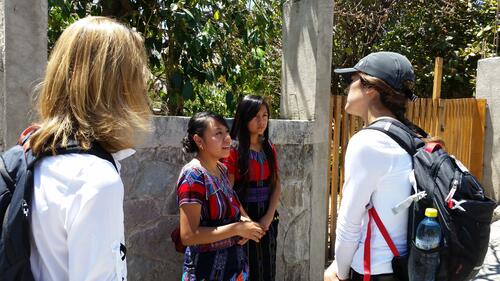
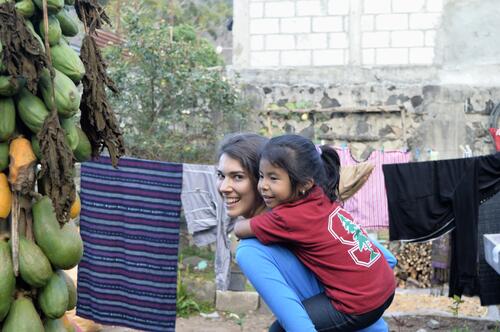
“Vic-TOR-ia!” Fátima cried, a grin lighting up her face. The 5-year-old had become fast friends with Stanford medical student Tori Bawel almost instantly after Bawel arrived in San Lucas Tolimán. After giving piggy-back rides to Fátima, a career in global pediatrics changed from a distant wish to a developing reality for Bawel.
Bawel is one of a few lucky medical students to travel with Stanford pediatrician Paul Wise, MD, MPH, to San Lucas Tolimán, a town in the mountains of rural Guatemala that serves as a base for his work to improve nutrition for local children. Once she completes her medical training, Bawel plans to devote her life to improving health in underserved areas.
“As an elementary school student, I was really compelled by issues of social justice,” she said. “I hope that over the course of my lifetime, I’m able to make a difference like physicians have done here in Guatemala and around the world.”
Every summer, Wise, a professor of pediatrics and a Stanford Health Policy core faculty member, takes a handful of undergraduates to the communities around San Lucas to learn about the Rural Guatemala Child Health and Nutrition Program. A collaboration between Stanford and a group of local health promoters, the program uses nutritional supplements and health education to save the lives of children under five. The students follow the promoters on house visits, help them measure the weight and height of children and gain an understanding of how the program helps the rural communities.
“We feel it is part of our educational mission,” said Wise. “We want to grow people who will make a difference, and part of that is providing them opportunities to do so.”
Bawel’s experience reinforced her desire to engage in global health work: “It’s inspired me and motivated me to want to give my life, like Wise, to… serving in areas of the world with the greatest need.”
Meeting Guatemalan students who overcame economic difficulties to study medicine — like Flor Julajuj — was also deeply moving for Bawel. Very few in rural Guatemala have the opportunity to pursue higher education or good health care. But with some help from Wise, Julajuj was able to attend medical school; just this month, she graduated from the University of San Carlos in Guatemala City.
Image
“It’s been a great opportunity,” said Julajuj. “It’s changed my life.”
Most, though, are not so lucky; Bawel also encountered two young women who dream of becoming physicians but cannot afford medical school. Meeting the young, ambitious women “makes me want to empower them with the education and opportunities I have had,” said Bawel.
Wise, meanwhile, will continue to each Stanford students about ways to help these communities.
“They see the poverty, but they also begin to understand why being a great doctor or a great diplomat or a great economist will serve the interests of people down here if done well,” he said. “We want them to go back to whatever field they’re interested in, committed to gaining skills and then using them to serve the needs and the rights of people in places like San Lucas.”
Stanford pediatrician Paul Wise stooped below the black tarp roof of a cinderblock house in Guatemala to offer his condolences to a mother who had just lost her child.
“Doctor Pablo,” as he is known in the communities around San Lucas Tolimán, talked softly as he relayed his sympathies to the mother, whose 9-year-old son had been a patient of his.
Stanford’s Children in Crisis Initiative seeks to save the lives of children in areas of poor governance. In Guatemala, their efforts work toward eliminating death by malnutrition for children under 5.
The boy’s genetic disorder would have been terminal anywhere, but thanks to Wise and local health promoters, the boy’s family had years with him instead of months.
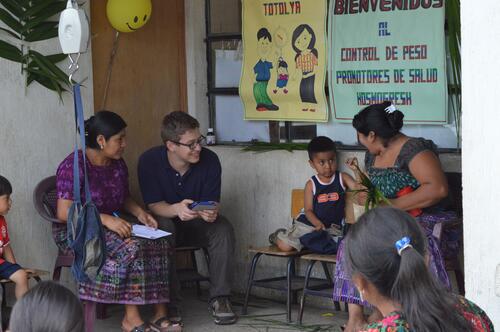
While Wise spoke to the heartbroken mother, his Stanford research assistant Alejandro Chavez helped the promoters set up inside a local community center to measure the weight and height of local kids to determine their nutrition level.
Chavez and the promoters had worked together for months to create an app for tablets that will make it easier to find malnourished children.
The app they designed will decrease training time for new health promoters and allow the program to expand. The goal is to distribute the app globally to help programs in other countries tackle malnutrition.
Children in crisis
As recently as 2005, about one of every 20 children in this rural area of Guatemala died before their 5th birthday. Almost half the deaths were associated with severe malnutrition.
“The death of any child is always a tragedy, but the death of any child from preventable causes is always unjust,” said Wise, a Stanford Health Policy core faculty member.
Along with other faculty from the Freeman Spogli Institute for International Studies (FSI) and the School of Medicine, Wise created the Children in Crisis Initiative to save the lives of children in areas of poor governance. The program brings together Stanford researchers and students across disciplines.
Nowhere are their efforts better illustrated than in the rural communities around San Lucas Tolimán, in the central mountains of Guatemala.
The program’s effectiveness rests on a deep respect for the local communities merged with innovation by Stanford researchers.
“It’s absolutely essential to any program that the people in need be part of the solution,” said Wise. Unlike many nongovernmental organizations and health programs, Wise believes the way to create a sustainable health system is for the locals to run it, so the health promoters manage the program’s day-to-day activities.
Image
This leaves the Stanford team free to focus on innovation – such as the new app. They believe the technology could change child health programs around the world. Wise’s team has partnered with Medic Mobile – a nonprofit that creates open-source software for health care workers – which plans to distribute the app to other areas suffering from malnutrition.
The six Android tablets purchased by Children in Crisis are enough to monitor the program’s 1,500 kids through the app.
Role of nutrition
When done well, nutrition surveillance is very effective at decreasing child mortality in poor countries.
“Nutrition contributes enormously to health and well-being,” Wise said as he walked through Tierra Santa, a small community near San Lucas, making house calls. “So the focus of our work turned to improving young child nutrition. It’s not an easy thing to do in a place that’s extremely poor.”
Wise and his colleagues – Stanford medical student Tori Bawel and Stanford professor of pediatrics Lisa Chamberlain – made their rounds during their visit in March. Evidence of poverty was everywhere.
Here, clean tap water is a dream and even the sturdier homes often lack four walls or paned windows, though the children were neatly dressed in T-shirts or colorful traje, traditional Mayan clothing.
It’s hard to provide proper nutrition when most families can’t find enough work to buy adequate food. But a little help can make a big difference.
Bawel, a first-year medical student who plans a career improving health in areas of poverty, was struck by the impact the promoter program has had on the community.
“There are children who need supplements and nutrition to stay alive,” she said. “Without this program, that infrastructure does not exist.”
With FSI’s assistance, the nutrition program distributes Incaparina, a supplement of cornmeal, soy and essential nutrients. The sweet, mealy drink helps the program’s most malnourished children get back on track.
Image
Every two months, the promoters gather each community’s children to measure their weight and height. Children and their mothers sit patiently, waiting for their turn. The children enjoy a cup of Incaparina, and their mothers eagerly listen to the promoters’ tips for keeping their children healthy.
“It’s very important to me,” said Elsira Rosibel Samayoa, who brought her 2-year-old to be measured. “There are mothers who don’t understand the importance of monitoring their children’s weight, but I do.”
Since its implementation in 2009, the Stanford program has slashed nutrition-based mortality in the participating communities by about 80 percent and decreased severe malnutrition by more than 60 percent – saving hundreds of children’s lives.
However, nutrition surveillance and intervention isn’t easy. Tracking nutrition takes training and expertise, and when the local population rarely exceeds a fourth-grade education, learning these skills is especially challenging. Detailed graphs on a standard growth chart are essential to identifying malnourished children.
“The community health workers are extremely capable and smart, but some have never seen a graph before,” said Wise. “Think about what it is to try to explain a graph to someone for the first time.”
It takes the health workers about three years to learn to graph and then interpret the results for intervention.
Wise said, “So we all got together and said, ‘How do we make this easier to do?’”
The app was the answer.
‘Let’s create an app’
Enter Alejandro Chavez, a recent Stanford computer science graduate and Stanford Health Policy research assistant. He developed the app to collect child health data, then determine the child’s degree of malnutrition and suggest intervention.
“The major goal was to lower training requirements and make programs like this simpler to start and maintain,” said Chavez, who now lives and works in Guatemala, where he gets daily feedback from the health promoters.
“I feel like they’ve been very honest with me about things I need to improve,” he said.
Cesia Lizeth Castro Chutá is a senior coordinator for the program who has worked with Chavez to ensure that the app meets the promoters’ needs.
“The tablet automatically generates the information we need to know,” she said. “It becomes easier to confirm that a child is malnourished and needs supplements.”
Looking forward
Image
With the app’s launch, it looks like training time for the promoters will be reduced from three years to less than six months. That means new communities can be incorporated into the program quickly, creating broader access to care.
Meanwhile, many health programs around the world are waiting to see how well the Stanford app works in Guatemala.
Josh Nesbit, a Stanford alumnus and Medic Mobile CEO, said, “As more health programs recognize the importance of nutrition and implement community-based interventions, screening and surveillance tools will be critical. We must learn from Dr. Wise’s success.”
The primary goal of the Guatemala Rural Child Health and Nutrition Program is to use the capacities of Stanford University to save young children’s lives in Guatemala and other areas of the world plagued by conflict and political instability. Part of the Children in Crisis Initiative, this Stanford effort in Guatemala has been focused on young child malnutrition, the central contributor to child mortality and life-long disability in these regions.
Stanford students belong to the first generation that could witness the end of extreme global poverty — in what would be one of humankind's greatest achievements — the head of the World Bank said during a recent talk on campus.
But their generation, he said, is also likely to experience the first global pandemic since the 1918 influenza that killed more than 50 million people.
Jim Yong Kim, president of the World Bank, said innovations in health, education and finance are behind the World Bank's twin goals of ending extreme poverty and boosting shared prosperity for the bottom 40 percent of the global population.
Speaking at the inaugural conference of the Stanford Global Development and Poverty Initiative on Oct. 29, Kim lauded faculty and students for their multidisciplinary approach in tackling poverty and improving public health. He is an infectious disease physician who oversaw World Health Organization initiatives on HIV/AIDS.
"Seeking transformative solutions to challenges of development and poverty that are necessarily cross-disciplinary is exactly what a great university should be doing," Kim said in his speech at Stanford.
The World Bank announced last month that the number of people living on less than $1.90 a day is expected to drop to 9.6 percent of the global population by the end of the year. That is down from 36 percent in 1990.
The bank has pledged to cut that rate to 3 percent by 2030.
"We expect the extreme poverty rate to drop below 10 percent for the first time in human history," he said. "This is the best news in the world today. And this is the first generation in human history that has been able to see that potential outcome."
Promoting prosperity
One of the co-founders of Partners in Health, Kim was the keynote speaker at the daylong conference, "Shared Prosperity and Health," which drew together Stanford faculty and researchers, plus government and NGO officials from around the world.
Kim's talk was optimistic about the newly adopted U.N. Sustainable Development Goals, with an ambitious agenda to end poverty and hunger, ensure healthy lives, empower women and girls and attain quality education for all children by 2030.
While those goals seem lofty, Kim pointed to the accomplishment of bringing down extreme poverty to 10 percent, a figure many had once said was impossible.
Ninety-one percent of children in developing countries now attend primary school, up from 83 percent in 2000, he said. And the number of people on antiretroviral drugs for treatment of HIV in sub-Saharan Africa has increased eightfold in the last decade.
"But we're humbled by the challenges ahead," Kim said. "Rising global temperatures will have devastating impacts on poor countries and poor people – and, as we saw with Ebola, major pandemics are likely to disproportionately affect the poor."
Pandemic threats
Kim said that most virologists and infectious disease experts are certain a pandemic will sweep the world in the next 30 years. He said that would lead to more than 30 million deaths and anywhere from 5 to 10 percent of lost GDP.
He blasted the global community for taking eight months to respond to the Ebola crisis in West Africa, noting that Guinea, Sierra Leone and Liberia had among the fastest growing economies in Africa before the outbreak killed more than 11,000 people – most of whom were poor.
In an effort to speed up financial aid the next time such an outbreak occurs, the World Bank is developing the Pandemic Emergency Facility, which would disburse funding immediately to national governments and responding agencies.
Rajiv Shah, the administrator for the U.S. Agency for International Development from 2010-2015, spoke earlier at the conference about his work leading the U.S. efforts to contain Ebola.
"Three small countries with total population of maybe 30 million people had such weak health systems with so little domestic investment – in one country $6 per capita health investment per year – that when Ebola became a crisis there was no first-line of defense," he said.
By October 2014, the U.S. was pouring hundreds of millions of dollars into containment efforts, including the establishment of a 2,500-personnel military deployment to hit Ebola on the ground. Shah said President Obama "stayed extraordinarily true to the science" of containment at the source.
Image
Stunted children
Moving beyond containment of epidemics, Kim said the most important investment developing countries could make in their people starts when a woman becomes pregnant. Using a combination of health, nutrition and education will have lifelong benefits for each child, as well as for the country in which each prospers.
The World Bank estimates that 26 percent of all children under age 5 in developing countries are stunted, which means they are malnourished and under-stimulated, risking a loss of cognitive abilities that lasts a lifetime. The number climbs to 36 percent in sub-Saharan Africa, giving those children limited prospects in life."This is a disgrace, a global scandal and, in my view, akin to a medical emergency," Kim said. "Children who are stunted by age 5 will not have an equal opportunity in life. If your brain won't let you learn and adapt in a fast-changing world, you won't prosper and, neither will society. All of us lose."
From 2001 to 2013, the World Bank invested $3.3 billion in early childhood development programs in poor countries. Kim said innovative policymaking and financial tools allowed the bank to help Peru cut its rate of child stunting in half to 14 percent in just eight years.
"Progress is possible – and it can happen quickly. But we must do even more,"he said.
Kim said the world set a target in 2012 to reduce stunting in children by 40 percent. But that would still leave 100 million children malnourished and undereducated. The bank and world leaders should pledge to end stunting for all children by 2030, he said.
"With partners like the Global Development and Poverty Initiative and the entire Stanford community, I'm full of hope that we can indeed be the first generation in human history to end extreme poverty and create a more just and prosperous world for everyone on the planet."
Every Halloween there seems to be another animated brushing campaign to save children from their own sweet tooths. For most, the goal is simple: better oral hygiene for kids.
PLAQUEMONSTER is different.
Developed by Jason Wang, director of the Center for Policy, Outcomes and Prevention (CPOP) and a Center for Health Policy/Center for Primary Care and Outcomes Research (CHP/PCOR) core faculty member, and his team, PLAQUEMONSTER does encourage children to practice good oral hygiene. However, the true purpose of the app is to provide feedback on the user’s engagement that can be used for future forays into mobile health.
Image
Smart phone users can download the application to create a “tooth pet” and help it grow by brushing and flossing daily. Neglect oral hygiene, and the tooth pet will grow dirty, become infected by “plaquemonsters,” and eventually end up in jail.
Using the game’s team mechanic, the app urges children to encourage their friends to brush and floss. Teammates can release a tooth pet from jail, so kids must hold each other accountable if they want their team to progress.
“The social aspect really does make a difference,” said Zara Abraham, a digital media specialist at CPOP and one of the app’s designers. She found that the app’s first child testers “would always be on the phone making sure that each one was doing their work, checking on their teeth.”
The social aspect is likely to engage children more than the average brushing and flossing campaign, according to Abraham. The app’s storyline also helps set PLAQUEMONSTER apart.
Image
“The storyline we came up with was really sticking it to the man,” said Abraham. Developers set tooth pet up as a heroic rogue character who does what he thinks is right by eating healthy despite pressure to give in to Big Candy. Facing peer pressure to subsist on a diet of candy but also more serious pressure from “candy corporation,” tooth pet must expose the company’s nefarious practices so that teeth can be clean again. The game’s darker aspects and complex storyline may help make the game more accessible to older children and hopefully will keep kids engaged longer.
However, PLAQUEMONSTER is more than just a game, more even than a campaign for oral hygiene. Wang’s team hopes to use health literacy games along with demographic and engagement information to develop other mobile health apps. Ultimately, PLAQUEMONSTER is a tool for discovering how people engage with health on a mobile platform and how mobile health apps can improve health care.
“The spirit that Jason brings to the app is the game mechanics of behavioral economics,” said Manuel Rivera, product manager at CPOP.
Eventually, Wang’s team hopes to develop other mHealth apps that could aid patients with serious conditions, helping them to track their health and engage in their care plan. Wang’s long-term goal is for “people who are of working age and elderly to improve their quality of life and health trajectories” using mobile health.
If all goes well, PLAQUEMONSTER could be a first step toward active engagement between patients and health care using mobile platforms.
This project is supported by an NIH Director's New Innovator Award.
Medical researchers must work together across disciplines to provide better health care to those who need it most, according to panelists at Stanford Medicine’s Annual Population Health Sciences Colloquium.
The symposium, hosted by the Stanford Center for Population Health Sciences, brought together working groups from across the Stanford campus to showcase the latest findings in population health research.
“Population health science at Stanford is likely to make the most important contributions when we cross traditional intellectual expertise disciplines,” said Paul H. Wise, a core faculty member at the Center for Health Policy/Center for Primary Care and Outcomes Research (CHP/PCOR).
Many of the scholars at the daylong conference on Tuesday stressed that an interdisciplinary approach to health care is crucial to understanding and aiding underserved populations.
“To deal with life-course questions we need to create-life course observational windows,” said Mark Cullen, chief of the Division of General Medical Disciplines and director of the Stanford Center for Population Health Sciences.
Instead of trying to create an all-encompassing care plan for the human population as a whole, panelists demonstrated that studying the needs of particular groups, or smaller populations, can better serve individuals within populations that may not receive the best care.
Douglas K. Owens, director of CHP/PCOR, said the U.S. Preventive Services Task Force, of which he is a member, has “often faced a real paucity of data trying to develop prediction guidelines for both the very young and the old.”
The Task Force, a panel of experts that makes recommendations for medical prevention services, is generally able to make guidelines for large populations like adults, but suggestions for specialized groups like children and the elderly are more challenging. Though Stanford researchers like Wise are working to improve care for particular sectors like children, more study is needed.
Several speakers at the conference said the underserved population of poor children could benefit from research targeted toward their population group.
“We don’t really understand the biology of the life-course, why things taking place in gestation and early life actually affect healthy aging and adult onset disease,” said Wise, adding, “We have a very poor understanding of how to translate this understanding into effective interventions for communities in need.”
Panelists agreed that big data can help them understand smaller, poorly served populations, such as young children in impoverished communities. By collecting large amounts of data from the general population, researchers will increase the amount of data available for more specific groups. This allows researchers to study these populations more closely and help create better outcomes.
Abby King, a professor of health research and policy and of medicine, and Jason Wang, director of the Center for Policy, Outcomes and Prevention (CPOP) and a CHP/PCOR core faculty member, believe life-course digital applications can provide individualized care while collecting data on a large-scale.
According to King, a life-course app, or a device to track health and provide care throughout one’s life, would grow with the user and help them through important developmental stages.
Image
Wang has taken a first step toward creating such an app with PLAQUEMONSTER. Intended for children eager for Halloween candy, the PLAQUEMONSTER app provides kids with a “tooth pet” they must keep safe from “plaquemonsters” and the so-called evil candy corporation. By flossing and brushing their teeth each day, kids earn points, and Wang’s team hopes the game will encourage good dental hygiene.
Health-care techniques using mobile devices, known as mHealth, could be particularly useful in underserved populations. King notes that even low-income populations have cell phones, so using phones as health-care tools could help decrease the gap between higher- and lower-income populations.
“I think for us one of the major challenges of the century is to really close that health-disparities gap and mHealth can help.”
However, each app must be tailored to the user.
“There’s no reason to believe that an African-American 16-year-old is going to be motivated the same way as a 45-year-old white man,” said Wang. “You need to involve patients in the design of the app.” When the app fits the specific patient’s needs, they are more likely to use it regularly, and knowing the needs of their population helps determine their preferences.
As the world continues to become more connected, the panelists said that reaching across disciplines and incorporating technology may hold the key to effective health care in the 21st century.
MUMBAI, India – India’s colors, crowd and noises can overpower a newcomer. And the unfathomable wealth and crushing poverty that are both on display reinforce the sense that this is a country of extremes.
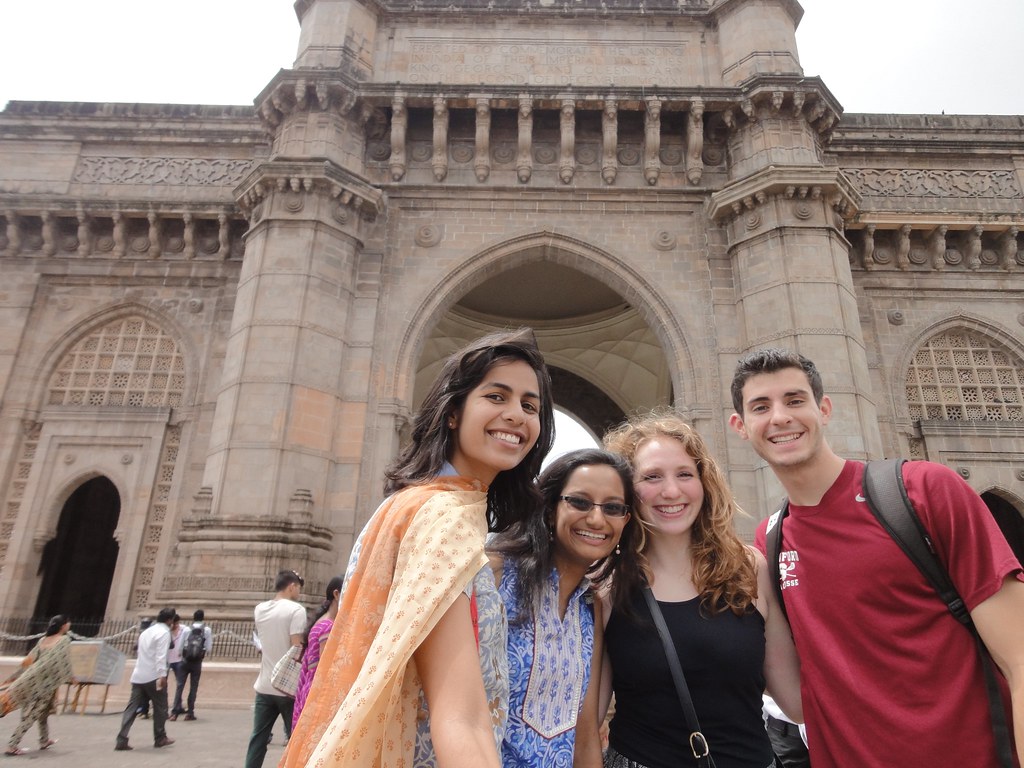
Four Stanford students embraced this savory sensory overload while navigating the labyrinthine Indian health-care system during seven weeks of research in the poor communities outside the financial capital, Mumbai, this summer.
“I think this experience has just hammered into me that it’s a very diverse country with a range of experiences,” said Lina Vadlamani, a Human Biology major just starting her senior year. “As one pharmaceutical owner said to us, ‘India might be poor — but the Indian people are not.’ There’s just so much going on here.”
One day they whizzed by bright Bollywood movie posters in belching auto-rickshaws and gaped up at Antilia, the 27-story mansion of a business tycoon considered the world’s most expensive home after Buckingham Palace.
The next, the students were talking to mothers of one Dalit community — members of the so-called “untouchable” Hindu caste — in the slums on the outskirts of Mumbai. They sat on the floor of a one-room community center taking notes as the women told them about their struggles to get access to medicine and doctors.
And yet another day, the students and their Indian colleagues and translators crouched in a small stucco pharmacy in the heat and humidity of the monsoon season while talking to a doctor about the procurement of traditional medicines.
The three Stanford seniors and one School of Medicine student were tracking access to health care, the quality of that care, and the way pharmaceutical networks impact medical practices in India. The Stanford India Health Policy Initiative fellows saw for themselves that the world’s largest democracy has become a microcosm of humanity’s bustling economic prosperity and yawning stretches of poverty.
“I think Mumbai is the place to see the extremes of inequality,” says Mark Walsh, an Economics major starting his senior year and a coterm who already has a Master’s in Public Policy with a focus on international development. “I’m just trying to think about how some of this great prosperity can be applied to the health problems that are affecting some of the most disadvantaged members of Indian society.”
Hadley Reid, another HumBio senior, and Pooja Makhijani, who just began her second year at the Stanford School of Medicine, are the other fellows. The students spent six days a week in the field for seven weeks and then would debrief one another every night back in their rooms on what they had learned that day.
“I’ve always thought I might be interested in doing international field work,” said Reid. “And I thought this fellowship would be a good way to experience that and see what’s really happening on the ground versus what you learn in the classroom.”
Navigating the three medical practices in India
Grant Miller, an associate professor of medicine and core faculty member at the Center for Health Policy/Center for Primary Care and Outcomes Research, directs the India Health Policy Initiative. The program, now in its third year, aims to work on the ground to identify obstacles to health-care delivery in the South Asian nation.
Miller gave the four fellows a mission: Spend your summer investigating the pharmaceutical networks that cater to the three main branches of Indian medicine:
The more mainstream Western practice of allopathy;
The traditional AYUSH system of medicine: ayurveda, yoga, unani, siddha and homeopathy.
And the large network of providers who have no formal medical training.
“The fellowship has two objectives,” said Miller, also a senior fellow at the Freeman Spogli Institute for International Studies. “One is to develop a nuanced, on-the-ground understanding of the practical realities that often cause otherwise promising health programs in India to fail. The other is to provide in-depth, non-clinical field experience to Stanford students interested in global health.”
Nomita Divi, program manager of the initiative, said the fellowship is designed to be demanding. During the preparatory spring quarter, the students brainstormed with a design-thinking expert about how to formulate their research and work toward specific goals. When the students return to Stanford later this month, they will focus on unpacking and analyzing the data and then writing a full report.
“Our aim is to expose students to the realities of field research in India and provide them sufficient time to grasp the realities on the ground, as well as provide them with the tools to assimilate their observations into a final report,” said Divi.
When they arrived in Mumbai in early July, the fellows went through a week of training with Veena Das, the renowned social anthropologist from Johns Hopkins University who is on the executive board of the New Delhi-based Institute of Socio-Economic Research on Development and Democracy (ISERDD). She taught the students how to conduct field research and compose discussion guides before they crossed the thresholds of more than 100 homes of patients and offices of physicians, pharmacists and drug wholesalers.
ISERDD is a nonprofit organization devoted to research on social and economic issues and is the leading partner of the Stanford initiative, providing decades of qualitative and quantitative data sets as well as field researchers who worked alongside the students all summer.
“Primary care in poor parts of India is centered around drugs,” Miller said. “This summer, our fellows focused on the relationship between pharmaceutical suppliers and health providers, many of whom work in the informal sector — that is, they lack formal clinical training of any kind.”
Only 1.3 percent of India’s GDP was devoted to public health in 2014, one of the lowest rates in the world, according to the World Bank. India still accounts for 21 percent of the world’s burden of disease, yet the amount of public funds India invests in health care is quite small compared to other emerging economies.
Most of the cost of health care falls to the patient in India, where 86 percent of the 1.2 billion people must pay for health care and medications on their own. While the private sector caters to Indians who can pay, the poor are left to rely on the often less-than-optimal public health care system and a network of family and friends.
Unproductive spending and corruption also cripple the system.
Image
In the Field
Jaya Jadhav, a young mother in the Dalit community, explained to the students that they rely on a government nurse who comes once a month to hand out paracetamol. They have no local doctor to treat the more serious cases of typhoid and malaria, so must travel to the next settlement to see a doctor.
The women also turn to poorly trained practitioners who purchase wholesale drugs from small manufacturers and dispense these cheaper, unlabeled and often diluted pills to their patients.
As the students interviewed the women, a dozen children sat on the floor eating government-donated puffed rice and boiled gram from tiffin pots; mothers nursed beneath their saris and politely answered questions. At the end, the women asked shyly if the Stanford students had any medications they could share.
The students explained they were not doctors, but hoped that learning about the women’s daily lives would help them with their findings.
“Well, if it will one day benefit the women in the area, then this exchange of ideas about health is a good thing,” says Jadhav.
But the students weren’t always so sure.
“One of the things that I’m struggling with is the frustration of being able to do so little for these people, who basically have nothing but are ready to give us all their time,” says Makhijani, an American whose parents are from Mumbai. “But I realize I have the potential to be able to do that in the future, so I’m considering coming back to work here one day.”
Hoping for Results
Vadlamani — one of the HumBio majors who this fall also begins the Department of Medicine’s new coterm Master’s Program in Community Health and Prevention Research — applied for the fellowship because of its emphasis on field work.
““It makes us feel like detectives in a way,” said Vadlamani, who was born in the southern India city of Hyderabad and moved to the States with her parents when she was an infant. “I hope we would leave this experience with a couple of concrete areas that need to be focused on that would, down the road, lead to a policy change.”
Reid also believes their summer-long research will yield results.
“I’m not saying we’re painting the broadest, most accurate picture of the situation in India,” she said. “I know we’re taking a very small sample outside of Mumbai. But the hope is our findings will decrease some of the obstacles to effective policymaking for the health care system in India one day.”
Some of the key trends the students observed include the murky government regulations on certain classes of drugs, and the lack of knowledge about the current restrictions of antibiotic and steroid use among AYUSH doctors.
And compounding communicable diseases, such as tuberculosis and HIV/AIDS, Indians are increasingly suffering from non-communicable diseases as well.
“That’s happening across the developing world, these chronic lifestyle diseases such as diabetes and hypertension,” said Walsh. “And these families aren’t used to having to deal with these kinds of chronic diseases.”
The rural poor cannot afford to see a primary care physician who would school them in lifestyle changes to fight a potentially deadly disease such as diabetes.
And those who can afford a doctor in rural India often can’t find one.
India currently has some 840,000 doctors, or about seven physicians for every 10,000 people, according to the World Health Organization. That compares with about 25 in the United States and 16 in India’s economic rival, China.
The doctors the students did meet were generally overworked and struggling to keep up with all their patients and the shifting laws and regulations. But the students were forced to let go of some of their preconceived notions.
“Although there’s definitely a lot of gaps in knowledge, I’ve been surprised at how much doctors do know and how well trained they are,” said Makhijani, who often visits family in Mumbai, but had never ventured out into the poorer communities where her grandfather once ran a government hospital.
“I’ve never had such personal interactions with people living in the slums, with the doctors who are working here,” she said. “It really turns your perspective around, how resilient and creative they are.”
An Honor and Duty
Dr. Masood Ahmed Khan, a physician and pharmacist, spent nearly two hours with the students, with no prior knowledge that they would show up at his door and pepper him with questions about how he runs his unani practice.
When asked why he would give so much of his time, he said it was his “honor and duty” to help the students better understand the ups and downs of his medical community in one of the poor Muslim corners of Mumbai.
Dr. Khan then bid farewell with a cup of masala chai and this advice as they embark on their careers: “Go with empathy, go with humanity — and go with humility.”
View the photo gallery by clicking here or on the arrows below:
Beth Duff-Brown is the communications manager for the Center for Health Policy/Center for Primary Care and Outcomes Research. She joined the students in Mumbai for a week to blog about their research. You can read the blog postings here.
Hero Image
A young boy in an impoverished Dalit community on the outskirts of Mumbai. | Beth Duff-Brown