FSI’s researchers assess health and medicine through the lenses of economics, nutrition and politics. They’re studying and influencing public health policies of local and national governments and the roles that corporations and nongovernmental organizations play in providing health care around the world. Scholars look at how governance affects citizens’ health, how children’s health care access affects the aging process and how to improve children’s health in Guatemala and rural China. They want to know what it will take for people to cook more safely and breathe more easily in developing countries.
FSI professors investigate how lifestyles affect health. What good does gardening do for older Americans? What are the benefits of eating organic food or growing genetically modified rice in China? They study cost-effectiveness by examining programs like those aimed at preventing the spread of tuberculosis in Russian prisons. Policies that impact obesity and undernutrition are examined; as are the public health implications of limiting salt in processed foods and the role of smoking among men who work in Chinese factories. FSI health research looks at sweeping domestic policies like the Affordable Care Act and the role of foreign aid in affecting the price of HIV drugs in Africa.
Jeremy Goldhaber-Fiebert, PhD, is a Professor of Health Policy, a Core Faculty Member at the Center for Health Policy and the Department of Health Policy, and a Faculty Affiliate of the Stanford Center on Longevity and Stanford Center for International Development. His research focuses on complex policy decisions surrounding the prevention and management of increasingly common, chronic diseases and the life course impact of exposure to their risk factors.
After registering, you will receive a confirmation email containing information about joining the meeting.
Maria Polyakova, PhD, is an Assistant Professor of Health Policy at the Stanford University School of Medicine. Her research investigates questions surrounding the role of government in the design and financing of health insurance systems. She received a BA degree in Economics and Mathematics from Yale University, and a PhD in Economics from MIT.
After registering, you will receive a confirmation email containing information about joining the meeting.
Maya Rossin-Slater is an Associate Professor of Health Policy at Stanford University School of Medicine. Rossin-Slater’s research includes work in health, public, and labor economics. She focuses on issues in maternal and child well-being, family structure and behavior, and policies targeting disadvantaged populations in the United States and other developed countries.
After registering, you will receive a confirmation email containing information about joining the meeting.
Rebecca Staiger, PhD, is a health policy researcher and a postdoc in the School of Medicine at Stanford University. Her research combines approaches from healthcare economics, health policy, and health services research to better understand how vulnerable patients access and experience healthcare, particularly through their relationships with providers.
After registering, you will receive a confirmation email containing information about joining the meeting.
Encina Commons,
615 Crothers Way, Office 188,
Stanford, California 94305-6006
(650)723-2727
0
asabety@stanford.edu
Assistant Professor, Health Policy
Faculty Fellow, Stanford Institute for Economic Policy Research
adrienne_sabety.jpg
PhD
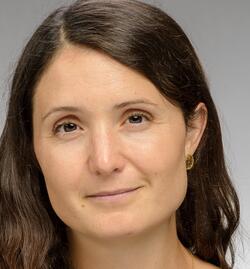
Adrienne Sabety, PhD, is an Assistant Professor in the Department of Health Policy at the Stanford University School of Medicine. Sabety's research focuses on healthcare and social determinants of health. She received a BA in Economics from UC Berkeley and her PhD in Health Policy from Harvard University.
Perry Nielsen Jr is a Master’s Student in Health Policy at Stanford University. Originally from Colorado, Perry got his Bachelor’s degree in Biochemistry from the University of Florida (Go Gators!) graduating Cum Laude and as a Truman Finalist. During his time in university, he volunteered in the pediatric immunocompromised unit at Shands Hospital and planned service events with local Gainesville nonprofits like Climb for Cancer and Footprints: Buddy and Support Program. He did quality assurance research in the Congenital Heart Center which led him to win 3rd place for original research at a regional Southeast research conference. He also interned at the Colorado Medical Society, where he helped draft a statewide physician counseling program for clinicians facing distress.
Perry is passionate about common sense healthcare reform and the accessible translation of medical research to clinical practice. In his free time, he enjoys meeting local coffee roasters and exploring the vintage fashion scene. Most of all, he’s excited to wander the west coast of the United States and appreciate all the natural beauty of the Bay Area.
Valeria Gracia Olvera (she/her) is a Health Policy PhD student in the Decision Sciences track and a Fulbright scholar. Prior to starting her PhD at Stanford in 2022, she worked as a research assistant at the Center for Research and Teaching in Economics (CIDE) in Mexico. In 2020, she joined the Stanford-CIDE COronavirus Simulation MOdel (SC-COSMO) (https://www.sc-cosmo.org/) consortium where she worked on high-impact projects to estimate the health effects of nonpharmaceutical interventions to control the spread of the COVID-19 epidemic in Mexico. Additionally, as a member of the Cancer Intervention and Surveillance Modeling Network (CISNET), Valeria worked on a project to model HPV transmission and cervical cancer disease at a state level in the United States. Her research interest is identifying cost-effective air pollution mitigation strategies to support decision making. Valeria holds a bachelor’s degree in Environmental Engineering from Autonomous University of San Luis Potosi (UASLP) in Mexico, a Diplôme d’ingénieur from École Centrale Paris in France, and a master’s degree in Environmental Economics from CIDE.
In support of improving patient care, Stanford Medicine is jointly accredited by the Accreditation Council for Continuing Medical Education (ACCME), the Accreditation Council for Pharmacy Education (ACPE), and the American Nurses Credentialing Center (ANCC), to provide continuing education for the healthcare team. To view the credit designation, disclosure summary and claim credit after viewing all course content, please view the activity page.
Stanford Medicine's new Department of Health Policy held its inaugural departmental symposium on October 6, convening thought leaders and experts in medicine, law, economics and data science. Speakers discussed innovative policy work and scalable solutions for improving health equity. Panelists addressed how to reduce persistent health disparities from three angles: social determinants of health, technology and innovation, and access and affordability.
Discover the powerful role health policy can serve in ensuring the health of all people, not just a privileged few.
***
Keynote Speaker: Kirsten Bibbins-Domingo, PhD, MD
Talk Title: Building Equity in the Research Enterprise
Editor in Chief, Journal of the American Medical Association (JAMA) and JAMA NetworkProfessor of Epidemiology & Biostatistics and Medicine, University of California, San Francisco
Remarks
Terrance Mayes
Associate Dean for Equity and Strategic Initiatives;
Executive Director of the Commission
On Justice and Equity at Stanford Medicine.
In support of improving patient care, Stanford Medicine is jointly accredited by the Accreditation Council for Continuing Medical Education (ACCME), the Accreditation Council for Pharmacy Education (ACPE), and the American Nurses Credentialing Center (ANCC), to provide continuing education for the healthcare team.
Credit Designation American Medical Association (AMA) Stanford Medicine designates this live activity for a maximum of 4.0 AMA PRA Category 1 CreditsTM. Physicians should claim only the credit commensurate with the extent of their participation in the activity.
Issa Sylla is an MBA and MS Health Policy candidate at the Darden School of Business and Stanford University, respectively; he holds a Bachelor of Arts from Dartmouth College. Passionate about health equity, he is interested in exploring the intersection of health economics and policy, social determinants, and outcomes.
Prior to graduate school, Issa worked as a Research Engineer at IBM's Center for Computational Health, publishing in the areas of clinical events prediction models, simulation and network models, and algorithmic fairness. While at IBM, Issa lived in Kenya in 2019 and 2021 working with providers and educators to open a medical clinic in Kiambu and provide resources to vulnerable children in Kericho. Today, Issa serves on the Board of Directors of NAD Partnership, advising on the integration of health, education, and community services in Labé, Guinea.
Issa is originally from Conakry, Guinea, and in his free time he enjoys reading East Asian comics and learning about Sub-Saharan African cultures through visual arts, including paintings and dances.
Dr. Ramzi Dudum is a cardiovascular medicine fellow at Stanford. Prior to Stanford, he received his MD at the George Washington University School of Medicine and Health Sciences and his MPH at Johns Hopkins Bloomberg School of Public Health. He trained in the Osler Residency internal medicine program at Johns Hopkins and conducted research in cardiovascular prevention, screening, and risk-prediction. He is excited to pursue a career in academic cardiology focusing on ASCVD risk prediction and the implementation of practices and systems that reduce the morbidity and mortality of this disease.