Health and Medicine

FSI’s researchers assess health and medicine through the lenses of economics, nutrition and politics. They’re studying and influencing public health policies of local and national governments and the roles that corporations and nongovernmental organizations play in providing health care around the world. Scholars look at how governance affects citizens’ health, how children’s health care access affects the aging process and how to improve children’s health in Guatemala and rural China. They want to know what it will take for people to cook more safely and breathe more easily in developing countries.

FSI professors investigate how lifestyles affect health. What good does gardening do for older Americans? What are the benefits of eating organic food or growing genetically modified rice in China? They study cost-effectiveness by examining programs like those aimed at preventing the spread of tuberculosis in Russian prisons. Policies that impact obesity and undernutrition are examined; as are the public health implications of limiting salt in processed foods and the role of smoking among men who work in Chinese factories. FSI health research looks at sweeping domestic policies like the Affordable Care Act and the role of foreign aid in affecting the price of HIV drugs in Africa.

Authors
Beth Duff-Brown
News Type
News
Date
Paragraphs

Global warming and more days of extreme heat are exacerbating the health risks of pregnancy, particularly among African-American women, according to new Stanford-led research.

The maternal mortality rate among all women in the United States is already the worst of any industrialized nation. And black women are three to four times more likely to die from pregnancy-related problems than white women.

“It is truly a crisis that in America, one of the wealthiest countries in the world, more women are dying from pregnancy or childbirth complications than in any other developed country,” said Maya Rossin-Slater, a core faculty member at Stanford Health Policy and a faculty fellow at the Stanford Institute for Economic Policy Research.

In a new working paper published by the National Bureau of Economic Research, Rossin-Slater and two other health economists underscore how little research is out there about the impact of rising temperatures on the health of mothers and their newborns.

Pregnant women, for example, are not able to regulate body temperature as efficiently as non-pregnant individuals due to the physiological changes they undergo during gestation. Heat exposure can alter blood flow in the placenta, which can weaken the placenta and lead to complications. And high heat can lead to other pregnancy complications, such as hypertension, preeclampsia and prolonged premature rupture of membranes.

“All of these issues can translate into women needing to be hospitalized during pregnancy and experiencing complications during childbirth,” wrote Rossin-Slater, an assistant professor of health research and policy at Stanford Medicine. Her co-authors are Jiyoon Kim, assistant professor of economics at Elon University, and Ajin Lee, an assistant professor of economics at Michigan State University.

The researchers said most of the discussion about maternal health focuses on the health-care system, but that other determinants of poor maternal health and racial disparities are much less understood, particularly when it comes to how the environment is impacting pregnancy.

So they launched what they believe is the first study to identify the causal effects of prenatal exposures to extreme temperatures on the health of the mothers themselves.

As the Earth Warms, So Does Exposure to Extreme Heat

Their paper focuses on an environmental factor that is becoming increasingly relevant due to the growing consensus that climate change is contributing to a gradual warming of the earth: exposure to extreme heat.

The researchers studied the effects of exposure to extreme temperatures during pregnancy on maternal and child hospitalizations, using inpatient discharge records from three U.S. states with different climates: Arizona, New York and Washington. Their data comes from the State Inpatient Databases from the Healthcare Cost and Utilization Project, including 2.7 million inpatient records of 2.7 million infants and 2.2 million mothers in those three states.

And to measure temperature exposure, the researchers obtained data from the National Oceanic and Atmospheric Administration (NOAA).

For every county in their data, the researchers calculated the average temperature for every month. Then for every given day in a specific month in that county, they looked at the historic average for how high or low that day’s temperature was relative to the overall temperature in that month in that county.

For example, a 90-degree day in Arizona in September would not be classified as extreme heat since it’s relatively common. But a 90-degree day in New York would be, since temperatures that high are much less common. They classified “extreme heat” as a given day when the temperature is more than three standard deviations (3SD) above that historic county mean.

Then, they compared the outcomes of women who are of the same race giving birth in the same county and calendar month, but in different years. These women are likely similar in terms of their demographics and socioeconomic status, but may be exposed to different temperatures during pregnancy. For example, consider a black woman giving birth in November 2011 in Queens County, New York, and a black woman giving birth in November 2012 in the same county. If there were a heat wave in Queens in the August 2012, then the latter woman is exposed to more extreme heat during pregnancy than the former. 

The economists found that each additional day with heat that is at least 3SDs — or substantially higher than the historic county-month average — during the second trimester of pregnancy increases the likelihood that a newborn is diagnosed with dehydration by .008 percentage points.

“Our results provide new estimates of the health costs of climate change and identify environmental drivers of the black-white maternal health gap,” they wrote. “Understanding the health consequences of this increase in extreme heat is critical information for discussions about the costs of climate change and the possible benefits of mitigating policies.”

The researchers found that each additional day of extreme heat exposure during pregnancy increases black women’s likelihood of hospitalization during pregnancy. Since black women on average are exposed to more extreme heat than white women — due to different residence patterns and access to mitigating technologies like air conditioning — extreme heat may contribute to exacerbating the already large gap in maternal health between black and white women.

Detrimental Consequences of Rising Temperatures

Scientists predict global average temperatures will continue to rise over the next 50 to 100 years as greenhouse gases continue to trap more heat in the Earth’s atmosphere. The U.N. Intergovernmental Panel on Climate Change last year warned that nations worldwide must quickly reduce fossil fuel use to keep the rise in global temperatures below 1.5°C by 2050. 

The panel also said the number of days with mean temperatures above 32°C in the average American county is forecasted to increase from about 1 to 43 days per year by 2070-2099.

That could have detrimental consequences for babies and mothers alike.

“Overall, our findings on infant health suggest that exposure to extreme heat during the second trimester increases the likelihood of the baby being dehydrated at the time of birth,” the researchers wrote. “This, in turn, appears to increase the likelihood of subsequent readmission to the hospital many months later for causes linked to dehydration.”

And these impacts are typically missed when researchers only measure infant health using more standard variables, such as birth weight.

The authors note dehydration is one of the leading causes of morbidity and mortality in children. Studies show that children under 5 years old who have an average of two episodes of gastroenteritis associated with dehydration per year leads to 2 to 3 million pediatric office visits and accounts for 10% of all pediatric hospital admissions in the United States. 

Experts believe black women are three- to four-times more likely to die from pregnancy-related causes due to lack of access to and the poor quality of health care, as well as clinicians not monitoring black women as closely — or actually dismissing their symptoms altogether.

“The fact that the adverse impacts on health during pregnancy are larger for black than for white mothers suggests that climate change may exacerbate the already large racial gap in maternal health,” the researchers said.

Hero Image
gettyimages thermometer Getty Images
All News button
1
News Type
News
Date
Paragraphs

Stanford Medicine has announced a merger of its Division of Health Services Research from the Department of Health Research and Policy with the Center for Health Policy and the Center for Primary Care and Outcomes Research — joining together the School of Medicine’s leading researchers in the field of health policy.

The three centers have all been under the Stanford Health Policy umbrella for several years — CHP is a part of the Freeman Spogli Institute for International Studies and PCOR is a division in the Department of Medicine. The faculty will now all sit under one roof at Stanford Health Policy’s newly renovated offices in Encina Commons.

“On behalf of CHP/PCOR, I want to say how delighted we are to be coming together as one health policy unit,” said Douglas K. Owens, the director of both centers. “We very much look forward to further strengthening our ongoing collaborations in research and training, and the merger will provide great opportunities for synergy.”

Loren Baker, who worked with Kate Bundorf to lead the efforts at the Division of Health Services Research, called the melding of the faculty “a real opportunity to build on the strengths Stanford has in health policy,” and said it would position Stanford Health Policy faculty for further success in their research and education programs.

“We’ve had a long history of working together and we hope that this will lead to more and better opportunities to do that going forward,” Baker said.

Owens said he wanted to thank Loren and Kate “for their terrific leadership as we have worked out how to bring our groups together,” as well as the Dean’s Office, the Department of Medicine, and FSI for their support and guidance.

Hero Image
dougloren
Doug Owens and Loren Baker welcome new fellows, faculty and PhD students to the fall welcome lunch at Stanford Health Policy.
Francesca Apalis
All News button
1

Age- and Time-trend in heavy drinking among Chinese Men: Modeling Approach
Kyu Lee, MS

Pre-Doctoral Student, Stanford Health Policy
Advisor: Jeremy Goldhaber-Fiebert, PhD

Kyueun is a PhD student in the Department of Health Research and Policy at Stanford University. She received her BS in Life Science from Pohang University of Science Technology, South Korea in 2012. During her training in basic science, she participated in a medical research to evaluate the efficacy of anti-cancer drug targeting ovarian cancer. After the graduation, she discovered her interest in the health policy and studied health services and research at the University of Minnesota during her MS degree. Prior to joining Stanford University, Kyueun worked as an research assistant at Harvard Center for Health Decision Science. She has worked on projects related to evaluating cervical cancer screening strategies in developing countries.

CHP/PCOR Conference Room
Encina Commons, Room 119
615 Crothers Way, Stanford, CA 94305

Seminars
Authors
News Type
News
Date
Paragraphs

Women are underrepresented in the economics profession, as recent research and the public spotlight have shown. But changes are afoot as both men and women in the field try to understand the scope of the gender gap.

At the Stanford Institute for Economic Policy Research (SIEPR), Faculty Fellow Maya Rossin-Slater is taking steps to address underlying factors of the disparity. In September, the economist and assistant professor in the School of Medicine held a mentoring workshop to assist women who are third-year economics PhD students — a pivotal point for doctoral candidates as they transition from mostly structured classes to independent research. Rossin-Slater is also a core faculty member at Stanford Heatlh Policy.

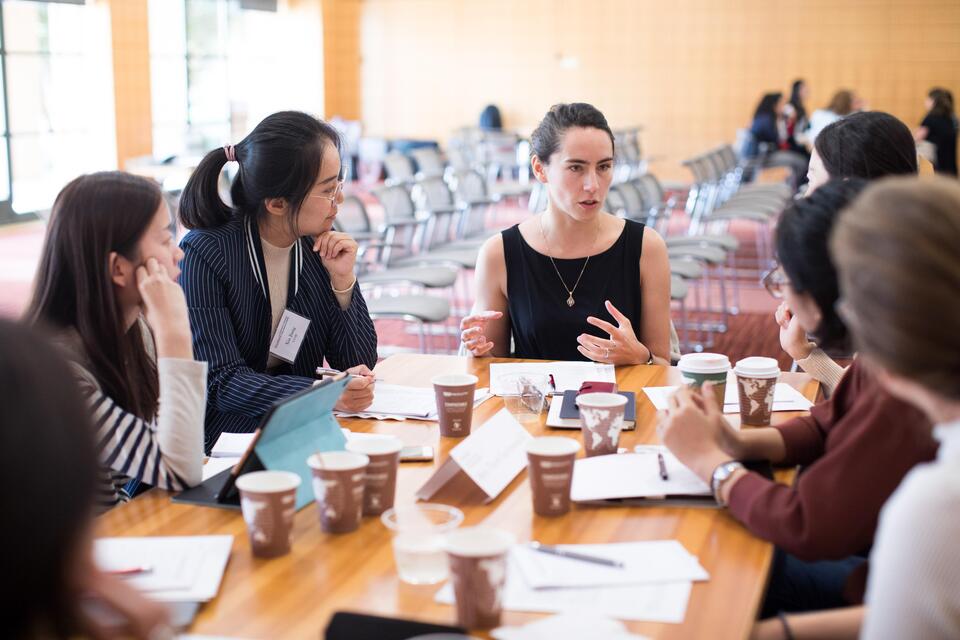
Part boot camp and part networking event, the daylong workshop brought together 28 graduate students from across California. Twice that many students had applied for the opportunity to practice insider skills, discuss their research interests, and get paired with a mentor.

The need for such an assist is clear, Rossin-Slater says. In the United States, women now have grown to account for about 60 percent of those who hold bachelor’s degrees. But in the discipline of economics, they constitute a steady 30 percent of the students. Meanwhile, other majors, such as math, have risen to a 48 percent share of women in recent years.

Image

“Economics is about a lot of different aspects of human behavior in society,” Rossin-Slater told the workshop participants. “And you cannot think about all kinds of questions unless you have a diverse set of people doing the research.”

“You, here, are part of the next generation of female economists who can help change the profession.”

Females who are underrepresented in the economics arena — while getting their degrees or later, while working — face a variety of systemic barriers, Rossin-Slater said. And they may be at a particular disadvantage, lacking female peers, role models or mentors in their own departments and networks.

The mentoring workshop at Stanford sought to begin addressing that problem for graduate students and will hopefully catalyze similar initiatives elsewhere.

“You should continue to do the research that you are doing, and be excited about it. Be confident. Do economics,” Rossin-Slater told the participants. “As you see here today, women research every possible field.”

Mentors participating in the inaugural workshop included female economists working at think tanks and university professors — including SIEPR Faculty Fellow Maria Polyakova — focusing on applied economics, microeconomics and macroeconomics.

In organizing the workshop, Rossin-Slater said she had thought about challenges she herself had faced as a third-year PhD student, and she modeled it after a successful workshop that the American Economic Association’s Committee on the Status of Women in the Economics Profession hosts for female assistant professors. Rossin-Slater is slated to talk about the female PhD workshop at the annual AEA conference in January.

The September event at Stanford featured a mix of informative sessions — on topics, such as, “How do you ‘do research’?” — as well as practice exercises. Participants worked through hypothetical but common scenarios — What should you do, say, if you’re interrupted during your presentation at a seminar, and challenged about your research?

SIEPR, along with the National Science Foundation, funded Rossin-Slater’s workshop.

"With the mounting body of evidence that the economics culture can be unwelcoming to women and minorities, it is great to see our faculty taking concrete steps to counteract this environment and broaden the pipeline of candidates who can make important contributions to the field,” said SIEPR Deputy Director Gopi Shah Goda.

“SIEPR is proud to support such efforts, as they are perfectly aligned with our goal of cultivating the next generation of economic policy scholars.”

 
Hero Image
maya cropped
All News button
1
1
shirawinter.jpg PhD, RN, FNP-BC

Shira Winter is a Health Services Research and Development Fellow at the VA Palo Alto Health Care System in conjunction with the Stanford University School of Medicine.  She completed her PhD in nursing with a concentration in health policy at the University of California, San Francisco, as a Robert Wood Johnson Foundation Future of Nursing Scholar.  She holds a B.A. in Modern Middle Eastern Studies from Yale University, and a BSN and MSN in the family nurse practitioner specialty from the MGH Institute of Health Professions.


Shira's research interests include the implementation of population health initiatives and the evolving role of the nursing workforce.  Her prior work has explored the role and contribution of nurse practitioners in ambulatory specialty care in the context of value-based care.

VA HSR&D Fellow, CHP/PCOR
AcademyHealth Delivery System Science Fellow
CV
1
megha_shankar.jpg MD

Megha Shankar is a health services research fellow at the Palo Alto VA and CHP/PCOR at Stanford. She completed her undergraduate degree in anthropology and biology at the University of Chicago, medical school at the University of Illinois at Chicago College of Medicine, and internal medicine residency at the University of Washington.

Research Fellow
1
fernandarossi.jpg PhD

Fernanda S. Rossi is a postdoctoral research fellow at the Stanford University School of Medicine as well as at the VA Palo Alto Health Care System Center for Innovation to Implementation. She received her Ph.D. from the Clinical Science program at Indiana University-Bloomington and completed her clinical psychology predoctoral internship at VA Palo Alto Health Care System (2017-2018). Her research interests focus broadly on examining the mental health care utilization of women veterans and on using technology to enhance intimate partner violence prevention, identification, and intervention.

Post-doctoral Research Fellow

Twitter: @StacieVilendrer

0
stacie_vilendrer_md.png MD, MBA
Stacie grew up in Minnesota where she decided to become a physician after watching her grandfather survive metastatic cancer with the support of his medical team. She honored in Human Biology at Stanford, where her senior thesis investigated community beliefs around childhood malaria in rural Tanzania. She continued to pursue global health work with nonprofits in India and Tanzania prior to medical school that sought to scale the capacity of health worker training programs.   Stacie returned to Stanford School of Medicine to complete her medical degree where she focused on cost-effectiveness research for a genetic screening tool. Recognizing the increasing importance of market dynamics in healthcare delivery, Stacie also chose to pursue her MBA at the Graduate School of Business where she gained additional experience in the private sector with Medtronic and McKinsey & Company. Stacie completed her medical training at UCSF-affiliate Santa Rosa Family Medicine and is a practicing board-certified family physician. She is currently pursuing the Stanford-Intermountain Fellowship in Population Health Sciences.    Stacie’s current research seeks to bring rigorous methodologies to answer those questions most relevant to the hospital C-suite: How to effectively manage physicians and other healthcare workers? How to achieve the quadruple aim of improving patient outcomes, lowering cost, and improving the physician and patient experience? How to transition from a fee-for-service to a value-based health system? Her work is based in implementation science, using quantitative and qualitative methodologies to answer the above questions. Her ongoing projects relate to physician incentives, physician burnout, policy impacts on population health, corporate benefit management strategies, medical assistant turnover, and social determinants of health.
Stanford/Intermountain Fellow, PCPH
1
personal_crop.png MD

Vishal Duggal is a current postdoctoral fellow in Medical Informatics at CHP/PCOR and the Center for Innovation to Implementation at the VA Palo Alto Health Care System.


He received a B.S. in Molecular Biology at Johns Hopkins University and a M.D. from the University of Maryland School of Medicine. He trained in Internal Medicine at Rutgers New Jersey Medical School, and completed a fellowship in Nephrology at Stanford University School of Medicine.


He is interested in building clinical decision support tools and risk stratification for identifying patients in need of higher intensity care.

VA Informatics Fellow, Health Plolicy
CV
1
PhD Student Alumni, Health Policy
matthew_kaufmann.jpeg MHS

Matt Kaufmann is a Health Policy PhD student in the Decision Sciences track. Prior to joining Stanford in 2019, he worked as an economist in the Public Health Economics Program at RTI International conducting economic evaluations in areas such as diabetes, pediatric asthma, family planning, and more. He holds a bachelor’s degree in Finance and Business Economics from the University of South Carolina and a master’s degree in Health Economics from the Johns Hopkins University Bloomberg School of Public Health.

Subscribe to Health and Medicine