Civil Wars
Authors
News Type
News
Date
Paragraphs


The two-day forum, part of a project of the American Academy of Arts and Sciences, led by the Freeman Spogli Institute’s Karl Eikenberry and Stephen Krasner, gathered experts to examine trends in civil wars and solutions moving forward.   


Image
Attendees at a two-day forum, part of a project of the American Academy of Arts and Sciences

The Council on Foreign Relations presently tracks six countries in a state of civil war, including three (South Sudan, Afghanistan, and Yemen) where the situation is currently worsening. Furthermore, three states (Central African Republic, Myanmar, and Nigeria) are experiencing sectarian violence with the potential to become larger conflicts. With two months still remaining in 2018, the combined fatalities in Afghanistan, Syria, and Yemen alone is fast approaching 100,000 for the year.

It was against this backdrop that Shorenstein APARC’s U.S.-Asia Security Initiative (USASI), the American Academy of Arts and Sciences (AAAS), and the School for International Studies at Peking University recently co-hosted the security workshop “Civil Wars, Intrastate Violence, and International Responses.” Held in Beijing, on October 22-23, the workshop brought together thirty-five U.S. and international experts to gain a wider perspective on intrastate violence and consider the possibilities for, and limits of, intervention. The workshop is the latest activity of the AAAS project on Civil Wars, Violence, and International Responses, chaired by Ambassador Karl Eikenberry, director of USASI, and by Stephen Krasner, senior fellow at the Freeman Spogli Institute for International Studies (FSI) and professor of international relations.

“Some of the major discussion topics included the appropriate political and economic development models to apply to fragile states recovering from internal conflict, justifications for intervention, and the likely impact of great power competition on the future treatment of civil wars." - Karl Eikenberry

Workshop participants included academics and professionals with expertise in political science, global health, diplomacy, refugee field work, United Nations, and the military. Countries represented at the table included the United States, Ethiopia, France, and China. Throughout the two-day session, they examined three crucial questions: What is the scope of intrastate conflicts and civil wars, and to what extent is it attributable to domestic or international factors? What types of threats to global security emanate from state civil wars? What policy options are available to regional powers and the international community to deal with such threats?


Image
USASI Director Karl Eikenberry addresses one of the sessions

USASI Director Karl Eikenberry addresses one of the sessions

China’s Emerging Role in Addressing Intrastate Violence

The workshop’s timing and location was prescient. Over the past two decades, China’s global exposure–through trade, investment, and financing–has increased dramatically. Coupled with a growing number of its citizens living abroad, China’s equity in other states has reached the point where it has a direct interest in those experiencing or are at risk of political instability and internal violence. Indeed, through its ambitious Belt and Road Initiative, China has the opportunity to help stabilize fragile states by stimulating economic development.

“The workshop revealed, at least for me, that China is backing away from its absolute defense of sovereignty and non-intervention,” said Stephen Krasner. “As Chinese interests have expanded around the world, and as both its investments and the number of its citizens living abroad have increased, the Chinese have become more concerned with political conditions in weakly governed countries.”

With China’s growing policy and academic interests in addressing civil wars and intrastate violence, as well as its higher international profile in places like United Nations peacekeeping operations, the Beijing event provided an excellent opportunity for Chinese experts to exchange views with their international colleagues.

Paul H. Wise, MD, MPH; Senior Fellow at Stanford Health Policy

Paul H. Wise, MD, MPH; Senior Fellow at Stanford Health Policy

Where We are Today, Where We Go Tomorrow

The Beijing workshop was arranged into four sessions, with themes focusing on trends in intrastate violence, the threats it poses to international security, the limits of intervention, and advice to policymakers.

Each panel included presentations of prepared papers, moderator comments, and an open discussion by all participants. A fifth and final session provided an opportunity to summarize the preceding discussions. The workshop then closed out with an open conversation, where participants offered insight and policy recommendations developed over the preceding two days of dialogue.

Image
Martha Crenshaw seated at round table
“The workshop,” observed Martha Crenshaw (shown above), a Senior Fellow at FSI, “was a unique opportunity to exchange views with Chinese colleagues on the subject of civil conflict in the contemporary world. A valuable learning experience for all of us."

The "Civil Wars, Intrastate Violence, and International Responses” workshop marks the second phase of the AAAS project by the same name that launched in 2015. The first phase of the project culminated in the publication of 28 essays across two volumes of the AAAS quarterly journal Dædalus. The ongoing second phase consists of a series of roundtables and workshops in which project participants engage with academics and with government and international organization officials to build a larger conceptual understanding of the threats posed by the collapse of state authority associated with civil wars, and to contribute to current policymaking. Project activities have included meetings with the United Nations leadership and staff; academic activities in the United States; sessions with the U.S. executive and legislative branches; and a visit to Nigeria.

Throughout the workshop, Chatham House Rule of non-attribution applied to all dialogue. A workshop report will be published by the co-hosts in early 2019.

The U.S.-Asia Security Initiative is part of Stanford University’s Walter H. Shorenstein Asia-Pacific Research Center (APARC). Led by former U.S. Ambassador and Lieutenant General (Retired) Karl Eikenberry, USASI seeks to further research, education, and policy relevant dialogues at Stanford University on contemporary Asia-Pacific security issues.

March 1, 2019 update: the workshop report is now available online. Download the report >> 
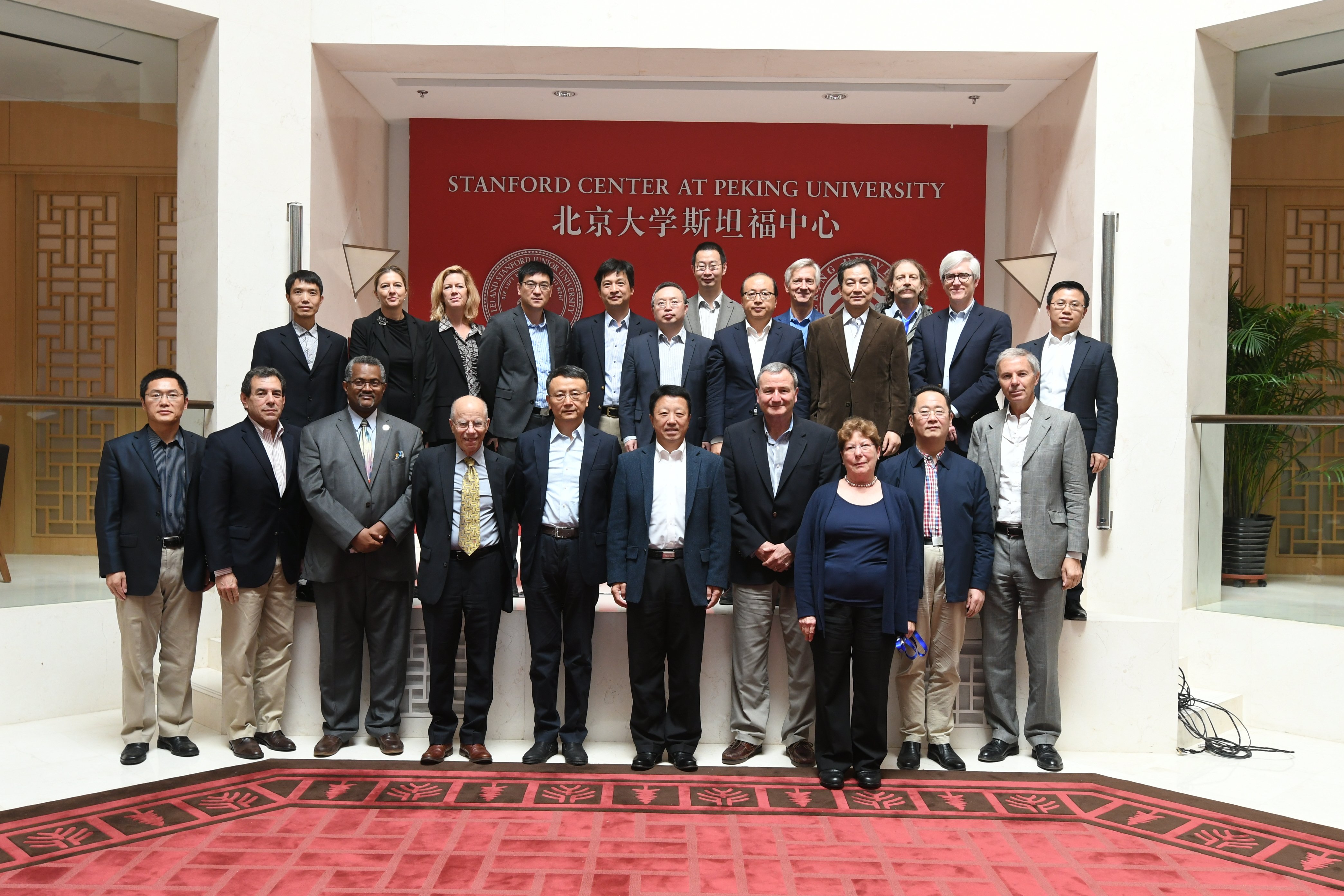
Group photo of Participants in the “Civil Wars, Intrastate Violence, and International Responses” workshop

Participants in the “Civil Wars, Intrastate Violence, and International Responses” workshop

Hero Image
Karl Eikeberry at Civil Wars, Intrastate Violence, and International Response Workshop
All News button
1
Authors
Beth Duff-Brown
News Type
News
Date
Paragraphs

More children die from the indirect impact of armed conflict in Africa than those killed in the crossfire and on the battlefields, according to a new study by Stanford researchers. 

The study is the first comprehensive analysis of the large and lingering effects of armed conflicts — civil wars, rebellions and interstate conflicts — on the health of noncombatants.

The numbers are sobering: 3.1 to 3.5 million infants born within 30 miles of armed conflict died from indirect consequences of battle zones between 1995 and 2005. That number jumps to 5 million deaths of children under 5 in those same conflict zones.

“The indirect effects on children are so much greater than the direct deaths from conflict,” said Stanford Health Policy's Eran Bendavid, senior author of the study published today in The Lancet.

The authors also found evidence of increased mortality risk from armed conflict as far as 60 miles away and for eight years after conflicts. Being born in the same year as a nearby armed conflict is riskiest for young infants, the authors found, with the lingering effects raising the risk of death for infants by over 30 percent.

On the entire continent, the authors wrote, the number of infant deaths related to conflict from 1995 to 2015 were more than three times the number of direct deaths from armed conflict. Further, they demonstrated a strong and stable increase of 7.7 percent in the risk of dying before age 1 among babies born within 30 miles of an armed conflict.

The authors recognize it is not surprising that African children are vulnerable to nearby armed conflict. But they show that this burden is substantially higher than previously indicated. 

“We wanted to understands the effects of war and conflict, and discovered that this was surprisingly poorly understood,” said Bendavid, an associate professor of medicine at Stanford Medicine.  “The most authoritative source, the Global Burden of Disease, only counts the direct deaths from conflict, and those estimates suggest that conflicts are a minuscule cause of death.”

Paul Wise, a professor of pediatrics at Stanford Medicine and a senior fellow at the Freeman Spogli Institute for International Studies, has long argued that lack of health care, vaccines, food, water and shelter kills more civilians than combatants from bombs and bullets. 

This study has now put data behind the theory when it comes to children.

“We hope to redefine what conflict means for civilian populations by showing how enduring and how far-reaching the destructive effects of conflict have on child health,” said Bendavid, an infectious disease physician whose co-authors include Marshall Burke, PhD, an assistant professor of earth systems science and fellow at the Center on Food Security and the Environment.

“Lack of access to key health services or to adequate nutrition are the standard explanations for stubbornly high infant mortality rates in parts of Africa,” said Burke. “But our data suggest that conflict can itself be a key driver of these outcomes, affecting health services and nutritional outcomes hundreds of kilometers away and for nearly a decade after the conflict event”. 

The results suggest efforts to reduce conflict could lead to large health benefits for children.

The Data

The authors matched data on 15,441 armed-conflict events with data on 1.99 million births and subsequent child survival across 35 African countries. Their primary conflict data came from the Uppsala Conflict Data Program Georeferenced Events Dataset, which includes detailed information about the time, location, type and intensity of conflict events from 1946 to 2016. 

The researchers also used all available data from the Demographic and Health Surveys conducted in 35 African countries from 1995 to 2015 as the primary data sources on child mortality in their analysis.

The data, they said, shows that the indirect toll of armed conflict among children is three-to-five times greater than the estimated number of direct casualties in conflict. The indirect toll is likely even higher when considering the effects on women and other vulnerable populations.

Zachary Wagner, a health economist at RAND Corporation and first author of the study, said he knows few are surprised that conflict is bad for child health.

“However, this work shows that the relationship between conflict and child mortality is stronger than previously thought and children in conflict zones remain at risk for many years after the conflict ends.” 

He notes that nearly 7 percent of child deaths in Africa are related to conflict and reiterated the grim fact that child deaths greatly outnumber direct combatant deaths.

“We hope our findings lead to enhanced efforts to reach children in conflict zones with humanitarian interventions,” Wagner said. “But we need more research that studies the reasons for why children in conflict zones have worse outcomes in order to effectively intervene.” 

Another author, Sam Heft-Neal, PhD, is a research fellow at the Center for Food Security and the Environment and in the Department of Earth Systems Science. He, Burke and Bendavid have been working together to identify the impacts of extreme climate events on infant mortality in Africa.

Hero Image
gettyimages sick baby
KYANGWALI, UGANDA - APRIL 06: A baby girl from Uganda suffering with cholera lies in a ward in the Kasonga Cholera Treatment Unit in the Kyangwali Refugee Settlement on April 6, 2018 in Kyangwali, Uganda. According to the UNHCR almost 70,000 people have arrived in Uganda from the Democratic Republic of Congo since the beginning of 2018 as they escape violence in the Ituri province. (Photo by Jack Taylor/Getty Images)
Getty Images
All News button
1
Authors
Beth Duff-Brown
News Type
News
Date
Paragraphs


Paul Wise watched as children ran around a playground attached to a health clinic at a displaced persons camp on the outskirts of Mosul — the northern city in Iraq once controlled by the Islamic State but now back in the hands of the Iraqi government.

The children had survived the Battle of Mosul, which had fallen to ISIS in 2014 but was retaken by the government forces and allied militias during a nine-month military campaign that ended in July. Many of the children suffer from physical and mental wounds and Wise wondered how they would recover with so little medical infrastructure.

Wise was part of a small delegation of physician-academics asked to evaluate a World Health Organization-led system to treat civilians injured in the Mosul fighting. Wise and his colleagues recently slipped into Mosul to visit field hospitals, review health care on the ground and determine whether there is a better way to distribute medical aid during armed conflict.

The visit left the Stanford Medicine professor of pediatrics and senior fellow at the Freeman Spogli Institute for International Studies with questions about health care, humanitarian ethics, and conduct of war: Are there better ways to deliver emergency medical care during the height of battle? How do relief workers maintain neutrality when embedded with government security forces? Has the system of financing humanitarian interventions — one that was essentially created during the Cold War — become dangerously outdated?

Answering these questions is the mission of a new health-and-security initiative at Stanford led by Wise, a core faculty member at Stanford Health Policy who has spent 40 years working to improve the health of children impacted by conflict. Much of his work has been in Guatemala through his Children in Crisis project, the first university-based program to address the needs of children in areas of unstable governance and civil war.

“In talking with the groups that are running these humanitarian efforts in Mosul, there was this uneasiness, this kind of disorientation with the way things are now,” said Wise. “It was a kind of recognition that humanitarian norms are changing, the health personnel and facilities are at greater risk; the financial gap between humanitarian need and humanitarian capability is growing; and the old way of financing humanitarian intervention is inadequate, archaic.”


An Interdisciplinary Approach

Wise believes academics are well suited to help resolve these humanitarian conundrums.

“So we are going to move ahead and try to bring all the players together to reconsider this global challenge. Here at Stanford, we have the capacity to draw upon remarkable resources,” he said.

The new biosecurity initiative led by Stanford Medicine physician and FSI senior fellow, David Relman, together with world-renowned political scientists, security specialists, computer scientists and health policy experts will “attempt to craft new strategies for the provision of critical services to populations affected by conflict and political stability.”

The initiative will collaborate with other institutions such as Johns Hopkins, UCSF, Harvard, and the American Academy of Arts and Sciences. It will also seek the engagement of partners committed to providing humanitarian services, including WHO, the U.N. High Commissioner for Refugees, Doctors Without Borders and the International Committee of the Red Cross.

“The voice of communities impacted by war should also be an essential element in this ambitious effort,” Wise said. “To break new ground, we’re going to have to do things differently; the health strategies need to take into consideration fundamental understanding of the political dynamics. But we have a special opportunity here at Stanford because we take an interdisciplinary approach.”

Children of War

Most of the children Wise saw will never be the same, he said, nor the humanitarian workers who risked their lives to treat them, their families, and fighters from all sides of the battle to oust the Islamic extremists from the city on the Tigris River.

“I look at these little kids with horrendous emotional trauma and PTSD, and I think to myself, it’s the collision of all these questions playing out within a 50-square-meter little playground,” he said. “It’s these broader, strategic and ethical questions that are really profound. And as a pediatrician who is dedicating the last phase of my career to these questions of security and the political dimensions — I have to engage on all of these levels. That’s not easy.”

Wise traveled with WHO officials, as well as Paul Spiegel, a physician who leads the Center for Humanitarian Health at Johns Hopkins Bloomberg School of Public Health; Adam Kushner, a trauma surgeon affiliated with Johns Hopkins; and Kent Garber, a surgical resident at UCLA and research associate at Johns Hopkins.


Image
mosul bike


Spiegel also believes academics are uniquely positioned to help assess the current system of responding to medical crises during conflict.

“I believe that we can bring objectivity and rigor to analyzing and evaluating important and innovative responses, such as the trauma response by WHO and others in Mosul,” Spiegel said. “Humanitarian organizations are often busy responding quickly to rapidly changing situations; they don’t always have the luxury of time to do what academic humanitarians can do.”

Making the two-hour drive from Erbil to Mosul in armored, bulletproof SUVs provided by the United Nations, they slipped into field hospitals to meet with Iraqi physicians and medical teams with the humanitarian agencies.

Wise, who was able to take a few photos and video on his smartphone, described the devastation on the ground, noting that not since the siege of Leningrad has a city of this size experienced such street-by-street fighting. In large parts of the city, virtually every building was bombed or bulleted. It will take years to clear the rubble and rebuild.

“It’s just a remarkable story of tragedy and resilience,” he said.

Image

Since the city was not long ago controlled by ISIS, the field hospitals are still surrounded by massive concrete barricades and tactical trucks stationed outside with mounted machine guns.

The team found that at the height of the battle for Mosul, there was tremendous pressure to treat injured civilians and discharge patients very quickly, due to the lack of medical infrastructure and personnel and the continuous wave of new injuries coming in.

“The charge for us was to evaluate the system and how well it worked, what ways could it be improved, how many lives that it saved,” Wise said. “One of the concerns, for example, was that in order to put in medical people that close to the frontline, you have to give them some kind of security. This raised issues among the humanitarians about their need for independence and neutrality, since you’re essentially embedding them with Iraqi security forces.”

Epidemiology and Ethics


“We are looking at the technical issues and the epidemiologic issues, but also dealing with the ethical issues and their implications,” he said.

They intend to write an internal report and then publish their findings in a major medical journal, to get the word out about the issue and gain support for ongoing collaborative work. They’re looking to partners like the American Academy of Arts and Sciences, which recently devoted an entire issue of its journal, Daedalus, to the factors and influences of contemporary civil war. One of the essays in that issue by Wise and his Stanford colleague, Dr. Michele Barry, who directs the Center for Innovation in Global Health, talks about the threat of a global pandemic as a potential byproduct of the 30 ongoing civil wars around the world.

“We’re trying to get the report completed quickly because the model of trauma care for civilians in Mosul is a new model and could be implemented in other combat areas, like the fighting in Syria and other places in Iraq,” Wise said.

Wise worries some see Stanford University as an insulated Silicon Valley institution in a beautiful setting and not always engaged in the real world.

“Well, this is about as engaged in the real world as you can get — this is Stanford moving and doing things out there, not just sitting around in seminar rooms. Sometimes you need to get close to the front lines to save lives,” he said.

When asked what surprised him during this trip to Mosul, Wise smiled.

“I’m sort of old and I’ve seen a lot of the world and not a lot surprises me anymore,” he said. “But it was a reminder of how desperate are the lives of millions of people — that we could do so much more. It’s a reminder of just how fragile physical security really is in this world."

Image
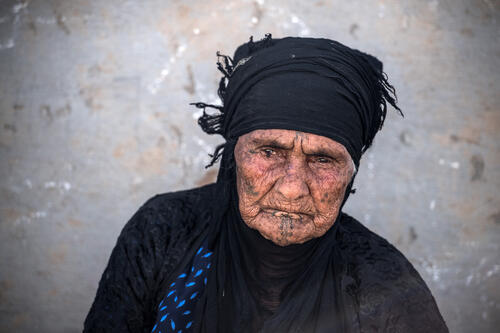
mosul old woman


Hero Image
mosul health
ERBIL, IRAQ — A Red Cross nurse from Sweden applies a dressing to a 3-year-old boy who was injured after an improvised explosive device (IED) detonated near him in Mosul on April 17, 2017.
Carl Court/Getty Images
All News button
1
Authors
Beth Duff-Brown
News Type
News
Date
Paragraphs

There are 30 civil wars underway around the globe, where civilians are dealing with death and destruction as well as public health emergencies exacerbated by the deadly march of conflict.

Yemen is battling an unprecedented cholera outbreak which has killed more than 2,150 people this year, with another 700,000 suspected cases of the water-borne disease. The government and a rival faction have been fighting for control of the country, taking 10,000 lives since 2015.

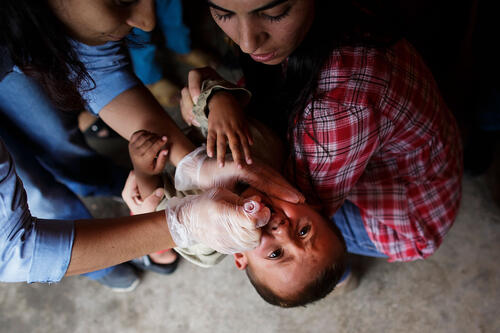
Some 17 children in Syria have been paralyzed from a confirmed polio outbreak in northeastern districts, with 48 cases reported in a country that had not had a case of polio since 1999. The cases are concentrated in areas controlled by opponents of President Bashar al-Assad.

And in the Democratic Republic of Congo — where the civil war officially ended years ago, but thousands of people still suffer from recurrent uprisings and scant infrastructure — a yellow fever outbreak was met last year with a lack of vaccines. The WHO was forced to give inoculations containing a fifth of the normal dose, providing protection for only one year.

And yet today, of the nearly 200 countries on this planet, only six nations — three rich ones and three poor ones — have taken steps to evaluate their ability to withstand a global pandemic.

“The bottom line is that despite the profound global threat of pandemics, there remains no global health mechanism to force parties to act in accordance with global health interests,” write FSI’s Paul Wise and Michele Barry in the Fall 2017 issue of Daedalus.

“There also persists inherent disincentives for countries to report an infectious outbreak early in its course,” the authors write. “The economic impact of such a report can be profound, particularly for countries heavily dependent upon tourism or international trade.”

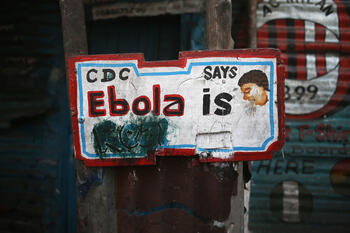
China, for example, hesitated to report the SARS outbreak in 2002 for fear of instability during political transition and embarrassment over early mishandling of the outbreak. Reporting cases of the 2013 Ebola outbreak in West Africa were slow and the virus killed some 11,300 people in Sierra Leone, Guinea and Liberia before the epidemic was declared over in January 2016.

Image
cdc ebola sign getty images

“Tragic delays in raising the alarm about the Ebola outbreak in West Africa were laid at the doorstep of the affected national authorities and the regional WHO committees, which were highly concerned about the economic and social implications of reporting an outbreak,” Wise and Barry write in the journal published by the American Academy of Arts and Sciences.

The Daedalus issue, “Civil War & Global Disorder: Threats and Opportunity,” explores the

factors and influences of contemporary civil wars. The 12 essays look at the connection of intrastate strife and transnational terrorism, the limited ambitions of intervening powers, and the many direct and indirect consequences associated with weak states and civil wars.

“Wise and Barry, both medical doctors with extensive field experience in violence-prone developing countries, analyze the relationship between epidemics and intrastate warfare,” write FSI’s Karl Eikenberry and Stephen D. Krasner in their introduction to the issue that includes eight essays by Stanford University faculty.

“Their discussion is premised on the recognition that infectious pandemics can threaten the international order, and that state collapse and civil wars may elevate the risk that pandemics will break out,” they wrote.

Eikenberry and Krasner are hosting a panel discussion about the new volume of Daedalus with FSI senior scholars, including Wise and Barry, on Oct. 23. Members of the Stanford community and the public are invited and can RSVP here. Podcasts with the authors will also be available at FSI’s World Class site over the next few weeks.

Prevention, Detection and Response

Barry and Wise believe there is significant technical capacity to ensure that local infectious outbreaks are not transformed into global pandemics. But those outbreaks require some level of organized and effective governance — and political will.

Prevention, detection, and response are the keys to controlling the risk of a pandemic. Yet it’s almost impossible for these to coincide in areas of conflict.

Prevention includes solid immunization programs and efforts to reduce the risk of animal-to-human spillover associated with exposure to rodents, monkeys and bats.

Then, early detection of an infectious outbreak with pandemic potential is crucial, through a methodical surveillance structure to collect and test samples drawn from domestic and wild animals, a capacity sorely lacking in areas of conflict and weak governance.

Image
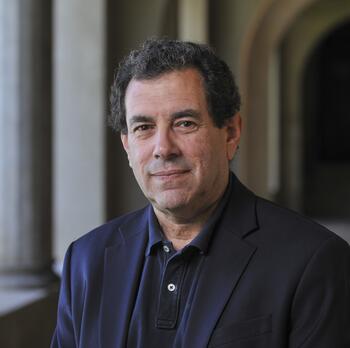
paul

“Civil wars commonly disrupt traditional means of communication,” they write. “The Ebola virus outbreak in West Africa exposed glaring weaknesses in the global strategy to control pandemic outbreaks in areas with minimal public health capacity.”

New strategies that utilize satellite or other technology to link remote or insecure areas to surveillance are urgently needed, they said.

Then there is the response in countries where civil war not only makes it difficult, but politically treacherous.

In Syria, there had not been a case of polio reported since 1999. In 2013, health workers began to see children with the kind of paralysis that is associated with a highly contagious polio outbreak.

“However, the government and regional WHO office have been intensely criticized for their slow and uneven response,” the authors note, particularly the government’s resistance to mobilizing immunization efforts in areas sympathetic to opposition forces.

Pressure from international health organizations and neighbors in the region ultimately led to the reinstatement of vaccination campaigns throughout Syria.   

“The Syrian polio outbreak is an important reminder that health interventions, though technical in nature, can be transformed into political currency when certain conditions are met,” they write. “At the most basic level, the destruction or withholding of essential health capabilities can be used to coerce adversaries into political compliance, if not complete submission.”

Image
syria polio


Strengthening Global Oversight

The only comprehensive global framework for pandemic detection and control, the authors write, is the International Health Regulations treaty, which was signed in 2005 by 196 member-nations of the World Health Organization to work together for global health security.

The IHR imposed a deadline of 2012 for all states to have in place the necessary capacities to detect, report and respond to local infectious outbreaks. But only a few parties have reported meeting these requirements, and one-third has not even begun the process. There have also been efforts to enhance state reporting of health systems capacities through voluntary assessments of countries working through the Global Health Security Agenda consortium.

But both frameworks, Barry said in an interview, need financial and political support.

Image
michele

“I see a stronger IHR with more than words — but actual money behind it in order for it to become stronger,” said Barry, noting the Global Health Security Agenda ends in 2018 and she has been asked to sit on a NAAS task force to form its next iteration. “I’m hoping we can move the needle to put money into bio-surveillance and health security, especially in conflict areas.”

Why should Americans care?

“Pathogens know no borders,” Barry said. “And with climate change, we have tremendous movement of vectors; with globalization and billions of people routinely in flight, we have tremendous health threats traveling first class and coach.”

Twenty Countries at High Risk

Meanwhile, some 20 countries are at high risk for pandemic emergence. The two Stanford professors are urgently calling for “new approaches that better integrate the technical and political challenges inherent in preventing pandemics in areas of civil war.”

Wise and Barry note that human factors, such as the expansion of populations into previously forested areas, domesticated animal production practices, food shortages, and alterations in water usage and flows, have been the primary drivers of altered ecological relationships.

So globalization with climate change brews the perfect storm.

“There is substantial evidence that climate change is reshaping ecological interactions and vector prevalence adjacent to human populations,” they said. “Enhanced trade and air transportation have increased the risk that an outbreak will spread widely. While infectious outbreaks can be due to all forms of infectious agents, including bacteria, parasites, and fungi — viruses are of the greatest pandemic concern.”

Science suggests the greatest danger of pandemic lies in tropical and subtropical regions where human and animals are most likely to interact. Most of the estimated 400 emerging infectious diseases that have been identified since 1940 have been zoonoses, or infections that have been transmitted from animals to humans. The human immunodeficiency virus (HIV), for example, is believed to have emerged from a simian host in Central Africa.


Recent analyses have suggested that the “hotspots” for emerging infectious diseases overlap substantially with areas plagued by civil conflict and political instability. 

The U.S. Agency for International Development and the Centers for Disease Control and Prevention have been working on the Emerging Pandemic Threats Program to improve local pandemic detection and response capacities by directing resources and training to countries thought to be at high risk for pandemic. However, it is not clear that this and related programs are addressing the political dynamics at the local level that will determine the essential cooperation of local communities with any imposed global health security response.

“The unpredictability of a serious infectious outbreak, the speed with which it can disseminate, and the fears of domestic political audience can together create a powerful destabilizing force,” Wise and Barry write in their conclusion. “Current discussions regarding global health governance reform have largely been preoccupied by the performance and intricate bureaucratic interaction of global health agencies. However, what may prove far more critical may be the ability of global health governance structures to recognize and engage the complex, political realities on the ground in areas plagued by civil war.”


Hero Image
ebola toddler getty
A Liberian Red Cross burial team in Ebola protectant clothing collects the body of a toddler from a home in the West Point township on January 28, 2015, in Monrovia, Liberia.
John Moore/Getty Images
All News button
1
Authors
News Type
News
Date
Paragraphs

Philanthropist and software giant Bill Gates spoke to a Stanford audience last week about the importance of foreign aid and product innovation in the fight against chronic hunger, poverty and disease in the developing world.

His message goes hand-in-hand with the ongoing work of researchers at Stanford’s Freeman Spogli Institute for International Studies. Much of that work is supported by FSI’s Global Underdevelopment Action Fund, which provides seed grants to help faculty members design research experiments and conduct fieldwork in some of the world’s poorest places.

Four FSI senior fellows – Larry Diamond, Jeremy Weinstein, Paul Wise and Walter Falcon – respond to some of the points made by Gates and share insight into their own research and ideas about how to advance and secure the most fragile nations.

Without first improving people’s health, Gates says it’s harder to build good governance and reliable infrastructure in a developing country. Is that the best way to prioritize when thinking about foreign aid?

Larry Diamond: I have immense admiration for what Bill Gates is doing to reduce childhood and maternal fatality and improve the quality of life in poor countries.  He is literally saving millions of lives.  But in two respects (at least), it's misguided to think that public health should come "before" improvements in governance.  

First, there is no reason why we need to choose, or why the two types of interventions should be in conflict.  People need vaccines against endemic and preventable diseases – and they need institutional reforms to strengthen societal resistance to corruption, a sociopolitical disease that drains society of the energy and resources to fight poverty, ignorance, and disease.  

Second, good governance is a vital facilitator of improved public health.  When corruption is controlled, public resources are used efficiently and justly to build modern sanitation and transportation systems, and to train and operate modern health care systems.  With good, accountable governance, public health and life expectancy improve much more dramatically.  When corruption is endemic, life-saving vaccines, drugs, and treatments too often fall beyond the reach of poor people who cannot make under-the-table payments. 

Foreign aid has come under criticism for not being effective, and most countries have very small foreign aid budgets. How do you make the case that foreign aid is a worthy investment?

Jeremy M. Weinstein: While foreign aid may be a small part of most countries’ national budgets, global development assistance has increased markedly in the past 50 years. Between 2000 and 2010, global aid increased from $78 billion to nearly $130 billion – and the U.S. continues to be the world’s leading donor.

The challenge in the next decade will be to sustain high aid volumes given the economic challenges that now confront developed countries. I am confident that we can and will sustain these volumes for three reasons.

First, a strong core of leading voices in both parties recognizes that promoting development serves our national interest. In this interconnected world, our security and prosperity depend in important ways on the security and prosperity of those who live beyond our borders.

Second, providing assistance is a reflection of our values – it is these humanitarian motives that drove the unprecedented U.S. commitment to fighting HIV/AIDS during the Bush Administration.

Perhaps most importantly, especially in tight budget times, development agencies are learning a great deal about what works in foreign assistance, and are putting taxpayers’ dollars to better use to reduce poverty, fight disease, increase productivity, and strengthen governance – with increasing evidence to show for it.

Some of the most dire situations in the developing world are found in conflict zones. How can philanthropists and nongovernmental organizations best work in places with unstable governments and public health crises? Is there a role for larger groups like the Gates Foundation to play in war-torn areas?

Paul H. Wise: As a pediatrician, the central challenge is this: The majority of preventable child deaths in Sub-Saharan Africa and in much of the world occur in areas of political instability and poor governance. 

This means that if we are to make real progress in improving child health we must be able to enhance the provision of critical, highly efficacious health interventions in areas that are characterized by complex political environments – often where corruption, civil conflict, and poor public management are the rule. 

Currently, most of the major global health funders tend to avoid working in such areas, as they would rather invest their efforts and resources in supportive, well-functioning locations.  This is understandable. However, given where the preventable deaths are occurring, it is not acceptable. 

Our efforts are directed at creating new strategies capable of bringing essential services to unstable regions of the world.  This will require new collaborations between health professionals, global security experts, political scientists, and management specialists in order to craft integrated child health strategies that respect both the technical requirements of critical health services and the political and management innovations that will ensure that these life-saving interventions reach all children in need.

Gates says innovation is essential to improving agricultural production for small farmers in the poorest places. What is the most-needed invention or idea that needs to be put into place to fight global hunger?

Walter P. Falcon: No single innovation will end hunger, but widespread use of cell phone technology could help.

Most poor agricultural communities receive few benefits from agricultural extension services, many of which were decimated during earlier periods of structural reform. But small farmers often have cell phones or live in villages where phones are present.

My priority innovation is for a  $10 smart phone, to be complemented with a series of very specific applications designed for transferring knowledge about new agricultural technologies to particular regions.  Using the wiki-like potential of these applications, it would also be possible for farmers from different villages to teach each other, share critical local knowledge, and also interact with crop and livestock specialists.

Language and visual qualities of the applications would be key, and literacy problems would be constraining.  But the potential payoff seems enormous.

Hero Image
RTXG95C logo
Children play near a punctured water pipe in Nairobi's Kibera slums.
REUTERS/Noor Khamis
All News button
1
Subscribe to Civil Wars