Paragraphs

Even before the covid-19 pandemic, virtual consultations (also called telemedicine consultations) were on the rise, with many healthcare systems advocating a digital-first approach. At the start of the pandemic, many GPs and specialists turned to video consultations to reduce patient flow through healthcare facilities and limit infectious exposures. Video and telephone consultations also enable clinicians who are well but have to self-isolate, or who fall into high risk groups and require shielding, to continue providing medical care. The scope for video consultations for long term conditions is wide and includes management of diabetes, hypertension, asthma, stroke, psychiatric illnesses, cancers, and chronic pain. Video consultations can also be used for triage and management of a wide range of acute conditions, including, for example, emergency eye care triage. This practice pointer summarises the evidence on the use of video consultations in healthcare and offers practical recommendations for video consulting in primary care and outpatient settings.

All Publications button
1
Publication Type
Journal Articles
Publication Date
Journal Publisher
The British Medical Journal
Authors
C. Jason Wang
Number
2020
Authors
Beth Duff-Brown
News Type
News
Date
Paragraphs

Armed conflict continues its brutal march in Syria, Yemen, Southeast Asia and South Sudan — to name a few of the international hotspots that contributed to an 11% increase in political violence around the world in 2018.

Nearly 10 million Yemenis are facing famine this year; Syria was the deadliest place on earth for civilians last year, with more than 7,100 fatalities.

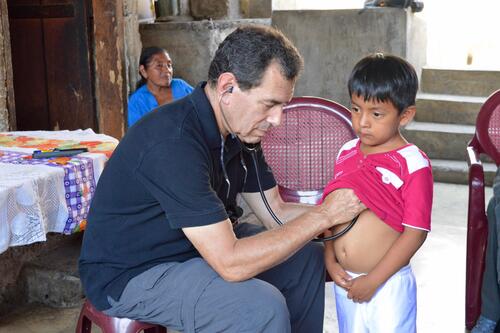
Many of those killed — and even more who face starvation — are children. And that’s when Stanford professor of pediatrics Paul Wise finds it hard to stand on the sidelines. Wise, who has traveled to Guatemala annually for the last 40 years to treat children in rural communities, also travels to the frontlines of global calamities.

As part of a small team of physicians, Wise went to Mosul, the northern city in Iraq once controlled by ISIS, in 2017 to evaluate the World Health Organization-led system to treat civilians injured in the brutal battle for the city. 

Working with colleagues at the Freeman Spogli Institute for International Studies, Wise has collaborated with the U.S. military, non-governmental organizations and the United Nations on the interaction of humanitarian and security challenges.

So, it should come as no surprise that the American Academy of Arts & Sciences — of which he is a member — recently appointed him and two other global health experts to lead a new initiative to develop new strategies to protect civilians, health care and cultural heritage in areas of extreme violence. 

The initiative, Rethinking the Humanitarian Health Response to Violence Conflict, will be a collaboration among political scientists, international human rights lawyers, physicians, academics and even the curators of major museums. They will develop strategies to prevent civilian harm and deliver critical health services in areas plagued by violent conflict, most notably in the Middle East, central and north Africa and parts of Asia. 

“We also want to address the humanitarian and protective frameworks that operate in areas that are extremely violent but wouldn’t necessarily be defined as being in armed conflict, like in the northern triangle of Central America. The human toll in these areas is at least as great as some of these other more traditionally defined areas,” Wise said.

Image
wise guatemala

Another of those areas is Myanmar, where nearly 700,000 ethnic Rohingya Muslims have fled to neighboring Bangladesh amid sectarian violence in the northern Rakhine province, in what the United Nations calls a “textbook example of ethnic cleansing.”

Rethinking is also headed up by global health expert Jaime Sepulvedaof the University of California, San Francisco, and Jennifer M. Welsh, a global governance and security expert at   McGill University in Canada. Their work will result in a series of publications, blog posts, videos, podcasts and op-eds as a means to reach not only a general audience but also local and field-based humanitarian health providers. The initiative will also seek the engagement of those directly victimized by violence in the areas of greatest concern. 

“We will come up with new strategies to protect civilians and deal with their needs when protection fails in the real world,” Wise said. “The goal is to make a difference in the real world. That’s a much more ambitious goal of course, but it’s the only goal that’s worthy of this kind of initiative.” 

A professor of pediatrics in the Medical School and core faculty member at Stanford Health Policy, Wise is also appointed in several international security programs at Stanford, including the Center on Democracy, Development and the Rule of Law,and the Center for International Security and Cooperation,and is a senior fellow at the Freeman Spogli Institute for International Studies.

Wise said he is particularly excited about the prospect of working with those who curate and protect cultural heritage sites and objects.

“The other thing about the American Academy of Arts & Sciences is that we are not just academics, but artists, musicians, novelists — and we expect to take full advantage of breaking out into these disciplines that aren’t normally part of these conversations,” Wise said.

When fire nearly toppled Notre Dame in Paris three months ago, Parisians gathered near the French Gothic cathedral to pray and to sing. When al-Qaida seized control of the North African country of Mali in 2012, a band of librarians undertook a dangerous mission to protect 350,000 centuries-old Arabic texts and smuggled them out of the library in Timbuktu.

At a recent meeting at the Getty Museum in Los Angeles, Wise met with museum directors, archeologists and political scientists about the preservation of cultural heritage.

“It was very clear that there were enormous areas of overlap between the efforts to protect cultural heritage and the efforts to protect people,” he said. “They’re just pragmatically connected because when you start destroying things of cultural importance, it tends to be associated ultimately with atrocities against people.”

Hero Image
gettyimages rohingya child
COX'S BAZAR, BANGLADESH: A Rohingya Muslim refugee boy is carried in a basket after crossing the border from Myanmar into Bangladesh close to the Naf River on November 2, 2017, near Anjuman Para in Cox's Bazar, Bangladesh.
Getty Images/Kevin Frayer
All News button
1
Authors
News Type
News
Date
Paragraphs

Early vaccination could save both lives and money during the next flu pandemic, according to a study led by Stanford medical researchers.

Using lessons learned from the 2009 H1N1 flu pandemic, researchers calculated the costs of waiting to vaccinate, looking at both the price tag to treat sick patients and the number of lives lost. Generally, a new flu vaccine takes at least six months to develop and distribute, but a vaccination campaign at four months after the start of an outbreak would save thousands more lives and millions of dollars in a large metropolitan area, according to the study published in Annals of Internal Medicine.

Additional measures, such as wearing face masks, using cough etiquette, washing hands or closing schools, can limit the virus' spread while a vaccine is in production.

Seasonal flu viruses sicken and kill large numbers of people each year, but the flu becomes a pandemic when it fulfills three criteria: It must be unusually infectious and deadly, it must be a new strain to which humans do not have immunity and it must spread worldwide. The H1N1 strain was a new virus that traveled around the globe at the end of the last decade, but it killed a small percentage of the people infected - less than 0.3 percent. In comparison, the deadly 1918 Spanish flu pandemic killed 2.5 percent of people it infected.

"We had a test run of our preparedness in 2009," said Nayer Khazeni, the study’s lead author. Khazeni, an assistant professor of medicine, is also an associate at the Center for Health Policy/Center for Primary Care Outcomes Research (CHP/PCOR) at Stanford’s Freeman Spogli Institute for International Studies (FSI).

"It's great that it happened under a very mild pandemic situation, and I think that's given us a lot of opportunity to learn and revise,” she said. “I hope that recommendations based on our study findings will help make us even more prepared."

Though the World Health Organization declared the H1N1 virus a pandemic in June 2009, large-scale vaccination did not occur until January 2010. By then, many people had already contracted the virus, recovered and developed immunity. The delay spurred the researchers to ask when would be the best time to vaccinate, and how many people should receive the vaccine.

The new study also looked at the economic impacts of the flu, which previous models had not quantified.

The model simulates how a more severe flu virus would spread through a densely populated metropolitan area such as New York City. It considered the deadliness of the virus, whether the population had immunity from a similar strain and how easily the virus spreads between people.

By adding a vaccination campaign into the model at different times, the researchers could predict the best time to vaccinate for a future pandemic. Vaccinating at six months after the start of the outbreak instead of nine (the timing of vaccination for the 2009 H1N1 pandemic) would prevent more than 230,000 infections and almost 6,000 additional deaths in a city of 8.3 million people. The city would also save $51 million in medical bills.

The bottleneck that slows vaccination is the production process. Most doses of flu vaccine are grown in chicken eggs. And when companies must adapt the process to a novel virus, it cuts into the production time for the seasonal flu vaccine. Six months is the least amount of time in which these companies can produce and distribute a sufficient number of doses.

Newer technologies that use cell cultures and DNA manipulation to create vaccines may one day cut down on vaccine-development time. If these technologies could yield enough doses within four months, then a metropolis like New York could save almost twice as many lives and save another $50 million.

"Timing is crucial," said Douglas K. Owens, professor of medicine at Stanford and director of CHP/PCOR. Owens is the senior author on the paper and is a senior investigator at the Veterans Affairs Palo Alto Health Care System.

"Delays of a few weeks or months can make an enormous difference in the number of people who are infected,” he said. “If you had a bad pandemic flu, it can have an enormous impact on the number of people who die."

Before the vaccine becomes available, other strategies can limit the virus' spread. Nonpharmaceutical interventions include hand washing, wearing a face mask, coughing into one's elbow and staying home while sick. In a severe pandemic, schools, businesses and public transit systems could be closed down to reduce exposure, the researchers said.

"I think the most encouraging finding of our study is that nonpharmaceutical interventions can really serve as a bridge to mass-vaccine creation and delivery," said Khazeni. The researchers found that even if a city did not vaccinate until nine months after an outbreak began, by instituting these measures, they could see the same positive effects as if they had vaccinated at four months.

In future studies, the researchers will add more complexity to their model by including additional consideration for young children, who tend to spread flu germs more widely than adults, and people with underlying medical conditions, who are more susceptible to serious illness and death.

Though it's impossible to predict which flu virus will become the next deadly pandemic - and when it will strike - two specific viruses are on epidemiologists' radars: H5N1, a virus in Southeast Asia contracted from birds, and H7N9, a new flu virus strain to which humans have no natural immunity. Both strains have a high mortality rate but cannot yet spread from human to human.

"I don't know that we can predict what the virus is going to be, but I do think it's possible to say that there might be a pandemic," Khazeni said. "There are some similarities in the viruses and the way we prepare that are generalizable. It doesn't actually matter what virus it is."

Researchers from the University of Michigan, Community Health Councils and Harvard University co-authored the study.

The work was supported by the Agency for Healthcare Research, National Institutes of Health, the Veterans Affairs Palo Alto Health Care System, and Stanford’s Department of Medicine. 

Patricia Waldron is a science-writing intern for the Stanford School of Medicine's Office of Communication & Public Affairs. 


Hero Image
influenza vaccine Reuters
All News button
1

Nipah virus commonly infects large fruit bats in South and Southeast Asia. It does not cause any apparent disease in bats, but when the infection spills over into humans in Bangladesh, over 75 percent of infected people die, and infected humans can pass the infection on to other people. People in Bangladesh most commonly become infected with Nipah virus by drinking raw date palm sap that has been contaminated by bats during harvest.

Authors
News Type
News
Date
Paragraphs

Stanford pediatrician Jason Wang and researcher Mildred Cho have received $1,087,920 to launch a center in Taiwan and Stanford dedicated to training medical professionals about ethics. Wang -- an associate professor of pediatrics and a CHP/PCOR affiliate, and Cho -- a professor of pediatrics at the School of Medicine’s Center for Biomedical Ethics -- received one of five of this year’s bioethics grants from the Fogarty International Center of the National Institutes of Health. 

The Fogarty grant will help support the launch of the Centers of Excellence in Research Ethics Training in the Asia Collaborative for Medical Education (ACME), a consortium of leading medical schools and healthcare institutions, with the Steering Committee chaired by Dr. Harvey Fineberg, President of the U.S. Institute of Medicine. Wang and his colleagues have proposed innovative ways to train practitioners in Southeast Asia, where ethical behavior in healthcare-related research is a pressing concern but training is scarce. 

In addition to the Taiwan facility, which will be based jointly at the Koo Foundation Sun Yat-Sen Cancer Center and the National Yang Ming University, the web-based curricular development center will be based at the Stanford’s Center for Health Policy at the Freeman SpogIi Institute for International Studies, and the School of Medicine. The centers will be hubs for training, research, and innovation for Asia health and research professionals.

The training curriculum will incorporate the use of the IDEO design method, a human-centered, design-based approach that uncovers "latent needs, behaviors and desires,” to help scholars develop culturally appropriate lessons. Partnership models include pairing trainees with core faculty members from Stanford, Koo Foundation Sun Yat-Sen Cancer Center, and National Yang Ming University for mentorship on research ethics, which will then be developed into a training curriculum appropriate for their home institutions.  

Scholars from different countries will also be invited to participate in a Research Ethics Improvement Network. The model includes face-to-face learning sessions (story boards, role plays, simulations, didactics), a web-based support component (didactics materials, cases discussions, video/audio teleconferences for problem solving,) and the application of traditional quality improvement to curricular improvement. 

The collaborative and ongoing improvement training model, inspired by the Institute for Healthcare Improvement’s Quality Collaboratives, also has a dissemination component where scholars will be encouraged to build networks and to engage policy makers and community leaders to publicize the importance of research ethics in their academic and local communities.

Wang says that “testing and dissemination of the project’s innovative training mechanisms is paramount because of the relevance to other parts of the world facing similar demands.”

Hero Image
Wang Taiwan Lecture 4 cropped2
Jason Wang
All News button
1

Stanford Health Policy, 615 Crothers way, Room 222, Stanford, CA 94305-6006

(650) 724-5325 (650) 723-1919
0
babiarz_2021.jpg MA, PhD

Dr. Babiarz’s research focuses on fertility and family planning programs, infant and maternal health, and the gender dynamics of global health. She has studied human trafficking in China and South East Asia, and currently works on quantitative approaches to issues of human trafficking and child labor in Brazil.  Dr. Babiarz specializes in large-scale program evaluations and quasi-experimental study designs. She holds a PhD in Agricultural and Resource Economics from the University of California, Davis (2011).

Sr. Research Scholar, Health Policy
CV
Date Label
Paragraphs

Aims The prevalence of Type 2 diabetes mellitus (DM) has grown rapidly, but little is known about the drivers of inpatient spending in low- and middle-income countries. This study aims to compare the clinical presentation and expenditure on hospital admission for inpatients with a primary diagnosis of Type 2 DM in India, China, Thailand and Malaysia.

Methods We analysed data on adult, Type 2 DM patients admitted between 2005 and 2008 to five tertiary hospitals in the four countries, reporting expenditures relative to income per capita in 2007.

Results Hospital admission spending for diabetic inpatients with no complications ranged from 11 to 75% of per-capita income. Spending for patients with complications ranged from 6% to over 300% more than spending for patients without complications treated at the same hospital. Glycated haemoglobin was significantly higher for the uninsured patients, compared with insured patients, in India (8.6 vs. 8.1%), Hangzhou, China (9.0 vs. 8.1%), and Shandong, China (10.9 vs. 9.9%). When the hospital admission expenditures of the insured and uninsured patients were statistically different in India and China, the uninsured always spent less than the insured patients.

Conclusions With the rising prevalence of DM, households and health systems in these countries will face greater economic burdens. The returns to investment in preventing diabetic complications appear substantial. Countries with large out-of-pocket financing burdens such as India and China are associated with the widest gaps in resource use between insured and uninsured patients. This probably reflects both overuse by the insured and underuse by the uninsured.

All Publications button
1
Publication Type
Journal Articles
Publication Date
Journal Publisher
Diabetic Medicine
Authors
Jeremy Goldhaber-Fiebert
Karen Eggleston
Paragraphs

Background
Multidrug-resistant tuberculosis (MDR-TB) is an important global health problem, and a
control strategy known as DOTS-Plus has existed since 1999. However, evidence regarding the feasibility, effectiveness, cost, and cost-effectiveness of DOTS-Plus is still limited.


Methodology/Principal Findings
We evaluated the feasibility, effectiveness, cost, and cost-effectiveness of a DOTS-Plus pilot project established at Makati Medical Center in Manila, the Philippines, in 1999. Patients with MDR-TB are treated with regimens, including first- and second-line drugs, tailored to their drug susceptibility pattern (i.e., individualised treatment). We considered the cohort enrolled between April 1999 and March 2002. During this three-year period, 118 patients were enrolled in the project; 117 were considered in the analysis. Seventy-one patients (61%) were cured, 12 (10%) failed treatment, 18 (15%) died, and 16 (14%) defaulted. The average cost per patient treated was US$3,355 from the perspective of the health system, of which US$1,557 was for drugs, and US$837 from the perspective of patients. The mean cost per disability-adjusted life year (DALY) gained by the DOTS-Plus project was US$242 (range US$85 to US$426).


Conclusions
Treatment of patients with MDR-TB using the DOTS-Plus strategy and individualised drug
regimens can be feasible, comparatively effective, and cost-effective in low- and middle-income countries.

All Publications button
1
Publication Type
Journal Articles
Publication Date
Journal Publisher
PLoS Medicine
Authors
Paragraphs

As Vietnam opens its economy to privatization, its system of healthcare will face a series of crucial tests. Vietnam's system of private healthcare -- once comprised only of individual physicians holding clinic hours in their homes -- has come to also include larger customer-oriented clinics based on an American business model. As the two models compete in the expanding private market, it becomes increasingly important to understand patients' perceptions of the alternative models of care.

This study reports on interviews with 194 patients in two different types of private-sector clinics in Vietnam: a western-style clinic and a traditional style, after-hours clinic. In bivariate and multivariate analyses, we found that patients at the western style clinic reported both higher expectations of the facility and higher satisfaction with many

aspects of care than patients at the after-hours clinic. These different perceptions appear to be based on the interpersonal manner of the physician seen and the clinic's delivery methods rather than perceptions of the physician's technical skill and method of treatment. These fndings were unaffected by the ethnicity of physician seen.

These fndings suggest that patients in Vietnam recognize and prefer more customer-oriented care and amenities, regardless of physician ethnicity and perceive no signiccant differences in technical skill between the private delivery models.

All Publications button
1
Publication Type
Journal Articles
Publication Date
Journal Publisher
Social Science & Medicine
Authors
Donald A. Barr
Paragraphs

BACKGROUND: Cervical-cancer screening strategies that involve the use of conventional cytology and require multiple visits have been impractical in developing countries. METHODS: We used computer-based models to assess the cost-effectiveness of a variety of cervical-cancer screening strategies in India, Kenya, Peru, South Africa, and Thailand. Primary data were combined with data from the literature to estimate age-specific incidence and mortality rates for cancer and the effectiveness of screening for and treatment of precancerous lesions. We assessed the direct medical, time, and program-related costs of strategies that differed according to screening test, targeted age and frequency, and number of clinic visits required. Single-visit strategies involved the assumption that screening and treatment could be provided in the same day. Outcomes included the lifetime risk of cancer, years of life saved, lifetime costs, and cost-effectiveness ratios (cost per year of life saved). RESULTS: The most cost-effective strategies were those that required the fewest visits, resulting in improved follow-up testing and treatment. Screening women once in their lifetime, at the age of 35 years, with a one-visit or two-visit screening strategy involving visual inspection of the cervix with acetic acid or DNA testing for human papillomavirus (HPV) in cervical cell samples, reduced the lifetime risk of cancer by approximately 25 to 36 percent, and cost less than 500 dollars per year of life saved. Relative cancer risk declined by an additional 40 percent with two screenings (at 35 and 40 years of age), resulting in a cost per year of life saved that was less than each country's per capita gross domestic product--a very cost-effective result, according to the Commission on Macroeconomics and Health. CONCLUSIONS: Cervical-cancer screening strategies incorporating visual inspection of the cervix with acetic acid or DNA testing for HPV in one or two clinical visits are cost-effective alternatives to conventional three-visit cytology-based screening programs in resource-poor settings.

All Publications button
1
Publication Type
Journal Articles
Publication Date
Journal Publisher
New England Journal of Medicine
Authors
Jeremy Goldhaber-Fiebert
Subscribe to Southeast Asia