Authors
Beth Duff-Brown
News Type
Blogs
Date
Paragraphs


As millions marched against gun violence across the country on Saturday, research by Stanford Health Policy experts about the impact of gun ownership on public health was also in the spotlight.

The Washington Post published an in-depth story about how the work of gun researchers is finally getting attention — an unfortunate consequence of the recent mass shootings in the United States.

David Studdert — a professor of medicine and law — and Yifan Zhang, a biostatics and data analyst with Stanford Health Policy, along with seasoned gun researcher Garen Wintemute of UC Davis’s Violence Prevention Research Program, are trying to answer the question: Are you more or less likely to die if you own a firearm?

“The explosion of national interest in the problem of gun violence since the Parkland shooting has been remarkable,” said Studdert, who is also a core faculty member at Stanford Health Policy.  “And it is inspiring to hear students’ voices — that is definitely a new twist in the politics around this issue. I think there is momentum for change, but I remain pessimistic that we will see the enactment of any substantial reforms at the federal level.”

The Post wrote:

Studdert’s group is using a data set unique to California because of the state’s strict gun laws. Every time a gun is sold in California, a background check logs the purchase and purchaser with California authorities, who also have been unique in their willingness to share such politically fraught data with academic researchers.


Using a sample of 25 million people (taken from California’s voter registration records), Studdert’s team plans to identify handgun owners with the firearm sales records, then compare that against state death records.


The resulting data in theory will help them determine the relationship — whether good or bad — between gun ownership and death.


They call the project LongSHOT, a nod to the project’s scale and ambition.


Academic researchers who were studying the impact of gun violence on public health were dealt a huge financial and political blow in 1996, when the so-called Dickey Amendment was passed by Congress under pressure from gun lobbyists. The law forbids the Centers for Disease Control and Prevention to fund research that might be seen as advocating for gun control. This choked off federal grant money and essential data-gathering on gun violence.

But tucked into the government spending bill in Congress last week was language that indicates the CDC now has the authority to conduct research on the causes and effects of gun violence. Though gun researchers are skeptical that the change in tone will lead to any significant support or funding, some believe that it’s a start. The $1.3 trillion government funding measure also includes efforts to improve state compliance with the national background check system, as well as funding for school counseling and safety programs.

Again, from The Post story:

Yifan Zhang was finishing her PhD in biostatistics at Harvard five years ago when news broke of the Sandy Hook Elementary School shooting.


As a graduate student from China, specializing in highly technical design of clinical drug trials, she had little connection to America’s long-running debate over gun violence. But even now, she said, the anguished faces of those parents she saw on television remain seared in her memory.


So when she heard about a gun-violence research project at Stanford University that could use the statistical skills she had honed on pharmaceuticals, she jumped at the chance.


“I have a son who just turned 1,” said Zhang, 31. “When I think about what I will need to teach him about protecting himself, I think about that school shooting.”


Zhang hopes the Stanford team can one day have an impact.

“I think there are going to be some big decisions that the whole country has to make together, and I’m hoping that our research can help provide evidence and information for the decision making,” she said.


Hero Image
gettyimages bullets Getty Images
All News button
1
Authors
Beth Duff-Brown
News Type
News
Date
Paragraphs

Health care has become the largest sector of the global economy, now accounting for more than 10 percent of Gross World Product, or $7.5 trillion. And it’s only going to get bigger as economists expect that figure to approach $18 trillion in two decades.

And yet, the quality of care and health outcomes are not keeping pace.

Ashish K. Jha — a leading expert on health policy and director of the Harvard Global Health Institute — calls this a “critical moment” in health care as the standard of care increasingly becomes more important than the number of people who have health coverage around the world.

“The point is, coverage is not coverage is not coverage. All health financing schemes are not the same,” said Jha, noting that China and Canada have universal coverage for its citizens, but many still receive inadequate health care or are going broke due to the high cost of special medical needs.

“In many places, the problem is the shallowness of the coverage.  Everyone may be covered — but if you get really sick, shallow coverage gets people into trouble,” said Jha, a keynote speaker at the annual Global Health Economics Colloquium, which brings together health economists and policy experts from University of California San Francisco, UC Berkeley and Stanford Health Policy to discuss recent developments in their fields.

Image
ashish

The fifth colloquium identified the health needs of vulnerable populations and developing cost-effective and scalable interventions to improve the health of socially and economically disadvantaged people here in the United States and in low- and middle-income countries.

“Our hope for the day is that our speakers will remind us why we do what we do, remind us why we support evidence-based policies, and most of all to inspire us at a time of this geopolitical craziness and why we must continue to persist,” Dhruv Kazi, a cardiologist and health economist at UCSF, who opened the daylong event.

Rising cost of global health care

Global health-care spending is so massive due to several key factors, Jha told the audience: the unprecedented rapid expansion of people moving into the middle class and the rise in treatments, drugs and medical technologies.

And while these are all positive movements, he said, as the world becomes more interdependent, it “behooves us to act” quickly so that health coverage and quality keep up.

At the end of 2016 there were 3.2 billion people in the global middle class; on average 160 million will join the middle class annually for the next five years, heavily concentrated in Asia.

So the two goals of universal health care should be financial protection and improved health.

But Jha noted that while 90 percent of China’s 1.4 billion people are covered by its national health care system, some 18 percent of Chinese are still thrown into poverty by the incidence of catastrophic health spending above and beyond what the government provides. That is nearly 8 percent higher than the global incidence of catastrophic spending, which stands at 11.7 percent.

India, by contrast, does not have a universal health-care system and only 20 percent of it 1.3 billion people have some form of health insurance. But it also has a 17-percent incidence of catastrophic health spending.

“Catastrophic payment incidence cannot be inferred from the fraction of the population covered by health insurance schemes or public health services,” Jha said, quoting a recent Lancet study.

It stands to reason that the health outcomes of those in countries with universal health care should have improved. But most studies show that that is not the case; the reason?  The quality just isn’t there.

Unsafe medical care top cause of deaths

Nearly 43 million injuries are caused in hospitals each year around the world, leading to 23 million years of healthy living that is lost among the world’s population.

“Unsafe medical care is probably one of the top 10 causes of death and disability in the world,” Jha said.

Jha wondered if quality of care isn’t a bigger problem than access to care.  For example, in one of India’s poorer rural states, Madhya Pradesh, there are 11 health-care providers within walking distance of every village, a fairly large number of private providers.

“Yet half of them have no formal training, they didn’t go to any school but they call themselves doctors,” Jha said.

And in the capital of India, New Delhi, public-sector physicians who are well trained are so overworked they spend an average of 2.5 minutes and ask one question per patient.

Ideally, universal health care must be effective and consistent with best professional practices while meeting the needs of the individual patient.

“Global health policy leaders have made universal health coverage an overarching priority.  This is a good thing.  But in order for UHC to improve the health of the world’s poor, we need to ensure people get good care. And that is the biggest challenge of all.”


Image
ghe audience


Hero Image
little boy vaccine Getty Images
All News button
1
Authors
News Type
News
Date
Paragraphs

New research finds that even though members of an advisory committee for Medicare are biased toward physician specialties, the partiality often bridges across specialty lines and may improve the quality of its price-setting recommendations.

For the first time, David Chan a core faculty member at Stanford Health Policy and faculty fellow at the Stanford Institute for Economic Policy Research, and his colleague Michael Dickstein from New York University, gained access to more than 4,000 fee proposals that were reviewed over a 21-year span by the committee, which is part of the American Medical Association (AMA). Their independent analysis is in a working paper just released by the National Bureau of Economic Research.

The finding is a surprising insight. Until now, behind-closed-doors deliberations meant nobody has known for sure how the physician-based committee reaches its recommendations for health-care service prices, which Medicare typically adopts. And longstanding criticisms of conflicts of interest have been largely based on anecdotal evidence and the assumption that tasking doctors with setting their own prices must be the equivalent of the fox guarding the henhouse.

But according to the empirical research, even if committee members were entirely neutral, only 1.9 percent of the $70 billion Medicare spends annually on physician care would be redistributed across all services.

“Though the analysis is not a complete vindication of the AMA committee, we find that committee bias has subtle implications for different medical fields and for Medicare,” said Chan, an assistant professor of medicine at Stanford.

“Primary care doctors once thought to be disadvantaged by the presence of specialty physicians on the committee actually benefit from shared interests with other types of physicians,” he says. “And overall, Medicare gets higher-quality information when the committee has connections with specialties.”

Benefits of bias

In their research, Chan and Dickstein, an assistant professor of economics at NYU, set out to uncover whether committee members exhibit bias in their recommendations and, if they do, how much it affects overall prices.

Since 1992, Medicare has tasked the AMA committee, formally known as the Relative Value Scale Update Committee (RUC), with calculating the time and effort component which, together with service costs, accounts for 96 percent of the Medicare reimbursement rate. Most private insurers also establish their payment rates based on Medicare pricing.

The lopsided composition of the committee – specialists significantly outnumber primary care physicians – has also fueled suspicions that prices for complex procedures are rising quickly because doctors on the committee are inclined to increase the cost of the procedures that either fall under or are closely related to their practice areas.

After reviewing internal deliberations on 4,423 fee proposals from 1992 to 2013, the researchers found an increased likelihood that committee members will recommend higher prices for specialties they are connected with. For example, a spinal surgeon on the committee is likely to agree with a price increase for a hand surgery procedure because both share revenue from orthopedic procedures.

David Chan

The researchers then measured how closely connected a proposed price change was to the specialties represented on the committee and the effect that affiliation had on the recommended reimbursement. They found that the more connected the overall committee was to specialties representing a procedure, the more likely it was to go along with a suggested rate increase.

So why would Medicare rely on a biased industry group to determine its prices? The evidence, Chan said, suggests an explanation: The lack of impartiality on the committee is offset by the finding that the information members contribute to the price-setting process is of higher quality than input from neutral advisers.

“There is this trade-off between bias and the quality of information,” Chan explained. “An unbiased but very imprecise price may be worse than a biased price that is closer to the truth.”

Positive impact on primary care

Contrary to common perception, the researchers also suggest that primary care doctors are not always harmed by these biases. They found that services performed by primary care doctors and specialists often overlap, which means that Medicare pricing policies affect them in similar ways more often than people think. For example, primary care physicians who are internists and family medicine doctors perform some procedures that cardiologists and radiologists do. So, if the price of an electrocardiogram goes up, primary care doctors stand to gain financially from the procedure as much as cardiologists and cardiothoracic surgeons.

And because primary care specialties already benefit from affiliations with other specialties, doubling the number of internists on the committee and quadrupling the number of family medicine practitioners would increase their specialty revenues by less than 1 percent.

Further, the analysis showed that such shared interests — and the closer connection between committee members and the specialties communicating the costs of a procedure — helped boost the overall quality of information behind committee decisions.

“There are very likely several features in Medicare’s pricing structure that disadvantage primary care,” Chan said. “But our research suggests that the arrangement of the RUC is not one of them.”


Hero Image
gettyimages 50796925
CHICAGO - Senior citizen Yoko Mitani waits for her prescription at Ballin Pharmacy in Chicago. Enrollment for the Medicare Drug Benefit program offering discounts on prescription drugs for senior citizens.
Tim Boyle/Getty Images
All News button
1
News Type
News
Date
Paragraphs

Screening all adults for hepatitis C virus infection (HCV) is a cost-effective way to improve clinical outcomes of HCV and identify more infected people compared to current recommendations, according to a new study by SHP’s Joshua Salomon and colleagues.

Using a simulation model, Salomon, a professor of medicine and core faculty member at Stanford Health Policy, and researchers from Boston Medical Center (BMC) and Massachusetts General Hospital (MGH) found that this expanded screening would increase life expectancy and quality of life while remaining cost-effective.

The infectious disease primarily attacks the liver. It is believed that one-in-30 Baby Boomers — born between 1945 and 1965 — have HCV, but don’t even know it because it can take years before symptoms emerge. The Centers for Disease Control and Prevention currently recommends HCV testing for boomers, but testing rates in this group remain relatively low, and recent trends show a higher incidence rate of HCV among young people.

“Testing all adults would lead to earlier diagnosis and treatment for many people, which would help to prevent cirrhosis and other long-term complications,” says Salomon, co-senior author of the study published in Clinical Infectious Diseases. “Overall, when you consider both the better health outcomes and the reduced costs of managing long-term liver disease, expanded testing offers excellent value for money.”

To address the potential benefits of changing the testing recommendations, the researchers created simulations to estimate the effectiveness of HCV testing strategies among different age groups. They compared effects of the current testing recommendations; of testing people over 40 years old or over 30 years old, and of testing all adults over 18 years old. All strategies included the current recommendations for targeted testing of high-risk individuals, such as people who inject drugs.

The study found that screening all adults would identify more than 250,000 additional people with HCV, increase cure rates from 41 to 61 percent, and reduce death rates for HCV-attributable diseases more than 20 percent, compared with current recommendations.

“When we expanded testing, the results were compelling,” says Joshua Barocas, lead author on the study and an infectious disease physician at MGH and an instructor in medicine at Harvard Medical School. “Changing the current recommendations could have a major public health impact, improving the quality of life for young people with HCV, and reducing death rates.”

The research team used data from national databases, clinical trials, and observational cohorts to inform their simulation models, which captured the details and dynamics of U.S. population demographics and HCV epidemiology.

All of the age-based strategies decreased costs related to managing chronic HCV and advanced liver disease, but the strategy of testing all adults was most effective. Even in a simulated scenario that required twice as much testing among uninfected people to identify the same number of HCV cases, the testing-all-adults strategy remained cost-effective.

Researchers say these findings should be considered by the CDC for future recommendations on HCV testing.

“Due in part to the opioid epidemic and the increase in injection drug use, the country has seen an increase in cases of HCV among young people,” says Benjamin Linas, MD, co-senior author of the study and infectious disease physician at BMC and an associate professor of medicine at Boston University Medical Center. “The CDC could address this public health concern by recommending all adults receive a one-time HCV test.”

The study was published online in Clinical Infectious Diseases and was funded by the National Institute on Drug Abuse at the National Institutes of Health, the MGH Fund of Medical Delivery and the U.S. Centers for Disease Control and Prevention.


Hero Image
getty hepc
A 3D illustration of the destruction of the Hepatitis C virus after treatment.
Getty Images
All News button
1
Authors
Beth Duff-Brown
News Type
News
Date
Paragraphs

As global health assistance for developing countries dwindles, a Stanford student working on her PhD in health policy has developed a novel formula to help donors make more informed decisions about where their dollars should go.

Donors have typically relied predominately on gross national income (GNI) per capita to determine aid allocations. But using GNI is problematic because it effectively penalizes economic growth. It also fails to capture contextual nuances important to channeling aid effectively and efficiently.

So Tara Templin, a first-year Stanford PhD student specializing in health economics, and her Harvard colleague Annie Haakenstad, have developed a framework that estimates funding based on needed resources, expected spending and potential spending into 2030. They believe the more flexible model makes it adaptable for use by governments, donors and policymakers.

“We've observed development assistance for health growth attenuate over the last seven years,” said Templin, who was a research fellow at the Institute for Health Metrics and Evaluation before coming to Stanford. “There are difficult trade-offs, and this entails honing in on the specific challenges and countries most in need.”

Their research published in the journal Health Policy and Planning outlines how their “financing gaps framework” can be adapted to short- or long-run time frames, between or within countries.

“Depending on donor preferences, the framework can be deployed to incentivize local investments in health, ensuring the long-term sustainability of health systems in low- and middle-income countries, while also furnishing international support for progress toward global health goals,” write the authors, who also are Stephen Lim of the University of Washington, Jesse B. Bump of Harvard and Joseph Dieleman, also at the University of Washington.

The authors developed a case study of child health to test out their framework. It shows that priorities vary substantially when using their results as compared to focusing mainly on GNI per capita or child mortality.

The case study uses data from the Global Burden of Disease 2013 Study, Financing Global Health 2015, the WHO Global Health Observatory and National Health Accounts. Funding flows are anchored to progress toward the U.N. Sustainable Development Goals’ target for reductions in the death rates of children under 5. More than six million children die each year before their fifth birthday, so the United Nations set a goal to reduce under-5 mortality to at least 25 per 1,000 live births.

To build their child health case study, the authors relied on a 2015 study that estimated the average cost per child-life saved is $4,205 in low-income countries, $6,496 in lower-middle income countries and $10,016 in upper-middle countries.

The framework considers three concepts. First, expected government spending is constructed from national health accounts, which are standardized financial reports from countries around the world. Second, ability to pay is estimated by looking at countries with similar levels of economic development and looking at associations with country investment in the health sector. Lastly, needed investment considers a health target, the country’s current health burden, and average costs to save children’s lives in each country.

“Our focus is on the gap between the resources needed to reach critical health targets and domestic health spending,” the authors wrote. “We highlight two facets of domestic health resources—expected spending and potential spending—as critical. While donor preferences may vary, basing aid allocation on expected or existing spending levels incentivizes countries to spend less on health. We therefore propose the use of potential spending, which is a measure of a country’s ability to pay, as the domestic resource benchmark.”

Image
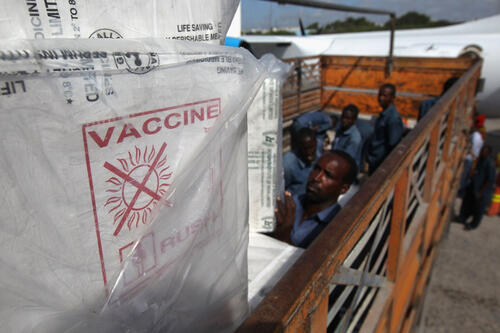
vaccines loaded truck

Instead of the gap between expected spending and need, their framework focuses on the gap between potential spending and the health resources needed to meet global health targets. In the framework, policymakers can choose which gap they want to target, since this decision can involve many factors.

“By focusing on that gap, donors can catalyze sustained domestic spending while also addressing the resource needs critical to reaching international health goals,” they wrote.

They then looked at 10 countries with the most need for additional child health resources. The gap between expected spending and potential spending was highest in Afghanistan, at 79 percent, and lowest in Cameroon, where expected spending exceeded potential spending.

“Fifty years ago, GNI was the best proxy for countries’ ability to finance their own development and health,” the authors wrote.

But today, more empirical data and technology are available, allowing donors to incorporate a broader set of health financing measures into their decision-making process.

“The flexible but targeted nature of our framework is critical in the current era of global health financing,” said Haakenstad, the lead author. “Our framework helps to ensure the poor and disadvantaged, the majority of which now reside in middle-income countries, are reached by development assistance and other public financing. This funding is critical to reducing death and disability and reaching global targets in health.”


The authors’ research was supported by the Welcome Trust (099114/Z/12/Z).

Hero Image
getty child vaccine Oli Scarff/Getty Images
All News button
1
Authors
Beth Duff-Brown
News Type
Q&As
Date
Paragraphs

In April 2016 the Equal Employment Opportunity Commission (EEOC) sued Mission Hospital, a large North Carolina health system, after it denied employee requests for religious exemptions from an influenza-vaccination requirement. The lawsuit, which alleges that the hospital violated Title VII of the Civil Rights Act of 1964, is one of a trio of lawsuits in the past two years in which the EEOC has intervened to challenge vaccination mandates for health-care workers. Facing a full-blown trial in February, the hospital agreed to settle the case on January 12, compensating the employees and revising its vaccination mandate policy.

Michelle Mello, PhD, JD, a professor of health research and policy and professor of law, and her colleague James A. Sonne, JD, an associate professor of law and director of Stanford Law School’s Religious Liberty Clinic, write in this week’s New England Journal of Medicine that the EEOC litigation “is cause for unease” among the growing number of hospitals with mandatory influenza-vaccination policies. Their article is co-authored with Douglas J. Opel, MD, MPH, an assistant professor of pediatrics at the University of Washington.

“These policies are an important public-health strategy since vaccination rates for health-care workers continue to fall short of the Healthy People 2020 target of 90 percent,” the authors write. “But they create thorny problems when it comes to exemptions. In particular, when and how must health-care workers’ religious objections be accommodated to conform to the law?”

The paper comes during what could be the worst flu season since the 2009 swine flu pandemic. The Centers for Disease Control and Prevention reports that this influenza season has claimed the lives of 37 children and is on track to rival the 2014-2015 flu season. The CDC estimates that 34 million Americans got the flu that season; more than 700,000 were hospitalized and about 56,000 people died.

So far this season, an influenza A virus called H3N2 has been the most common form of influenza. Preliminary estimates suggest that this season’s influenza vaccine is about 40 percent effective. Yet antibodies made in response to vaccination with a certain set of influenza viruses can sometimes provide protection against different but related viruses.

Stanford Health Policy asked Mello and Sonne questions about their research and findings.

Q: What prompted you to undertake this research and write about the subject?                                   

Mello: More and more hospitals are mandating their employees get vaccinated against influenza. This is good policy: influenza is a serious disease and voluntary programs have had disappointing results. Having a policy that requires health-care workers to be vaccinated helps protect employees themselves but also the patients they take care of, who are often at high risk of serious complications from influenza. We wrote this article to help make hospitals aware of potential legal challenges based on religious discrimination claims and help them ensure their own mandates are well-written and reasonably applied in order to avoid legal challenge and maintain a healthy and productive workplace. 

Q: Did anything surprise you while conducting your research?

Mello: Yes. First, the Equal Employment Opportunity Commission filed the three latest lawsuits on behalf of the employee. That’s unusual; the EEOC typically only injects itself into an individual employee’s dispute when it perceives that the employee’s case presents an issue of public concern.

Second, there have been about 15 cases filed between 2011 and 2016 that have challenged hospital influenza vaccination mandates on religious grounds, and most of them didn’t get thrown out by the judge—they were settled, or are heading toward trial. This indicates a need to understand the claims made by these lawsuits so that hospitals can avoid future legal challenges. When we looked at the plaintiffs’ grievances, we saw some pitfalls that can be easily avoided if hospitals are attentive to what the law requires and what seems to provoke employees to sue. For example, some hospitals were unduly rigid, to the point of seeming arbitrary, in enforcing deadlines or reviewing exemption requests.

Q: Is it common for hospitals to have influenza vaccination requirements for their employees?

Mello: Many hospitals do, and some states require it. Evidence suggests that these requirements are effective at increasing vaccination rates of their employees. However, hospitals’ requirements vary, with some allowing their employees to opt out of getting the influenza vaccine for religious reasons and others only allowing opt-outs if the employee has a medical contraindication to influenza vaccination, such as having experienced a severe allergic reaction to a prior dose of the vaccine or having an allergy to a component of the vaccine.

Q: Why allow religious exemptions to employer vaccination requirements at all?

Sonne: One reason might simply be to defuse perceptions of coercion and enhance the sustainability and acceptability of the requirements. In addition, Title VII of the Civil Rights Act of 1964 requires employers to reasonably accommodate employees’ religious practices unless doing so presents an undue hardship for the employer. Carefully crafted religious exemptions to influenza-vaccination requirements are a strategy that employers might need to use to avert religious-discrimination claims.

Image

A small proportion of workers may want to serve in the health-care field but nonetheless feel very strongly about not receiving the vaccine as a matter of their religious faith. Depending on the context, accommodating those sincere beliefs doesn’t necessarily impact public health and, arguably, it’s a better use of hospitals’ time and resources to focus on getting the vaccine to the vast majority of unvaccinated workers who don’t object but just haven’t gotten around to being vaccinated. Again, we’re not talking about a large group of people who both work in the industry and have these religious conflicts.


Q: A new civil rights division at the Department of Health and Human Services aims to protect health-care workers who refuse to provide services that violate their religious beliefs. Will there be more support now for health-care workers wanting to opt out from influenza vaccine for religious reasons?

Sonne: This is a good question, but the answer is unclear so far. The “Conscience and Religious Freedom Division” will be part of HHS’s already-established Office of Civil Rights. It will be charged with enforcing laws in the health-care field that forbid religious discrimination or require accommodation of religion—which certainly expresses an enforcement priority in this area of law. That said, the division doesn’t appear to create any additional legal duties but is meant only to enforce existing laws. And its creation also appears to have been motivated more by concerns about having to provide services that some clinicians find morally objectionable, like abortion, which arguably is a different situation. We’ll see.

Q: Are health-care organizations struggling to get their employees vaccinated against influenza?

Mello: HHS’s Healthy People 2020 goal is to have 90 percent or more of health-care personnel vaccinated against influenza. Recent estimates show that only about 78 percent of health-care personnel got vaccinated during the flu 2016-17 season, so we are falling short of that goal. The CDC recommends that all health-care personnel receive an annual influenza vaccination.

Image
Michelle Mello
Q: Why do some health-care personnel choose not to get vaccinated against influenza?

Mello: Studies have shown that some of the primary deterrents to immunization are concerns related to the safety and efficacy of the influenza vaccine, despite the fact that each year the vaccine undergoes a review by FDA to assure its safety and potency before it is approved for immunization of the public.  Health-care workers also may underestimate their risk of getting the flu or the risk they pose to their patients if they get sick—or they may simply be busy enough that they don’t prioritize getting vaccinated.

The fact is that healthy adults can pass the influenza virus to someone else one day before symptoms begin, and they can continue to infect others up to five days after getting sick. Therefore, it is possible for a healthy adult to unknowingly spread the virus to patients at high risk for serious complications from influenza.

Q: What did you find in your analysis of the lawsuits?

Mello: We found some clarity regarding the type of belief that qualifies for a religious exemption under Title VII. One court that dismissed a lawsuit, for example, stated that a religious belief can't simply be a personal moral code or something specific to vaccines. Rather, it must relate to ultimate questions about life, purpose and death. Providing a religious belief definition in hospital policy and explaining what does and doesn’t qualify should help reduced misguided requests and lawsuits.

Sonne: We also found that employers can satisfy their legal obligation to reasonably accommodate workers’ religious beliefs in a variety of ways aside from granting exemptions from vaccination, but should try to find the least onerous option that still protects patients. Tailoring accommodations to the specific individual based on, for example, how much contact they have with patients is good policy.

Finally, we found that, as in so many other litigation contexts, lawsuits in this area are often inspired by a feeling by the affected employees that the processes used to weigh their opt-out requests just weren’t fair. Hospitals can, therefore, avert problems by affording employees a reasonable opportunity to explain their deeply held religious beliefs, avoiding unnecessary or overly rigid administrative procedures and rules, explaining their reasons for denying exemptions and treating religious objectors with respect.


Hero Image
doc and nurse Getty Images
All News button
1
Authors
Beth Duff-Brown
News Type
Q&As
Date
Paragraphs


The federal Centers for Medicare & Medicaid Services (CMS) sent a letter to state Medicaid directors on January 11 announcing a policy change that allows states to experiment with how they deliver the public health insurance for low-income residents of their states. The provision that prompted headlines was its suggestion that state officials seek a waiver to Medicaid regulations allowing them to attach work requirements, or what CMS calls “community engagement,” for eligibility among able-bodied adults.

CMS Administrator Seema Verma said the work requirement among eligible adults would “make a positive and lasting difference in the health and wellness of our beneficiaries.”

In a speech to Medicaid officials in November, Verma criticized the Obama administration for focusing on expanding Medicaid enrollment under the Affordable Care Act, rather than helping the poor move out of poverty and into jobs that provide health insurance.

“Believing that community engagement does not support or promote the objectives of Medicaid is a tragic example of the soft bigotry of low expectations consistently espoused by the prior administration,” she said. “Those days are over.”

So far, the states that have applied for the Medicaid waiver that would allow them to impose the work requirement are Arizona, Arkansas, Indiana, Kansas, Kentucky, Maine, New Hampshire, North Carolina, Utah and Wisconsin. The Kentucky waiver application said it would require most nondisabled Medicaid beneficiaries age 19 to 64 to work at least 20 hours a week.

Medicaid was created in 1965 for families on public assistance and low-income seniors. It is now the nation’s largest health-insurance program and covers 70 million people, or about one in five Americans, and includes pregnant women and newborns, the elderly in nursing homes and people with disabilities.

Opponents of the work requirement say it demonizes the poor and that low-income people will fall through the cracks and could be denied coverage because of technicalities or errors in their paperwork.

We asked FSI senior fellow and Stanford Health Policy faculty member Jay Bhattacharya — a professor of medicine and health economist who is an expert on government policies designed to benefit vulnerable populations — a few questions about the new policy.

*****


Stanford Health Policy: A study by the Kaiser Family Foundation found that among nonelderly adults with Medicaid coverage — the group of enrollees most likely to be in the workforce — nearly 8 in 10 live in a working family and a majority are working themselves. They also found most Medicaid enrollees who work are working full time but their annual incomes are still low enough to qualify for Medicaid. So who are the Medicaid recipients that the Trump administration is targeting — and to what end?

Bhattacharya: The CMS decision permits states to experiment with work requirements for able-bodied Medicaid enrollees. That is, it does not permit state experiments with work requirements for Medicaid enrollees who qualify because of a disability, or qualify because they are pregnant, or otherwise qualify because of physical or medical incapacity to work. At least as a first cut, the CMS decision permits states to impose work requirements for Medicaid enrollees who qualify through the expansion in Medicaid induced by the Affordable Care Act and does not permit work requirements on traditional Medicaid population who qualified in ways permitted before the ACA. States can also require alternatives to work, including volunteering, caregiving, education, job training and even treatment for a substance abuse problem.

The end goal as stated in the CMS letter is to improve the health and well-being of the able-bodied poor. The logic is that (1) for able-bodied individuals, regular work is an important component of overall health, and (2) all income-linked welfare programs (Medicaid included) induce incentives not to work, or to work less. There is a literature in economics that documents this incentive (see this paper by Aaron Yelowitz.) The mid-1990s welfare reform law required this sort of linking of work and welfare, and CMS argues this decision permits states to align Medicaid with other income-linked welfare programs. If the KFF study is right, the decision will have an effect on a minority (perhaps a substantial minority) of able-bodied Medicaid recipients, since the majority are already working.

Stanford Health Policy: Under current law, can states impose a work requirement as a condition of Medicaid eligibility?

Bhattacharya: For a state to impose a work requirement, they must request a waiver from the Social Security Act to conduct a demonstration project. These waivers are permitted under current law, but are provided at the discretion of the appropriate executive agencies, in this case, CMS. A different administration might decide not to permit these waivers, and I think in general the Obama administration was more reluctant to permit this kind of state experimentation. The main substance of the CMS decision is to broadly signal to states that they will now be willing to provide such waivers.

Stanford Health Policy: Do critics of the work-requirement waiver have valid fears that low-income elderly or disabled people will fall through the cracks on technicalities or challenging paperwork?

Bhattacharya: Paperwork mistakes and problems caused by bureaucratic indifference are always possible when it comes to a program like Medicaid, which has such a complicated variety of paths to qualify. It is an empirical question whether such considerations would be more salient were a state to impose work requirements for a subset of Medicaid enrollees on top of the existing requirements.  Every state has experience with similar work requirements for qualification for other welfare programs, such as temporary assistance for needy families (TANF). Given that, it seems unlikely to me that — because of technicalities or paperwork — additional work requirements would be incorrectly applied to many elderly or disabled people applying for Medicaid.

Stanford Health Policy: Some states have proposed tying Medicaid eligibility to work requirements using waiver authority that may be approved by the Trump administration. What could this mean for Medicaid recipients in those states? In Kentucky, which expanded Medicaid, some state officials have said work requirements could lessen the program’s impact on the state budget.

Bhattacharya: I suppose it could have some effect on state budgets by reducing the number of people who qualify for Medicaid. I anticipate only a small effect on state budgets, though, because through the ACA, the Feds pay 100 percent of Medicaid costs for people who qualify via the ACA’s income provision, although that gradually phases down to 90 percent in 2020 and remains at that level.

Stanford Health Policy: How will the states that do not apply for the waiver, such as the large-population states of California and New York, be impacted by this change in Medicaid policy?

Bhattacharya: States that do not apply for a waiver will maintain their existing requirement for Medicaid qualification, including no work requirements for able-bodied Medicaid enrollees who qualify through the ACA’s Medicaid provisions.


Hero Image
Medicaid Patient
Dr. Martha Perez examines Maria Lebron in a room at the Community Health of South Florida, Doris Ison Health Center on February 21, 2013 in Miami, Florida.
Getty Images
All News button
1
Authors
Beth Duff-Brown
News Type
News
Date
Paragraphs

At least 91 Americans die every day from an opioid overdose. The epidemic has claimed more than 300,000 lives since 2000 and is expected kill another half million over the next decade.

So perhaps it’s time to step up lawsuits against the drug manufacturers that sell the opioids to the tune of $13 billion per year, Stanford Health Policy’s Michelle Mello argues in a commentary in the current issue of The New England Journal of Medicine.

Mello, a professor of law and of health research and policy, and co-author Rebecca L. Haffajee, an assistant professor of health management and policy at University of Michigan School of Public Health, note that although heroin and illicitly manufactured fentanyl account for an increasing proportion of opioid overdoses, the majority of people who are addicted to opioids get hooked on prescribed painkillers.

While clinicians and health-care providers are trying to prescribe fewer opioids, Mello and Haffajee believe litigation is another crucial method to fight the crisis.

“The search for solutions has spread in many directions, and one tentacle is probing the legal accountability of companies that supply opioids to the prescription market,” the authors write.

The final report of President Trump’s Commission on Combating Drug Addiction and the Opioid Crisis details decades of aggressive marketing of oxycodone from 1997-2002 that led to a tenfold rise in prescriptions to treat moderate to severe pain. “To this day, the opioid pharmaceutical industry influences the nation’s response to the crisis,” the report said, noting the industry had sponsored some 20,000 conferences for physicians on managing pain with opioids while claiming their potential for addiction was low.

Mello and Haffajee argue that similar to the early cigarette promotions by Big Tobacco, opioid manufacturers have failed to adequately warn patients about addition risks on drug packaging and in their marketing campaigns.

“Some recent claims allege that opioid manufacturers deliberately withheld information about their products’ dangers, misrepresenting them as safer than alternatives,” they write.

Early attempts to bring class-action suits against opioid manufacturers have encountered procedural barriers. Judges typically find that proposed class members lack sufficiently common claims because of different circumstances surrounding opioid use and clinical conditions.

But the tide may be turning. There has been an uptick in litigation against Big Pharma since Purdue Pharma, the maker of the blockbuster painkiller, OxyContin, agreed in 2007 to pay $600 million to settle charges that it misled federal regulators, doctors, and patients about the drug’s risk of addiction and its potential to be abused.

“As the population harmed by opioids grows and more information about the population is documented, it becomes easier to identify subgroups with similar factual circumstances and legal claims — for example, newborns with neonatal abstinence syndrome,” they said.

Perhaps most promising, the authors write, is the “advent of suits brought against drug makers and distributors by the federal government and dozens of states, counties, cities, and Native American tribes.

“Because the government itself is claiming injury and seeking restitution so that it can repair social systems debilitated by opioid addiction, these suits avoid defenses that blame opioid consumers or prescribers,” they said. “They also garner substantial publicity.”

The government is borrowing from the playbooks used to sue tobacco and firearms companies, relying on four strategies:

  • Focus on the “public scourge” created by the opioid manufacturers due to their oversaturation of the market, arguing that opioids constitutes a public nuisance;
  • Paint the opioid companies’ business practices as deceptive;
  • Call out the manufacturers’ lax monitoring of suspicious opioid orders; and
  • Ask courts to make companies disgorge the “unjust enrichment” they have reaped at the government’s expense through their unfair business practices.

Two large settlements have occurred in state cases that included unjust enrichment claims, the authors note, although the pharmaceutical companies avoided admitting fault. The Commonwealth of Kentucky settled with Purdue Pharma for $24 million in 2015 over allegations that it had profited while Kentucky was left paying associated medical and drug costs of those who became addicted.

Earlier this year, drug wholesaler Cardinal Health Inc. agreed to pay $20 million to settle a lawsuit brought by West Virginia’s attorney general over accusations that it flooded the market with opioids in a state that now has the highest opioid overdose rate in the nation.

Such lawsuits have garnered a lot of media attention and contributed to pressure on the U.S. government to take action against the abusive practices of drug manufacturers and distributors.

“Win or lose, lawsuits that very publicly paint the opioid industry as contributing to the worst drug crisis in American history put wind in the sails of agencies and legislatures seeking stronger oversight,” Mello and Haffajee write. “Together, litigation and its spillover effects hold real hope for arresting the opioid epidemic.”


Listen to a podcast with Haffajee talking about the opioid crisis.


Hero Image
heroin boy
Five-year-old Derrick Slaughter attends a march through the streets of Norwalk, Ohio, against the epidemic of heroin with his grandmother on July 14, 2017. Both of Derrick's parents are heroin addicts and he is now being raised by his grandparents. At least 4,149 Ohioans died from drug overdoses in 2016, a 36 percent leap from just the previous year.
Spencer Platt/Getty Images
All News button
1
Authors
Beth Duff-Brown
News Type
News
Date
Paragraphs

There is plenty of research on how the rapid warming of the planet is going to have growing adverse impacts on global economies, health, food supplies and natural disasters.

A new study now suggests that as temperatures continue to rise — particularly with more and more 90-plus-degree days — more fetuses and infants will experience economic loss by age 30.

“There is a growing body of evidence that finds that shocks to the fetus and young child — whether nutritional, environmental, economic or stress-related — have long-term consequences on health, education and economic outcomes throughout the life cycle,” said Maya Rossin-Slater, an assistant professor of health research and policy at Stanford Medicine and a faculty fellow at the Stanford Institute for Economic Policy Research.

Rossin-Slater published her study Dec. 4 in the Proceedings of the National Academy of Sciences, indicating early-life exposure to extreme temperatures is linked to potential losses in human capital. Her co-authors are Adam Isen, an economist with the U.S. Department of Treasury, and Reed Walker, an assistant professor at University of California, Berkeley.

The researchers used data from the U.S. Census Bureau’s Longitudinal Employer Household Dynamic Files, which contain information on adult labor market outcomes linked to county and exact date of birth. They looked at weather in counties in 24 states on any given day, and then measured how many days with average temperatures above 90 degrees a child born on that day in that county would have experienced during gestation and during the first year of life. They then compared the earnings of individuals who were exposed to different numbers of such hot days, but who were of the same race and gender, and born in the same county and on the same day of the year (but in different years).

Each day a fetus or infant experiences 90-plus-degree temperatures, Rossin-Slater and her co-authors found that he made $30 less a year on average, or $430 over the course of his lifetime. While that may not seem like a huge loss of income, the authors point out that their study is best understood from a population-level perspective rather than from an individual one.

“There is a lot of research already showing that extreme heat has immediate effects on labor market productivity and GDP,” she said. “What we are saying is that there is another wrinkle to this — that there can be consequences many years later, on cohorts who are still in the womb.”

Most Americans today only experience one day a year that is 90 degrees or hotter. But the Climate Impact Lab has indicated that if countries continue to take only moderate action on climate change, by the end of this century there will be about 43 such days a year.

So, if you multiple a $30 annual loss a day by 43 days, you come up with an average $1,290 a year — and compounded in large populations of pregnant women in hot climates.

“Prior research shows that exposure to extreme heat in utero leads to lower birth weight and increases infant mortality,” said Rossin-Slater, who is also a core faculty member at Stanford Health Policy. She said poor fetal and infant health could impact adult earnings in three ways: cognitive impairment, poor health that causes people to miss school or work, and less non-cognitive skill development such as self-control.

“With regard to exposure to heat specifically, fetuses and infants are especially sensitive because their thermoregulatory systems are not fully developed and they have less capacity to self-regulate when their bodies are exposed to extreme temperatures,” Rossin-Slater said.

Hot Zones and Air Conditioners

The obvious questions that arise from such research: What happens to the babies of women who already live in very high temperatures? And why not just ensure that all pregnant women have air conditioners, at least in the developed world where it would be more affordable?

Women in warm zones such as parts of Africa and South Asia, as well as U.S. cities like Phoenix and Washington, D.C., shouldn’t worry too much. The loss of income is relatively little and people living in hot climates may actually adapt over time to exposure to extreme heat.

“Our study is not saying that individual people should be doing something differently to avoid exposure to extreme heat,” Rossin-Slater said. “Instead, we think we are providing additional evidence for the possible population-level consequences of climate change and the projected increase in the number of days with extreme temperatures.”

And what about those air conditioners? The cohorts in the study are actually born in the 1970s, during a period of rapid expansion in air conditioning across American households. The researchers found the earning losses went away in areas where most people got air conditioners installed.

“If we think that there is something biological going on as a result of the fetus being overheated, then it makes sense that AC, which prevents the overheating, can mitigate this negative effect,” Rossin-Slater said.

But it’s important to recognize, she said, that air conditioners come with costs, both financial from the perspective of individuals and households who can and can’t afford such systems, and environmental from the perspective of the country or planet as a whole.

“So this is not a `free’ solution and any cost-benefit calculations related to climate change should take into account this adaption response,” Rossin-Slater said. “But we ought to think about what these results imply at the global level — in many countries that are much hotter than the United States and still don’t have AC. So if we are trying to understand global inequality and the impacts of climate change on developing countries, our results suggest that climate change could play a role in perpetuating global inequality across generations.”


Hero Image
pregnancy Getty Images
All News button
1
Authors
Beth Duff-Brown
News Type
Q&As
Date
Paragraphs

CVS Health announced it would buy Aetna, the country’s third-largest health insurance company for $69 billion, a deal that could revamp the nation’s health-care industry and impact millions of consumers who are always on the lookout for better delivery and costs.

The merger, which must still undergo an antitrust review by the government, could impact the cost of drugs and the way patients visit health-care providers.

“This combination brings together the expertise of two great companies to remake the consumer health-care experience,” CVS Health President and CEO Larry J. Merlo said in a statement on Dec. 3. “With the analytics of Aetna and CVS Health’s human touch, we will create a health-care platform built around individuals.” 

Merlo said that by using CVS’s 10,000 pharmacy locations around the country, they would make health care more affordable and accessible.

We asked Stanford Health Policy’s Laurence Baker, chair of Stanford Medicine’s Department of Health Research and Policy and an expert on health-care delivery and costs, several questions about the potential merger.

Q. Could this lead to lower drug prices for the consumer?

Baker: One of the hoped-for effects is that a combined Aetna-CVS would be better able to negotiate favorable prices for prescription drugs. It is possible I suppose, since together they would have a considerable amount of information and strengthened incentives to control costs. In a model where a pharmacy benefit manager, like CVS, did most of the negotiating with the pharmaceutical companies, and insurers like Aetna separately paid the costs, there might be less ability and incentive to negotiate for favorable prices than if the two do merge. 

At the same time, there is no guarantee that there will be savings and if there are it is not clear that they would be very large. CVS and others have been negotiating for drug prices already, and the advantages conveyed by the merger need not be that big.  I can only imagine that if there were lots of low-hanging fruit Aetna and CVS, and others, would already have had some good opportunities to pursue changes. 

One place where a combined Aetna-CVS could make a difference would be in working with doctors and patients, doing more to promote the use of better or higher-value drugs. A merged entity might be more effective at getting patients to use appropriate generics rather than expensive branded drugs, for example.  This effect could be even stronger if a merged company were to be successful in their announced plan to do more to integrate physicians and other health-care providers with CVS pharmacies.

Q: If there were savings, would consumers see them?

Baker: If a combined Aetna-CVS were to negotiate better drug prices, whether or not those are passed on to consumers or just retained by the company depends on things like the degree of competition in the insurance marketplace. If the company could benefit from lowering prices for, say, Aetna insurance policies because of the lower drug prices, at least some of the savings could be passed on to consumers. But we often worry that many insurance markets are not competitive enough, so it would remain to be seen whether consumers would see the benefits or not.

The effects of stronger efforts to move patients toward higher-value or lower-cost drugs also might or might not flow through directly to patients. Overall savings may or may not be passed on, but it is possible that some patients would see changes in their copayments that could be beneficial.

Q: Could the potential merger lead to new and improved methods of delivering care?

Baker: Leaders of CVS and Aetna talked about the potential for building new and improved methods for health care delivery, including having more care delivered through clinics associated with CVS stores. These are intriguing ideas, consistent with many discussions going on about the next generation of health-care delivery. It isn’t entirely clear why a merger is needed to develop this, nor is it clear that it would lead to widespread improvements in health care, but innovation in this area doesn’t seem likely to do harm either and would probably benefit some people.

Image

Q:  Would this result in reduced consumer choice of health care provider?

Baker: It does stand to reason that a merged Aetna-CVS might prefer that people with Aetna insurance use CVS rather than other competitors. They might develop restrictions or incentives that would steer their customers in this direction, and that could certainly be a concern for some people. This gets at a larger question facing the health-care system these days. It may be that the formation of more integrated care networks, with less provider choice overall, but with providers that are carefully chosen and better at working together, offers opportunities to improve care and lower costs.  This could have advantages, but would also come with tradeoffs for choice.

Q: Would a merger lead to a company that is “too big” with too much power?

Baker: One thing analysts have worried about lately is the amount of consolidation in the health-care marketplace. This would be another example of that, combining two already large players. Sometimes people argue that bigger can be better if it helps align the activities of different players in ways that could push us toward lower costs or improve quality. Often enough, however, we have seen consolidation lead to higher prices without seeing improved quality. This particular type of merger — combining a health insurer with a health care provider — is a bit less common than the consolidation we’ve most commonly seen such as hospitals merging and has some different features, so the overall effects will be something analysts will want to keep an eye on.

Hero Image
cvs Getty Images Heroin
All News button
1
Subscribe to The Americas