Catherine Lei CV
All Publications button
1
Publication Date
External Purchase Links
External URL

Stanford Health Policy is a joint effort of the Freeman Spogli Institute for International Studies and the Stanford School of Medicine
Women are underrepresented in the economics profession, as recent research and the public spotlight have shown. But changes are afoot as both men and women in the field try to understand the scope of the gender gap.
At the Stanford Institute for Economic Policy Research (SIEPR), Faculty Fellow Maya Rossin-Slater is taking steps to address underlying factors of the disparity. In September, the economist and assistant professor in the School of Medicine held a mentoring workshop to assist women who are third-year economics PhD students — a pivotal point for doctoral candidates as they transition from mostly structured classes to independent research. Rossin-Slater is also a core faculty member at Stanford Heatlh Policy.
Part boot camp and part networking event, the daylong workshop brought together 28 graduate students from across California. Twice that many students had applied for the opportunity to practice insider skills, discuss their research interests, and get paired with a mentor.
The need for such an assist is clear, Rossin-Slater says. In the United States, women now have grown to account for about 60 percent of those who hold bachelor’s degrees. But in the discipline of economics, they constitute a steady 30 percent of the students. Meanwhile, other majors, such as math, have risen to a 48 percent share of women in recent years.
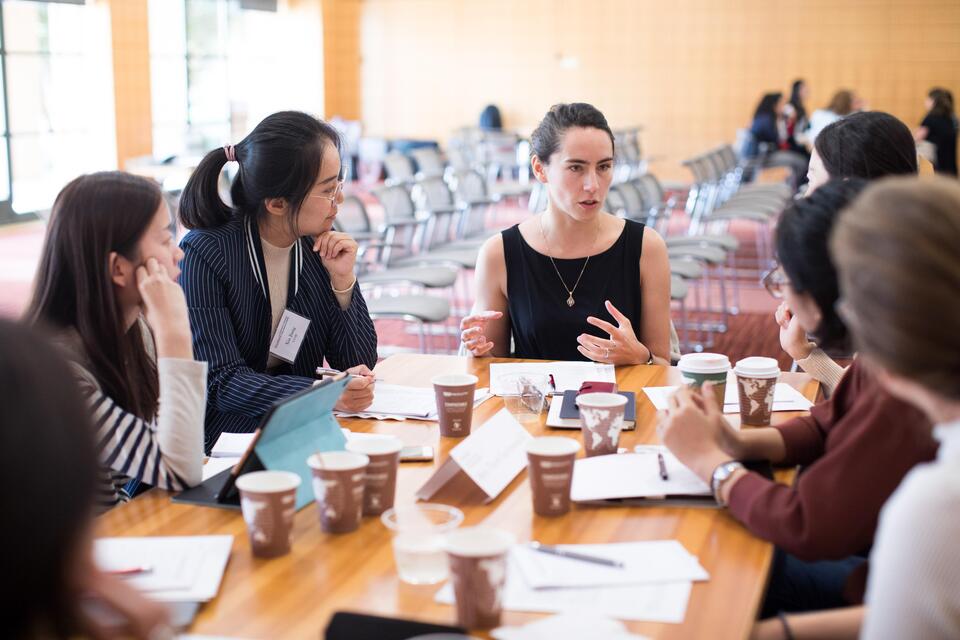
“Economics is about a lot of different aspects of human behavior in society,” Rossin-Slater told the workshop participants. “And you cannot think about all kinds of questions unless you have a diverse set of people doing the research.”
“You, here, are part of the next generation of female economists who can help change the profession.”
Females who are underrepresented in the economics arena — while getting their degrees or later, while working — face a variety of systemic barriers, Rossin-Slater said. And they may be at a particular disadvantage, lacking female peers, role models or mentors in their own departments and networks.
The mentoring workshop at Stanford sought to begin addressing that problem for graduate students and will hopefully catalyze similar initiatives elsewhere.
“You should continue to do the research that you are doing, and be excited about it. Be confident. Do economics,” Rossin-Slater told the participants. “As you see here today, women research every possible field.”
Mentors participating in the inaugural workshop included female economists working at think tanks and university professors — including SIEPR Faculty Fellow Maria Polyakova — focusing on applied economics, microeconomics and macroeconomics.
In organizing the workshop, Rossin-Slater said she had thought about challenges she herself had faced as a third-year PhD student, and she modeled it after a successful workshop that the American Economic Association’s Committee on the Status of Women in the Economics Profession hosts for female assistant professors. Rossin-Slater is slated to talk about the female PhD workshop at the annual AEA conference in January.
The September event at Stanford featured a mix of informative sessions — on topics, such as, “How do you ‘do research’?” — as well as practice exercises. Participants worked through hypothetical but common scenarios — What should you do, say, if you’re interrupted during your presentation at a seminar, and challenged about your research?
SIEPR, along with the National Science Foundation, funded Rossin-Slater’s workshop.
"With the mounting body of evidence that the economics culture can be unwelcoming to women and minorities, it is great to see our faculty taking concrete steps to counteract this environment and broaden the pipeline of candidates who can make important contributions to the field,” said SIEPR Deputy Director Gopi Shah Goda.
“SIEPR is proud to support such efforts, as they are perfectly aligned with our goal of cultivating the next generation of economic policy scholars.”

Cultural taboos can restrict student learning on topics of critical importance. In India, such taboos have led multiple states to ban materials intended to educate youth about HIV, putting millions at risk. We present the design of TeachAIDS, a software application that leverages cultural insights, learning science, and affordances of technology to provide comprehensive HIV education while circumventing taboos. Using a mixed-methods evaluation, we demonstrate that this software leaves students with significantly increased knowledge about HIV and reduced stigma toward individuals infected with the virus. Validating the effectiveness of TeachAIDS in circumventing taboos, students report comfort in learning from the software, and it has since been deployed in tens of thousands of schools throughout India. The methodology presented here has broader implications for the design and implementation of interactive technologies for providing education on sensitive topics in health and other areas.
Dr. George Rosenkranz —a world-renowned scientist who devoted his life to improving global health and established a prize to foster innovative research among emerging Stanford scholars — leaves behind an extraordinary legacy of science and humanitarianism.
Rosenkranz was 102 when he died Sunday after a prolific scientific career, one that would forever change the course of women’s reproductive lives.
A Hungarian Jew who fled the Nazis during World War II and eventually emigrated to Mexico, Rosenkranz was one of three scientists who pioneered the chemical compounds that led to the birth control pill. He was also instrumental in developing medicines to fight venereal diseases.
His family established The Dr. George Rosenkranz Prize in 2010 at the Freeman Spogli Institute for International Studies; the prize is administered by Stanford Health Policy. The $100,000 award goes to researchers working to improve health care in the developing world.
The beloved figure often made it to the campus symposiums that honored the prize winners.

The first Rosenkranz Prize was awarded in 2010 to SHP’s Eran Bendavid, an infectious disease physician and associate professor of medicine. He used his award to study whether U.S. money spent on malaria and HIV programs in sub-Saharan Africa translated into better health outcomes for women and their children.
“George has galvanized a community of global health researchers at Stanford,” said Bendavid. “We now have a community of scholars whose focus on critical issues in other countries has been powerfully enabled by George's legacy. He and his family have been an inspiration for us and, by extension, our students. The spirit of promoting promising young researchers is something we all benefit from. His is a wonderful name and a legacy to be attached to.”
Other Rosenkranz Prize winners honor his legacy with remembrances:
“There are very few people who have changed the world as much as Dr. Rosenkranz; his work in synthesizing and bringing oral contraception to market changed how people form families, and empowered women around the world.” — Mike Baiocchi, a Stanford statistician and the 2017 winner.
“The Rosenkranz Prize helped our young lab take risks where we might not have been able to; risks that have paid off intellectually,” said Baiocchi, whose team is conducting the largest-ever randomized trial to measure the impact of No Means No Worldwide project, which is training 300,000 boys and girls in Kenya and Malawi to prevent rape and teen pregnancy.
“The prize money allowed us to bring two of our statistics PhD students to Kenya to visit the communities they have been working with, to present their work to the stakeholders. This has built a passion for in these students, who have each launched their own Kenya-based study to examine means for reducing gender-based violence.”
“Dr. Rosenkranz's professional and personal legacy are closely intertwined. By his example, I and many other Rosenkranz scholars have been enabled to marry what sometimes feel like dueling passions: social justice and rigorous scholarship. I feel so fortunate to have met Dr. Rosenkranz and hope that many others will continue to be inspired by his message of equity, global fellowship, and excellence.” — Ami Bhatt, the 2016 winner who is building the first multi-country microbiome research project focused on noncommunicable disease risk in Africa.
*****
“As a Mexican awardee of the Rosenkranz prize it is a privilege to be part of the legacy of one of the most prominent Mexican scientists, whose generous support was a vital seed to create my research laboratory on Human Genomics in Mexico.” — Andrés Moreno Estrada, the 2012 winner who is analyzing the DNA of indigenous groups in Latin American, one of the most underrepresented populations in the field of genetics.
*****
“The prize was a huge boost to my career as an early stage researcher. It allowed me to do work in India on antimicrobial resistance (AMR) at a time when the topic was not a high priority for global funding agencies. The project led to a series of a collaborations with a large public hospital in India. There were several publications as a result of this partnership, and the studies we performed were innovative and informative on the prevalence on AMR in community-dwelling individuals.” — Marcella Alsan, one of two 2015 prize winners.

A new study by Stanford economists shows that giving fathers flexibility to take time off work in the months after their children are born improves the postpartum health and mental well-being of mothers.
In the study, slated for release by the National Bureau of Economic Research on June 3, Petra Persson and Maya Rossin-Slater examined the effects of a reform in Sweden that introduced more flexibility into the parental leave system. The 2012 law removed a prior restriction preventing a child’s mother and father from taking paid leave at the same time. And it allowed fathers to use up to 30 days of paid leave on an intermittent basis within a year of their child’s birth while the mothers were still on leave.
The policy change resulted in some clear benefits toward the mother’s health, including reductions in childbirth-related complications and postpartum anxiety, according to their empirical analysis.
“A lot of the discussion around how to support mothers is about mothers being able to take leave, but we often don’t think about the other part of the equation — fathers,” says Rossin-Slater, an assistant professor of health research and policy.
“Our study underscores that the father’s presence in the household shortly after childbirth can have important consequences for the new mother's physical and mental health,” says Persson, an assistant professor of economics.
Rossin-Slater and Persson are both faculty fellows at the Stanford Institute for Economic Policy Research.
Among their main findings of effects following the reform: Mothers are 14 percent less likely to need a specialist or be admitted to a hospital for childbirth-related complications — such as mastitis or other infections — within the first six months of childbirth. And they are 11 percent less likely to get an antibiotic prescription within that first half-year of their baby’s life.
There is also an overall 26 percent drop in the likelihood of any anti-anxiety prescriptions during that six-month postpartum period — with reductions in prescriptions being most pronounced during the first three months after childbirth.
What’s more, the study found that the average new father used paid leave for only a few days following the reform — far less than the maximum 30 days allowed — indicating how strong of a difference a couple of days of extra support for the mother could make.
“The key here is that families are granted the flexibility to decide, on a day-to-day basis, exactly when to have the dad stay home,” said Persson. “If, for example, the mom gets early symptoms of mastitis while breastfeeding, the dad can take one or two days off from work so that the mom can rest, which may avoid complications from the infection or the need for antibiotics.”
These indirect benefits from giving fathers workplace flexibility are not trivial matters when you consider the health issues mothers often face after childbirth and after they get home from the hospital, says Rossin-Slater, who is also a faculty member of Stanford Health Policy.
Infections and childbirth complications lead to one out of 100 women getting readmitted to the hospital within 30 days in the United States, according to the study.
Meanwhile, postpartum depression occurs for about one out of nine women, and maternal mortality has also been a rising trend over the past 25 years in the U.S.
The study comes as a growing number of lawmakers in the United States vocalize support for paid family leave but have failed to pass federal legislation.
Washington, D.C., and six states have adopted various paid family leave laws, but the U.S. remains the only industrialized nation in the world that does not have a national mandate guaranteeing a certain amount of paid parental leave.
Some federal lawmakers are working on family leave measures and have proposed such legislation over the past few years — including The Family Act, The New Parents Act — but none of them have ever gained enough traction to proceed in Congress.
This new study can help broaden the policy discussions, the researchers say.
The larger context around paid family leave policies is often framed today as a way to help narrow the gender wage gap by giving women more workplace flexibility and fewer career setbacks.
This study, however, shines a light on maternal health costs and how a policy on paid family leave — that includes workplace flexibility for the father — offers more benefits than previously thought, Rossin-Slater says.
“It's important to think not only about giving families access to some leave, but also about letting them have agency over how they use it,” she says.
And when it comes to concerns that fathers might use paid parental leave to goof off instead of spending the time as intended, the researchers say their study should assuage those worries.
“It's not like fathers are going to end up using a whole month to just stay home and watch TV. We don't find any evidence of that,” Rossin-Slater says. “Instead they only use a limited number of days precisely when the timing for that seems most beneficial for the family.”
“For all these reasons,” Persson says, “giving households flexibility in how to use paternity leave makes a lot of sense.”

The United States is the only country in the 35-member Organization for Economic Cooperation and Development that offers no paid leave to new mothers. The U.S. also has relatively poor infant health ratings, particularly for preterm births and infant mortality.
So why has the federal government been so reluctant to join other industrialized nations in paying new mothers to stay at home so they can nurture and nourish these new citizens?
“There’s opposition from business interests arguing that any type of mandate on employers imposes too large costs, especially for small businesses,” said Stanford Health Policy’s Maya Rossin-Slater. “There’s not much empirical evidence supporting this argument, but I think the strong political opposition from business supporters may be a central reason for a lack of action on the federal level.”
In a policy brief published March 28 in Health Affairs, Rossin-Slater, an assistant professor of health research and policy, lays out the evidence that suggests the introduction of paid family leave (PFL) for up to one year in duration may yield significant child and maternal health benefits, both in the short and long term. Her co-author on the brief is Lindsey Uniat, a predoctoral research fellow at the Stanford Institute for Economic Policy Research.
“Existing research suggests that when leave is paid, take-up rates are higher among low-income and disadvantaged families than when it is unpaid, which enables more families to benefit,” they wrote.
Some of the short- and long-term health benefits include decreased incidence of low birthweight and preterm births, increased breast-feeding, reduced rates of hospitalizations among infants and improved maternal health.
Family and Medical Leave Act
The federal Family and Medical Leave Act (FMLA) of 1993 provides 12 weeks of unpaid, job-protected leave with continued health insurance coverage to attend to a newborn or adopted child, a family member, or an employee’s own serious health condition. There are strict eligibility requirements for the FMLA, such as needing to have worked at least 1,250 hours for an employer with 50 or more employees during the 12 months before the start of the leave.
The most recent data, according to the authors, indicate that only about 60 percent of private-sector workers are eligible for FMLA, and 46 percent of those eligible report not being able to afford taking unpaid time off work.
Six states and the District of Columbia have passed paid family leave policies, and the issue has been receiving attention at both state and federal levels in recent years. California, Hawaii, New Jersey, New York and Rhode Island, as well as Puerto Rico, have State Disability Insurance (SDI), which provides partial wage-replaced leave for workers with temporary disabilities and for mothers preparing for and recovering from childbirth. These policies offer up to six weeks of leave postpartum for vaginal deliveries and eight weeks for C-section deliveries.
“The majority of existing research on the health effects of PFL focuses on children’s outcomes,” the authors write. Earlier work on the impacts of unpaid leave provided through the FMLA shows that it led to small increases in birthweight and large reductions in infant mortality rates.
However, these health benefits were apparent only for children of relatively advantaged mothers, the authors wrote, which is consistent with prior evidence that such mothers were most likely to be eligible for, and able to afford to use, unpaid leave.
“In contrast, mothers and children from less advantaged backgrounds particularly benefit from access to paid leave,” they said, noting that one study showed that the introduction of paid maternity leave through the SDI system in five states led to a reduction in the share of low birthweight and preterm births, especially for unmarried and black mothers.
Rossin-Slater and Uniat believe paid family leave may affect population health through multiple channels:
The Labor Market
Finally, existing research indicates that paid family leave may benefit the labor market by leading to fewer high-school dropouts, thus an increase in children’s future wages.
“Several policy takeaways are evidence from the research to date,” the authors wrote. “Paid leave, in contrast to unpaid leave, increases leave usage and duration, especially among disadvantaged parents who are least able to afford unpaid time off.”
More research is needed, they said, to understand how paid family leave legislation could impact employers.
“We know little about how employers deal with work interruptions due to employees’ taking leave or whether employers respond to PFL mandates by changing their own benefits packages, hiring practices, or other aspects of jobs,” they said.

Stanford School of Medicine
291 Campus Drive, Room LK3C02
Stanford, CA 94305
Michele Barry, MD, FACP is the Senior Associate Dean for Global Health and Director of the Center for Innovation in Global Health in the Stanford School of Medicine. As Director of the Yale/Stanford Johnson and Johnson Global Health Scholar Award program, she has sent over 1000 physicians overseas to underserved areas to help strengthen health infrastructure in low resource settings. As a past President of the American Society of Tropical Medicine and Hygiene, she led an educational initiative in tropical medicine and travelers health which culminated in diploma courses in tropical medicine both in the U.S. and overseas, as well as a U.S. certification exam. Dr. Barry is an elected member of the Institute of Medicine and National Academy of Science and is past-Chair of the Interest Group on Global Health, Infectious Diseases and Microbiology at the IOM. She has been listed in Best Doctors in America and serves on the Board of Directors of the Bill and Melinda Gates funded Consortium of Universities involved in Global Health (CUGH) and the Foundation of the Advancement of International Education (FAIMER).
Areas of scholarly interest include global health workforce, clinical tropical medicine, emerging infectious diseases, problems of underserved populations and globalization's impact upon health in the developing world.
Something as simple as, "Are you taking your medications?" could conceivably prolong a life.
And now, a Stanford study provides novel, concrete evidence on the power of exposure to health-related expertise – not only in improving mortality rates and lifelong health outcomes, but also in narrowing the vexing health gap between the rich and poor.
The study, detailed in a new working paper released this week by the National Bureau of Economic Research, was co-authored by Petra Persson, an assistant professor of economics; Maria Polyakova, an assistant professor of health economics at Stanford School of Medicine and core faculty at Stanford Health Policy; and Yiqun Chen, a doctoral student in health economics at Stanford School of Medicine. Persson and Polyakova are both faculty fellows at the Stanford Institute for Economic Policy Research (SIEPR).
Their study tackles the issue of health inequality and specifically examines the effects of having access to informal health expertise by having a doctor or nurse in the family. It finds that those with relatives in the health profession are 10 percent more likely to live beyond age 80. They are also significantly less likely to have chronic lifestyle-related conditions, such as heart attacks, heart failure and diabetes.
Younger relatives within the extended family also see gains: They are more likely to have been vaccinated, and they have fewer hospital admissions and a lower prevalence of drug or alcohol addiction.
In addition, the closer the relatives are to their familial medical source – either geographically or within the family tree – the more pronounced the impact of the health benefits, according to the findings.
The researchers used data from Sweden, where lotteries were used in the early 2000s to break ties among equally qualified applicants for admission into medical schools. The researchers then compared the health of the family members of lottery winners against lottery losers – a setup similar to a randomized control trial.
The strong findings of health benefits funneled from a familial sphere of medical knowledge suggest it would be worth ramping up access to health expertise in our health care system, the researchers say.
A doctor, for instance, could prescribe statins – a type of drug known to lower the risk of heart attacks – but whether the patient continues taking it from day to day is a decision made at home.
“Our work shows that there is a lot of value in trying to improve people’s decisions about their investment in their own health,” Persson says.
“If the government and health care system, including public and private insurers, could mimic what goes on inside families, then we could reduce health inequality by as much as 18 percent,” she says, referring to a main finding of the study.
Intra-family transmissions of health-related expertise might encompass frequent nagging to adhere to prescribed medications, get vaccinations or refrain from smoking during pregnancy, and “these behavioral changes are – from a society’s perspective – simple and cheap,” the study states.
The study also reveals limitations to the impact of equal access to medical care, underscoring the importance of other health efforts.
The researchers compared mortality data of Sweden – where there is universal access to health care – to the United States. They found the overall mortality was lower in Sweden but the level of health inequality largely mirrored that of the United States. In Sweden, despite its extensive social safety net, the rich also live longer and the poor die younger. Specifically, among people alive at age 55, more than 40 percent of individuals at the bottom of the income distribution in Sweden will have died by age 80 – as opposed to fewer than 25 percent for those at the top of the distribution.
“This health inequality appears to be extremely stubborn,” Persson says. “We can throw a universal health insurance system at it and yet substantial inequality persists. So, is there anything else that can help us close that health gap between rich and poor?”
According to their latest research, yes.
Health effects from having a medical professional in the family were substantial and occurred across the income spectrum, according to the study. And because the effects from the exposure to medical expertise was often even stronger for those at the lower half of the income distribution, the researchers estimated that information-driven behaviors could make a significant difference in getting rid of health disparities.
The study did not examine the complexity of family dynamics or specific actions that led to the positive health effects, but the researchers hypothesize that the mere presence of a medical professional in the family translates somehow to either a heightened health culture or, at least, having a coach of sorts to encourage healthy, good-patient behavior.
Although general public health campaigns (e.g., “Get Your Flu Shot Today!”) may not carry the same level of influence as intimate dinner-table discussions or persistent prodding among family members, there could be other ways society can improve its exposure to medical expertise to lead to healthier, longer lives, the researchers say.
Community health worker or nurse outreach programs can perhaps lead to more targeted, personalized communication efforts, they say. Digital nudges delivered through mobile phone apps could potentially make healthy dents.
Reminders of preventive care can also come by way of closer patient-doctor relationships and more consistent, longer-term ties to the same doctor.
“The idea of continuity of care and developing a true relationship with your doctor, who becomes someone who pays attention to you as an individual and sees you and your family over a long period of time, is well known,” Polyakova says. “Today, it’s what they might call old-fashioned primary care, where the whole family goes to the same doctor for many years. Many countries, the U.S. included, appear to be moving increasingly away from this model, and our results suggest that we might want to do the reverse.”
The finding of how a closer family connection or closer proximity leads to even stronger health outcomes helps substantiate the potential difference a closer bond between any doctor and patient could make – improvements that would be hard to glean from rushed and infrequent medical appointments, Persson and Polyakova say.
Communication-focused health initiatives don’t have to come with hefty price tags either, they say.
“We pour a lot of resources into getting even fancier machines inside hospitals, but the things that are making a difference here are not that expensive,” Persson says of their findings. “These are cheap, easily scalable preventative investments that are translating to gains in longevity, which is remarkable.”
Using large-scale data from Sweden, the researchers focused on quantifying the role of informal exposure to health expertise via a medical professional in the family while avoiding results that would be muddled with other differences between individuals with and without a doctor in the family.
The researchers used two different approaches. First, they took advantage of the fact that in some years, lotteries were used to break ties among equally qualified applicants to Sweden’s medical schools. This allowed the researchers to use medical school application records and track the health of family members of applicants who won and lost the lottery.
The researchers looked at more than 30 years of continuous health and tax records spanning four generations of family members, and examined health-related outcomes of the extended family members of newly trained doctors and nurses – including their siblings, parents, grandparents, children, aunts, uncles, cousins and in-laws.
Second, researchers sought to double-check whether higher income and higher social status associated with the medical profession had anything to do with the positive health benefits they found.
One of the ways they did this was to draw a comparison to lawyers, a similarly paid profession. The parents of doctors, they found, were 16 percent more likely to be alive than the parents of lawyers 20 years after their children matriculated. The parents of doctors also faced lower prospects of lifestyle-related chronic diseases.
In addition to the higher likelihood of their parents living past age 80 and the lower likelihood of heart diseases, the relatives of health professionals showed higher levels of preventive behaviors, including purchases of heart and blood-thinning medications, and vaccinations for HPV, or human papillomavirus. Younger family members also had fewer hospital admissions and addiction cases.
“People with health professionals in the family essentially make preventative investments that everyone should be doing,” Persson says.

Last month, He Jiankui, a Chinese researcher, announced the birth of the world’s first gene-edited babies, whose DNA had been edited to reduce the risk of HIV infection. While the claim has not yet been verified, Chinese authorities have launched an investigation and ordered this researcher’s work to stop. In the discussion that follows, Stanford Law Professor Hank Greely, an expert in the ethical, legal, and social implications of new biomedical technologies, and a Stanford Health Policy Fellow, discusses the legal and ethical questions surrounding the new world of gene-editing.
First, can you explain what the Chinese researcher, He Jiankui, did?
I’ll try but, first, we don’t know whether He Jiankui** did anything except make YouTube videos and give a talk. There has been no independent verification that these babies exist, let alone that he edited their genes. It would be a very bold fraud, but bold frauds have been carried out before in bioscience, including, notably, Hwang Woo-Suk’s false claim in 2004-05 that he had successfully cloned human embryos.
Assuming He Jiankui did what he said he did, he used a fantastic new DNA editing tool called CRISPR (“Clustered Regularly Interspaced Short Palindromic Repeats”) in human embryos very shortly after the eggs were fertilized. His goal was to change a gene called CCR5. This gene makes a protein that sits on the outside of some our white blood cells, crucial to the immune system, called T cells. There is good evidence that T cells that lack CCR5 cannot be (or cannot easily be) infected with HIV; about 1% of Northern Europeans (and a smaller percentage of people elsewhere) have a particular change in their CCR5 gene that deleted 32 base pairs (“letters”) in the DNA sequence and they do not seem to get HIV infections. So, his stated goal was to provide these embryos (and the babies, teenagers, and adults they turn into) with immunity from HIV infection. The data he released, however, shows that one of the twins only had half of her cells modified. If half of her T cells have CCR5, she could still be HIV infected. The other twin had all of her cells changed but not in the way He Jiankui intended, and not in the way found in people. We have no idea whether she will be immune, wholly or partially, from HIV infection.
Is it legal in the U.S.—or anywhere? If not, why?
It is not legal in the U.S. The FDA takes the position, which I think courts would most likely uphold, that genetically altered human embryos are either drugs or biological products (or both) and so under its jurisdiction. It is illegal—a federal crime—to distribute a new drug without FDA approval. The FDA has not approved genome editing for embryos for clinical use. For research uses only, you can get FDA permission more easily. You need to submit an application to the FDA for what’s called an Investigation New Drug (IND) exemption. You need to show the FDA that there is good reason, based on non-human research, that this will not be too risky for the research participants and that there is a reasonable chance it will be effective. His work would not satisfy either side of this and so would not get an IND.
But that’s not relevant right now because since December 2015 Congress has regularly added an amendment to the FDA’s funding bill, prohibiting it from even considering any application, of any kind, for human germline editing. So, if you did this in the US now, you’d be doing it without FDA approval, which would make your use an illegal distribution of a new drug.
In many other countries, particularly in Europe, any germline human genome editing is illegal by specific statute (which it is not in the U.S.). In most countries there is no law on this—many poor countries have other things to worry about—so it is legal (at least, not specifically illegal) in most countries.
What are the dangers? What are the potential benefits?
One danger to the children is that CRISPR might have caused damage to other parts of their DNA. These so-called off-target effects are fairly common when CRISPR is used. In addition to changes in other parts of the genome, we know that He Jiankui did not accurately make the changes he aimed for in the CCR5 gene; it’s possible that the He Jiankui-modified gene would not only be ineffective at preventing HIV but affirmatively harmful.
A second danger is that life without a working CCR5 gene may have its own problems. The Northern Europeans without it include adults and appear healthy but they haven’t been closely followed to see if they are at higher risk for other problems. There is some early evidence, for example, that they might be more susceptible to West Nile Virus and influenza.
The potential benefit to the babies is HIV immunity but it is of very little weight. One twin cannot be immune because half of her cells have CCR5. The other may not be immune. And both are “saved” from the possibility, probably small, that they would become infected after being exposed to HIV (probably several decades in the future). HIV is already a manageable disease (though certainly not fun); we have no idea how easily preventable or treatable it may be in 20 years.
The potential benefit to science/medicine is showing that CRISPR’d babies can be born but if that is worth establishing, it could and should be done in a different setting, with an embryo with a very serious disease for which no good alternative exists.
When might it become legal?
It could become legal any time Congress lets the appropriations rider lapse (next fall) and FDA decided there was enough safety information to allow it to proceed. I expect that neither of those will happen anytime soon.
When/if it does, would it be governed or overseen by an international organization? How might it be regulated?
Highly unlikely. In the U.S. it will be overseen by FDA and local IRBs. Not perfect but not terrible.
What are the ethical challenges we’ll face when it does become legal?
For me, really not much. The safety issues for the kids are key. Apart from that, based on our current knowledge of human genetics, there are very few situations where gene editing in embryos will be better than embryo selection. We don’t know enough to make super babies and are unlikely to anytime soon. For some people doing any genetic editing that could pass down to future generations is itself a major ethical issue, a “line in the sand” we should not pass. As I have written elsewhere, I don’t think that’s right. See https://leapsmag.com/much-ado-about-nothing-much-crispr-for-human-embryo-editing/
What legal issues do you anticipate?
If this is tried before it is legal, I would expect federal criminal charges against the clinics/scientists. That might raise the question of whether a gene-modified human embryo really is a drug or biological device for purposes of FDA law. If this is tried after it is legal and it goes wrong, big malpractice suits. If it gets used under appropriate regulation, not much.
___
Hank Greely is the Deane F. and Kate Edelman Johnson Professor of Law at Stanford Law School, Director of the Center for Law and the Biosciences, Professor (by courtesy) of Genetics, Stanford School of Medicine, Chair of the Steering Committee of the Center for Biomedical Ethics. And Director of the Stanford Program in Neuroscience and Society.
** He Jiankui was a postdoctoral scholar at Stanford in the laboratory of Prof. Stephen Quake from January 2011 to January 2012. His work in the Quake lab focused on computational analysis and was in no way related to gene-editing.

Background:
The amount of insulin needed to effectively treat type 2 diabetes worldwide is unknown. It also remains unclear how alternative treatment algorithms would affect insulin use and disability-adjusted life-years (DALYs) averted by insulin use, given that current access to insulin (availability and affordability) in many areas is low. The aim of this study was to compare alternative projections for and consequences of insulin use worldwide under varying treatment algorithms and degrees of insulin access.
Methods:
We developed a microsimulation of type 2 diabetes burden from 2018 to 2030 across 221 countries using data from the International Diabetes Federation for prevalence projections and from 14 cohort studies representing more than 60% of the global type 2 diabetes population for HbA1c, treatment, and bodyweight data. We estimated the number of people with type 2 diabetes expected to use insulin, international units (IU) required, and DALYs averted per year under alternative treatment algorithms targeting HbA1c from 6·5% to 8%, lower microvascular risk, or higher HbA1c for those aged 75 years and older.
Findings:
The number of people with type 2 diabetes worldwide was estimated to increase from 405·6 million (95% CI 315·3 million–533·7 million) in 2018 to 510·8 million (395·9 million–674·3 million) in 2030. On this basis, insulin use is estimated to increase from 516·1 million 1000 IU vials (95% CI 409·0 million–658·6 million) per year in 2018 to 633·7 million (500·5 million–806·7 million) per year in 2030. Without improved insulin access, 7·4% (95% CI 5·8–9·4) of people with type 2 diabetes in 2030 would use insulin, increasing to 15·5% (12·0–20·3) if insulin were widely accessible and prescribed to achieve an HbA1c of 7% (53 mmol/mol) or lower. If HbA1c of 7% or lower was universally achieved, insulin would avert 331 101 DALYs per year by 2030 (95% CI 256 601–437 053). DALYs averted would increase by 14·9% with access to newer oral antihyperglycaemic drugs. DALYs averted would increase by 44·2% if an HbA1c of 8% (64 mmol/mol) were used as a target among people aged 75 years and older because of reduced hypoglycaemia.
Interpretation:
The insulin required to treat type 2 diabetes is expected to increase by more than 20% from 2018 to 2030. More DALYs might be averted if HbA1c targets are higher for older adults.
Funding:
The Leona M and Harry B Helmsley Charitable Trust