Public Health
News Type
Q&As
Date
Paragraphs


The United States is in the grip of an opioid epidemic, which is affecting millions of Americans and claiming thousands of lives. Many trace their opioid dependence back to their doctor’s office, the drugs prescribed for pain after an injury, surgery, or dental procedure. Were these painkillers over prescribed? Did drug manufacturers exaggerate opioids’ effectiveness while deliberately underplaying their danger? Did drug distributors and retailers take necessary steps to ensure that pills weren’t falling in to the wrong hands?  

In this Q&A, Stanford Law Professors Michelle Mello, an expert in health law and core faculty member at Stanford Health Policy, and Nora Freeman Engstrom, an expert in tort law and complex litigation, explain the scope of the opioid problem and discuss the latest cases and legal challenges.

Just how big of a problem is the opioid crisis in the United States? Can you describe the problem’s scope and seriousness? 

Engstrom: The opioid problem is monstrous. Some 2.4 million Americans have an opioid use disorder, and the epidemic has already claimed 300,000 American lives, including 42,000 in 2016 alone. Worse, if the problem isn’t addressed, death tolls will rise: opioids are on track to claim the lives of another half-million Americans within the next decade. That’s like wiping out the entire city of Atlanta. The economic cost is also astronomical. The Council of Economic Advisors has estimated that, in 2015, “the economic cost of the opioid crisis was $504.0 billion, or 2.8 percent of GDP.”

Mello: If there’s one picture that brings home the shocking toll, it’s this one, showing trends in U.S. deaths based on data from the Centers for Disease Control and Prevention.  Nearly all of the “Poisoning” deaths shown here are opioid related. In terms of what’s killing Americans, opioids dwarf car crashes and guns.

Opioid lawsuits are now making news . Some of the actions are criminal, pursued by the states and federal government. Others of those suits are being initiated by cities, counties, and even states. What do those latter suits allege and what damages are the public plaintiffs trying to recover?

Engstrom: In the past four years, roughly 400 cities, counties, and states have initiated lawsuits seeking recovery for their additional public spending traceable to the opioid epidemic. The governmental entities claim they have been injured because defendants—typically, opioid manufacturers, distributors, and big retail pharmacies—have pumped opioids into the hands of their citizens and, in so doing, increased their spending for governmental services. Everything from policing, education, foster care, the provision of health care, even the operation of coroner’s officers, have all been made more expensive because, as compared to a healthy citizenry, an opioid-addicted populace is far less productive and needs much more by way of government help. Facing these spiraling costs, the governmental plaintiffs contend that the opioid defendants—who, they contend, caused and profited from this crisis—should foot the bill.

So, the typical defendants in these cases are opioid manufacturers, distributors, and big retail pharmacies. What is it that the plaintiffs are alleging these defendants did wrong?

Mello: There are some variations state to state, but for manufacturers, plaintiffs are typically claiming that they made false statements to prescribers and others that the drugs were safer and less addictive than alternatives, even when mounting evidence showed otherwise; that they failed to warn physicians and patients about the risks; and that the products were defectively designed—for example, because manufacturers didn’t make the pills tamper-resistant. For distributors and retailers, the claims are that these defendants failed to monitor, detect, investigate, and report suspicious orders of prescription drugs, even though reasonably prudent suppliers would have done so and the federal Controlled Substances Act requires suppliers to maintain effective controls against diversion of controlled substances to illicit markets.


Read More


Hero Image
gettyimages opioid crisis Getty Images-Opioids
All News button
1
Authors
Beth Duff-Brown
News Type
Commentary
Date
Paragraphs

There are a billion guns in the world today. Those firearms took the lives of about 251,000 people in 195 countries in 2016, according to new research. 

That’s a lot of guns and fatalities, mostly by homicide, suicide and accidents with firearms.

About 35 percent of those gun deaths were by Americans committing suicide.

In the most comprehensive investigation of its kind, the findings, published this week in the Journal of the American Medical Association (JAMA), show 64 percent of firearm-related deaths were homicides, 27 percent were suicides and 9 percent were unintentional deaths.

And in all but one year of the 27-year study period — 1994 due to the Rwandan genocide — firearm deaths were more common along sidewalks than on the battlefields.

“This constitutes a major public health problem for humanity,” said Stanford Health Policy’s David Studdert, a professor of medicine and professor of law.

In an accompanying editorial alongside the research by a consortium of public health experts, the Global Burden of Disease 2016 Injury Collaborators, Studdert and his co-authors write:

“Injuries and deaths from firearms are increasingly part of modern consciousness, particularly in some countries. In the United States, gun-related massacres at schools, places of worship, workplaces, night clubs, and recreational venues have seared images of innocent victims in the minds of the populace. In the United States and elsewhere, acts of terrorism committed with firearms and other lethal means have changed the way people live, work, travel, and play.”

But Studdert and his co-authors — firearms and public health experts Frederick P. Rivara at the University of Washington and Garden J. Wintemute at the University of California, Davis — argue that the deaths from these headline-generating mass shootings and terrorist attacks are only a fraction of the public health burden of firearm-related murders and suicides.

“Mass shootings and terrorism perpetrated with guns are the most visible forms of firearm violence,” Studdert told SHP. “But most firearm deaths are private tragedies. They are homicides and suicides that occur behind closed doors, leaving families and communities devastated.”


The global burden of firearm mortality is highly concentrated, according to the research. In 2016, six countries in the Americas — Brazil, the United States, Mexico, Columbia, Venezuela and Guatemala — accounted for slightlymore than 50 percent of all deaths.

An estimated 32 percent of the deaths occurred in just two countries, Brazil and the United States, with Brazil accounting for one-fourth of all firearm homicides and the United States 35 percent of all firearm suicides.

“For individuals living in the United States, where the national policy debate has focused largely on interpersonal violence, the study provides a reminder of the importance of firearm suicide. In 2016, there were 2 firearm suicides for every firearm homicide, a margin that has widened over the past decade as suicide rates have increased and homicide rates have been relatively flat. Older white non-Hispanic men are at greatest risk of firearm suicide. Research and prevention efforts in the United States should proceed from a more inclusive definition of firearm violence.”

The authors believe more robust methods for estimating the number and distribution of firearms — as well as a better understanding of access — are critically important in determining which policies and prevention strategies are most effective and how best to implement them.

Studdert and his fellow researchers said research on firearm violence and public health has been impeded by the Dickey Amendment, the 1996 bill that mandated “none of the funds made available for injury prevention and control  at the Centers for Disease Control and Prevention may be used to advocate or promote gun control.”

“In the absence of this funding, several private foundations have stepped in to fill the void," they wrote. "However, real progress in addressing the vast public health problem that the Global Burden of Injury Collaborators document will depend on sustained action from governments in both research and policy.”

Hero Image
getty images bullets Getty Images
All News button
1
Paragraphs


We study the effect of diversity in the physician workforce on the demand for preventive care among African-American men. Black men have the lowest life expectancy of any major demographic group in the U.S., and much of the disadvantage is due to chronic diseases which are amenable to primary and secondary prevention. In a field experiment in Oakland, California, we randomize black men to black or non-black male medical doctors and to incentives for one of the five offered preventives — the flu vaccine. We use a two-stage design, measuring decisions about cardiovascular screening and the flu vaccine before (ex ante) and after (ex post) meeting their assigned doctor. Black men select a similar number of preventives in the ex-ante stage, but are much more likely to select every preventive service, particularly invasive services, once meeting with a doctor who is the same race. The effects are most pronounced for men who mistrust the medical system and for those who experienced greater hassle costs associated with their visit. Our findings suggest black doctors could help reduce cardiovascular mortality by 16 deaths per 100,000 per year — leading to a 19% reduction in the black-white male gap in cardiovascular mortality.


All Publications button
1
Publication Type
Working Papers
Publication Date
Authors
Number
24787
Authors
Beth Duff-Brown
News Type
News
Date
Paragraphs

African-American doctors could help reduce cardiovascular mortality among black men by 19 percent — if there was more racial diversity among physicians, according to a new study led by Stanford Health Policy’s Marcella Alsan.

After conducting a randomized clinical trial among 1,300 black men in Oakland, the researchers found that the men sought more preventive services after they were randomly seen by black doctors for a free health-care screening compared to non-black doctors.

“We found that, once African-American men were at the clinic, even though all services were free, those assigned to a black doctor took up more services,” such as flu shots and diabetes and cholesterol screenings, said Alsan, an economist and infectious disease physician who focuses on  health and socioeconomic disparities here at home and around the world.

“It was surprising to see the results,” said Alsan, an associate professor of medicine at Stanford Medicine, a faculty fellow at the Stanford Institute for Economic Policy Research, and an investigator at the VA Palo Alto Health Care System. “Prior to doing the study, we really were not sure if there would be any effect, much less the magnitude. The signal in our data ended up being quite strong.”

Those signals include the men were 29 percent more likely to talk with black doctors about other health problems and seeking more invasive screenings that likely required more trust in the person providing the service. They found subjects assigned to black doctors increased their uptake of diabetes and cholesterol screenings by 47 percent and 72 percent, respectively.

The researchers calculated that black doctors could reduce cardiovascular mortality by 16 deaths per 100,000 per year, accounting for 19 percent of the black-white gap in cardiovascular-related deaths. They believe that the results would be even larger if extrapolated to other leading causes of death that are amenable to prevention, such as cancer and HIV/AIDS. 

“I was definitely surprised,” said Owen Garrick, president and COO of Bridge Clinical Research, an Oakland-based organization that helps clinical researchers find patients from targeted ethnic groups. “If you ask most people, they feel that there is some impact of black men seeing black doctors — but it has never been quantified using an experimental design.”

Alsan and Garrick, along with U.C. Berkeley graduate student Grant Graziani, published their findings in this working paper for the National Bureau of Economic Research.

Garrick, himself an African-American physician, said black doctors tend to present themselves in a manner that puts a black patient at ease, making him more willing to open up and agree to certain care. “The black doctor might explain the medical services in a way that the black patient more clearly understands.”

Garrick called the findings “astounding,” but he warned that increasing the number of black doctors and getting black men to routinely see them are no small tasks.

There is a yawning gap between white physicians and those of color. While African-Americans comprise about 13 percent of the population, only 4 percent of physicians and less than 6 percent of medical school graduates are black, according to the study.

This is compounded by African-American men having the lowest life-expectancy in the country, due to lack of health insurance, lower socioeconomic status and structural racism. 

And there remains a distrust of the U.S. healthcare system at least partially attributed to the infamous Tuskegee study that began in 1932, when the U.S. Public Health Service began following about 600 African-American men in Tuskegee, Alabama. Some two-thirds of the men had syphilis, and USPHS declined to inform those afflicted by the disease. Even after penicillin became the standard of care for syphilis treatment in the mid-1940s, the USPHS continued to withhold treatment. The study was finally halted when a whistleblower went to the press in 1972.

Alsan— with her colleague Marianne Wanamaker at the University of Tennessee — published a study in The Quarterly Journal of Economics in February that found the 1972 Tuskegee study revelation was correlated with a reduction in health-seeking behavior and increases in medical mistrust and mortality among African-American men.

Image

The men who participated in the recent study were recruited from barbershops and flea markets in Oakland, a city known for its diversity, yet plagued by a 20 percent rate of poverty.

Field officers —including minority and low-income pre-med students from around the Bay Area — approached men to enroll in the study. After obtaining written consent, the men were given a short survey about socio-demographics, health care and mistrust. For completing the survey, the men received a voucher with up to $25 for their haircut or, in the flea market, a cash incentive.

The men were also given a coupon to receive a free health-care screening for blood pressure, BMI, cholesterol and diabetes at the clinic where the Stanford team operated on Saturdays in the fall and winter of 2017-2018. The patients who did not have transport to the clinic were given free rides courtesy of Uber. Attendance at the clinic was encouraged with another $50 incentive.

Subjects and the 14 participating doctors were told that they were taking part in a Stanford study designed to improve preventive health-care for African-American men.

On top of the significant increases in patients who agreed to diabetes or cholesterol screenings if suggested by a black doctor, the researchers found that the men were 56 percent more likely to get a flu vaccine if randomized to one of the African-American doctors.

The results suggested the more invasive the test, the greater the advantage of being assigned a black doctor. And the findings were even stronger among subjects who had a high mistrust of the medical system as well as those who had limited prior experience with routine medical care.

“In curative care, the patient feels ill and then may seek out medical care to fix the problem,” Alsan said. “But in preventive care, the patient may feel just fine — but must trust the doctor when he is told that certain measures must be taken to safeguard health.” 

The policy implications would suggest that medical schools need to open the pipeline to students from diverse backgrounds who are training for health-care professionals. 

Garrick recommends exposing more young people of color to the field of medicine and helping them to become more competitive applicants through tutoring and interview prep.

“And you need advocates,” he said. “Since much of the medical school selection process is subjective, you need to get people on the selection committees who will relate and see the potential of black applicants as much as people relate to other applicants.”

Some links to other media outlets that have written about this research: 

The New York Times

Harvard Business Review

The Daily Mail

ColorLines


Hero Image
gettyimages black doctor Getty Images
All News button
1
Authors
Beth Duff-Brown
News Type
News
Date
Paragraphs

Malaria claims nearly half-a-million lives worldwide each year — and yet we still know so little about the immunology of the disease that has plagued humanity for centuries.

There were 216 million cases in 2016, according to the World Health Organization. Sub-Saharan Africa carries 80 percent of the global burden of the mosquito-borne infectious disease which devastates families, disrupts education, and promotes the vicious cycle of poverty.

It is particularly brutal to pregnant women, who are three times more likely to suffer from a severe form of the disease, leading to lower birthweight among their newborns and higher rates of miscarriage, premature and stillborn deliveries.

“Pregnant women and their unborn children are more susceptible to the adverse consequences of malaria, so we are working to investigate new strategies and even lay the foundation for a vaccine to prevent malaria in pregnancy,” said Prasanna Jagannathan, MD, an assistant professor of medicine who is this year’s recipient of the Rosenkranz Prize.

Jagannathan, an infectious disease physician who is also a member of Stanford’s Child Health Research Institute, said the $100,000 stipend that comes with the prize will allow his lab members to ramp up their research in Uganda. A member of the nonprofit Infectious Disease Research Collaboration in Kampala, his team is particularly interested in how strategies that prevent malaria might actually alter the development of natural immunity to malaria.

“With support from the Rosenkranz Prize, we hope to identify maternal immune characteristics and immunologic targets that are associated with protection of malaria in pregnancy and infancy,” Jagannathan said.

The Dr. George Rosenkranz Prize for Health Care Research in Developing Countries is awarded each year by the Freeman Spogli Institute for International Studies and Stanford Health Policy to a young Stanford researcher who is trying to improve health care in underserved countries. It was established in 2009 by the family or Dr. George Rosenkranz, a chemist who first synthesized cortisone in 1951, and later progesterone, the active ingredient in oral birth control pills.

“My father has held a lifelong commitment to scientific research as a way to improve the lives and well-being of communities around the world,” said Ricardo T. Rosenkranz, MD. “In particular, he has always sought to improve the health of at-risk populations. Dr. Jagannathan’s work offers the very sort of innovative ingenuity that characterized my father’s early research, as well as his vision towards the future.”

Jagannathan and his collaborators at UCSF and in Uganda are currently conducting a randomized control trial of 782 Ugandan women who are receiving intermittent preventive treatment with a fixed dose of dihydroartemisinin-piperaquine(or IPTp-DP), a medication that has dramatically reduced the risk of maternal parasitemia, anemia, and placental malaria. Their preliminary data suggests that among 684 infants born to these women, maternal receipt of IPTp-DP may lead to a reduced incidence of malaria in the first year of life.

Image

“Having the discretionary support of the Rosenkranz Prize will allow us to generate some preliminary ideas from this trial that could lead to larger studies, to push this agenda further along,” Jagannathan said.

That agenda is to create a vaccine that targets pregnant women to prevent malaria both during pregnancy — but also potentially preventing malaria in infants, giving them a better start in life.

“We’re not the first ones to think of this, but we have the opportunity to test these hypotheses in incredibly unique settings, with really well-studied cohorts that have real-world implications in terms of what we find,” Jagannathan said. “I’m hopeful that the data that’s generated over the new few years will allow us to keep moving forward.”

Jagannathan has been traveling to Uganda for a decade to study malaria. He’s seen firsthand the relentless, gnawing impact the disease has on daily life.

“Before I went to Uganda I really didn’t understand the burden that malaria causes in communities — and it’s just incredible,” he said. His first study was on children aged 5 and under who had on average six episodes of malaria a year.

“They just get it over and over again, and the toll on society is enormous,” he said. The clinics are overwhelmed and a parent or sibling must miss work or school to stay home with that child.

Yet, in highly endemic settings, children eventually develop an immunity that protects against the adverse outcomes from malaria. If he and his colleagues can understand how pregnant women and children develop this clinical immunity to malaria, it could lead to better treatments and preventative strategies.

“If we understand the mechanisms that underlie naturally acquired immunity, that would offer some clues as to how we can develop a vaccine that actually allows either that immunity to occur more quickly or prevents us from developing immunity that allows for the parasite to persist without symptoms,” he said.

There is currently a malaria vaccine undergoing testing in Africa. The vaccine, known as RTS,S, was developed by GlaxoSmithKline and the PATH Malaria Vaccine Initiative, with support from the Bill and Melinda Gates Foundation. Decades in the making, four doses of the vaccine are required to reduce malaria infection in humans.

“It’s a remarkable vaccine in that it’s effective in the beginning, but the problem is that the efficacy wanes very rapidly,” Jagannathan said, noting that some studies show that beyond three years, the effectiveness drops to 15-20 percent.

“That’s the big issue and why people are really interested in trying to find new strategies and new approaches for a next-generation malarial vaccine,” he said. “That’s the overarching aspect of what motivates my work.”

Hero Image
Prasanna Jagannathan Rosenkranz Beth Duff-Brown
All News button
1
Subtitle

Prasanna Jagannathan and his lab members intend to ramp up their research in Uganda. A member of the nonprofit Infectious Disease Research Collaboration in Kampala, his team is particularly interested in how strategies that prevent malaria might actually alter the development of natural immunity to malaria.

Paragraphs

Poor air quality is thought to be an important mortality risk factor globally1,2,3, but there is little direct evidence from the developing world on how mortality risk varies with changing exposure to ambient particulate matter. Current global estimates apply exposure–response relationships that have been derived mostly from wealthy, mid-latitude countries to spatial population data4, and these estimates remain unvalidated across large portions of the globe. Here we combine household survey-based information on the location and timing of nearly 1 million births across sub-Saharan Africa with satellite-based estimates5 of exposure to ambient respirable particulate matter with an aerodynamic diameter less than 2.5 μm (PM2.5) to estimate the impact of air quality on mortality rates among infants in Africa. We find that a 10 μg m−3 increase in PM2.5 concentration is associated with a 9% (95% confidence interval, 4–14%) rise in infant mortality across the dataset. This effect has not declined over the last 15 years and does not diminish with higher levels of household wealth. Our estimates suggest that PM2.5 concentrations above minimum exposure levels were responsible for 22% (95% confidence interval, 9–35%) of infant deaths in our 30 study countries and led to 449,000 (95% confidence interval, 194,000–709,000) additional deaths of infants in 2015, an estimate that is more than three times higher than existing estimates that attribute death of infants to poor air quality for these countries2,6. Upward revision of disease-burden estimates in the studied countries in Africa alone would result in a doubling of current estimates of global deaths of infants that are associated with air pollution, and modest reductions in African PM2.5 exposures are predicted to have health benefits to infants that are larger than most known health interventions.

All Publications button
1
Publication Type
Journal Articles
Publication Date
Journal Publisher
Nature
Authors
Eran Bendavid
Authors
Beth Duff-Brown
News Type
News
Date
Paragraphs

Most participants in clinical trials believe the benefits of broadly sharing person-level data outweigh the risks, according to new research by Stanford Medicine's Michelle Mello and Steven N. Goodman. 

And despite low levels of trust in pharmaceutical companies, most of those who take part in clinical trials are willing to share their data with the drug firms.

The Stanford researchers surveyed 771 current and recent participants from a diverse sample of clinical trials at three academic medical centers in the United States. They asked about the practice of making personal data collected in medical research studies widely available, after information that could identify individual participants is removed. Nearly 80 percent of those surveyed responded to the questions — and fewer than 8 percent of the respondents felt that the potential negative consequences of data sharing outweighed the benefits.

Some 93 percent of those surveyed said they were very or somewhat likely to allow their data be shared with university scientists, and 82 percent were either very or somewhat likely to share with scientists in for-profit companies. They found that the willingness to share was high regardless of the purpose for which their data would be used, with the exception of litigation.

Although some researchers and trial funders have worried that participants might object to data sharing as an invasion of privacy, the respondents’ greatest concern was that “data sharing might make others less likely to enroll in clinical trials,” Stanford Health Policy's Michelle Mello and her co-authors write in The New England Journal of Medicine. “Less concern was expressed about discrimination (22 percent) and exploitation of data for profit (20 percent.)”

Mello is a professor of law at Stanford Law School and a professor of health research and policy at Stanford Medicine. Her co-authors are Van Lieou and Steven N. Goodman, a professor of medicine and of health research and policy at Stanford Medicine.

The authors acknowledge there is no turning back from clinical data sharing.

“We are rapidly moving toward a world in which broad sharing of participant-level clinical trial data is the norm,” they wrote.

The European Medicines Agency has implemented a policy to expand public access to data concerning products it approves, and the Food and Drug Administration is considering expanding access to data pooled within a product class. Major research sponsors and journal editors have begun promoting data sharing, and the National Institutes of Health now requires all of its grantees to share data.

Pharmaceutical industry associations have committed to making data more accessible, and several data platforms are now available, such as the Yale Open Data Access Project.

Mello said she was somewhat surprised by the survey results, “given the amount of consternation one hears at conferences about data sharing. Interestingly, nearly half our sample had experienced a breach of their personal data privacy in another context, yet they were still willing to share their clinical trial data.”

Then again, she said, people who take part in clinical trials may be special.

“I suspect that clinical trial participants may be different from the public at large. They are already incurring risks to benefit science by dint of their trial participation.”

Most of those participants, along with clinical researchers, believe the benefits of sharing data include accelerating scientific discovery and improving accurate reporting of trial results.

Yet some investigators and industry sponsors of clinical trials are leery of the swift move toward broad data sharing, the authors note, because of “potential harm to research participants,” the authors wrote. “Investigators express worries that participants’ privacy cannot be adequately protected, particularly in light of the fact that experts have demonstrated that it is possible to reidentify participant-level data.”

Furthermore, they said, some pharmaceutical companies have warned that data sharing could chill willingness to participate in trials, thereby delaying the availability of new therapies. In fact, 31 percent of those surveyed were somewhat or very concerned about having their personal information stolen.  Nevertheless, most felt the benefits of data sharing were more important. 

“Reaching a world in which the sharing of clinical trial data is routine requires surmounting several challenges — financial, technical, and operational,” the authors concluded. “But in this survey, participants’ objections to data sharing did not appear to be a sizeable barrier.” 

Hero Image
clinical trials Getty Images
All News button
1
Authors
News Type
News
Date
Paragraphs

New research finds that even though members of an advisory committee for Medicare are biased toward physician specialties, the partiality often bridges across specialty lines and may improve the quality of its price-setting recommendations.

For the first time, David Chan a core faculty member at Stanford Health Policy and faculty fellow at the Stanford Institute for Economic Policy Research, and his colleague Michael Dickstein from New York University, gained access to more than 4,000 fee proposals that were reviewed over a 21-year span by the committee, which is part of the American Medical Association (AMA). Their independent analysis is in a working paper just released by the National Bureau of Economic Research.

The finding is a surprising insight. Until now, behind-closed-doors deliberations meant nobody has known for sure how the physician-based committee reaches its recommendations for health-care service prices, which Medicare typically adopts. And longstanding criticisms of conflicts of interest have been largely based on anecdotal evidence and the assumption that tasking doctors with setting their own prices must be the equivalent of the fox guarding the henhouse.

But according to the empirical research, even if committee members were entirely neutral, only 1.9 percent of the $70 billion Medicare spends annually on physician care would be redistributed across all services.

“Though the analysis is not a complete vindication of the AMA committee, we find that committee bias has subtle implications for different medical fields and for Medicare,” said Chan, an assistant professor of medicine at Stanford.

“Primary care doctors once thought to be disadvantaged by the presence of specialty physicians on the committee actually benefit from shared interests with other types of physicians,” he says. “And overall, Medicare gets higher-quality information when the committee has connections with specialties.”

Benefits of bias

In their research, Chan and Dickstein, an assistant professor of economics at NYU, set out to uncover whether committee members exhibit bias in their recommendations and, if they do, how much it affects overall prices.

Since 1992, Medicare has tasked the AMA committee, formally known as the Relative Value Scale Update Committee (RUC), with calculating the time and effort component which, together with service costs, accounts for 96 percent of the Medicare reimbursement rate. Most private insurers also establish their payment rates based on Medicare pricing.

The lopsided composition of the committee – specialists significantly outnumber primary care physicians – has also fueled suspicions that prices for complex procedures are rising quickly because doctors on the committee are inclined to increase the cost of the procedures that either fall under or are closely related to their practice areas.

After reviewing internal deliberations on 4,423 fee proposals from 1992 to 2013, the researchers found an increased likelihood that committee members will recommend higher prices for specialties they are connected with. For example, a spinal surgeon on the committee is likely to agree with a price increase for a hand surgery procedure because both share revenue from orthopedic procedures.

David Chan

The researchers then measured how closely connected a proposed price change was to the specialties represented on the committee and the effect that affiliation had on the recommended reimbursement. They found that the more connected the overall committee was to specialties representing a procedure, the more likely it was to go along with a suggested rate increase.

So why would Medicare rely on a biased industry group to determine its prices? The evidence, Chan said, suggests an explanation: The lack of impartiality on the committee is offset by the finding that the information members contribute to the price-setting process is of higher quality than input from neutral advisers.

“There is this trade-off between bias and the quality of information,” Chan explained. “An unbiased but very imprecise price may be worse than a biased price that is closer to the truth.”

Positive impact on primary care

Contrary to common perception, the researchers also suggest that primary care doctors are not always harmed by these biases. They found that services performed by primary care doctors and specialists often overlap, which means that Medicare pricing policies affect them in similar ways more often than people think. For example, primary care physicians who are internists and family medicine doctors perform some procedures that cardiologists and radiologists do. So, if the price of an electrocardiogram goes up, primary care doctors stand to gain financially from the procedure as much as cardiologists and cardiothoracic surgeons.

And because primary care specialties already benefit from affiliations with other specialties, doubling the number of internists on the committee and quadrupling the number of family medicine practitioners would increase their specialty revenues by less than 1 percent.

Further, the analysis showed that such shared interests — and the closer connection between committee members and the specialties communicating the costs of a procedure — helped boost the overall quality of information behind committee decisions.

“There are very likely several features in Medicare’s pricing structure that disadvantage primary care,” Chan said. “But our research suggests that the arrangement of the RUC is not one of them.”


Hero Image
gettyimages 50796925
CHICAGO - Senior citizen Yoko Mitani waits for her prescription at Ballin Pharmacy in Chicago. Enrollment for the Medicare Drug Benefit program offering discounts on prescription drugs for senior citizens.
Tim Boyle/Getty Images
All News button
1
Authors
Beth Duff-Brown
News Type
News
Date
Paragraphs

As global health assistance for developing countries dwindles, a Stanford student working on her PhD in health policy has developed a novel formula to help donors make more informed decisions about where their dollars should go.

Donors have typically relied predominately on gross national income (GNI) per capita to determine aid allocations. But using GNI is problematic because it effectively penalizes economic growth. It also fails to capture contextual nuances important to channeling aid effectively and efficiently.

So Tara Templin, a first-year Stanford PhD student specializing in health economics, and her Harvard colleague Annie Haakenstad, have developed a framework that estimates funding based on needed resources, expected spending and potential spending into 2030. They believe the more flexible model makes it adaptable for use by governments, donors and policymakers.

“We've observed development assistance for health growth attenuate over the last seven years,” said Templin, who was a research fellow at the Institute for Health Metrics and Evaluation before coming to Stanford. “There are difficult trade-offs, and this entails honing in on the specific challenges and countries most in need.”

Their research published in the journal Health Policy and Planning outlines how their “financing gaps framework” can be adapted to short- or long-run time frames, between or within countries.

“Depending on donor preferences, the framework can be deployed to incentivize local investments in health, ensuring the long-term sustainability of health systems in low- and middle-income countries, while also furnishing international support for progress toward global health goals,” write the authors, who also are Stephen Lim of the University of Washington, Jesse B. Bump of Harvard and Joseph Dieleman, also at the University of Washington.

The authors developed a case study of child health to test out their framework. It shows that priorities vary substantially when using their results as compared to focusing mainly on GNI per capita or child mortality.

The case study uses data from the Global Burden of Disease 2013 Study, Financing Global Health 2015, the WHO Global Health Observatory and National Health Accounts. Funding flows are anchored to progress toward the U.N. Sustainable Development Goals’ target for reductions in the death rates of children under 5. More than six million children die each year before their fifth birthday, so the United Nations set a goal to reduce under-5 mortality to at least 25 per 1,000 live births.

To build their child health case study, the authors relied on a 2015 study that estimated the average cost per child-life saved is $4,205 in low-income countries, $6,496 in lower-middle income countries and $10,016 in upper-middle countries.

The framework considers three concepts. First, expected government spending is constructed from national health accounts, which are standardized financial reports from countries around the world. Second, ability to pay is estimated by looking at countries with similar levels of economic development and looking at associations with country investment in the health sector. Lastly, needed investment considers a health target, the country’s current health burden, and average costs to save children’s lives in each country.

“Our focus is on the gap between the resources needed to reach critical health targets and domestic health spending,” the authors wrote. “We highlight two facets of domestic health resources—expected spending and potential spending—as critical. While donor preferences may vary, basing aid allocation on expected or existing spending levels incentivizes countries to spend less on health. We therefore propose the use of potential spending, which is a measure of a country’s ability to pay, as the domestic resource benchmark.”

Image
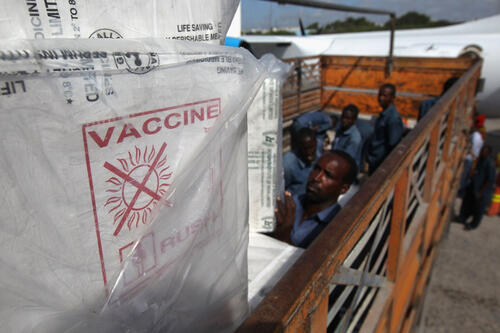
vaccines loaded truck

Instead of the gap between expected spending and need, their framework focuses on the gap between potential spending and the health resources needed to meet global health targets. In the framework, policymakers can choose which gap they want to target, since this decision can involve many factors.

“By focusing on that gap, donors can catalyze sustained domestic spending while also addressing the resource needs critical to reaching international health goals,” they wrote.

They then looked at 10 countries with the most need for additional child health resources. The gap between expected spending and potential spending was highest in Afghanistan, at 79 percent, and lowest in Cameroon, where expected spending exceeded potential spending.

“Fifty years ago, GNI was the best proxy for countries’ ability to finance their own development and health,” the authors wrote.

But today, more empirical data and technology are available, allowing donors to incorporate a broader set of health financing measures into their decision-making process.

“The flexible but targeted nature of our framework is critical in the current era of global health financing,” said Haakenstad, the lead author. “Our framework helps to ensure the poor and disadvantaged, the majority of which now reside in middle-income countries, are reached by development assistance and other public financing. This funding is critical to reducing death and disability and reaching global targets in health.”


The authors’ research was supported by the Welcome Trust (099114/Z/12/Z).

Hero Image
getty child vaccine Oli Scarff/Getty Images
All News button
1
Authors
Beth Duff-Brown
News Type
Q&As
Date
Paragraphs

In April 2016 the Equal Employment Opportunity Commission (EEOC) sued Mission Hospital, a large North Carolina health system, after it denied employee requests for religious exemptions from an influenza-vaccination requirement. The lawsuit, which alleges that the hospital violated Title VII of the Civil Rights Act of 1964, is one of a trio of lawsuits in the past two years in which the EEOC has intervened to challenge vaccination mandates for health-care workers. Facing a full-blown trial in February, the hospital agreed to settle the case on January 12, compensating the employees and revising its vaccination mandate policy.

Michelle Mello, PhD, JD, a professor of health research and policy and professor of law, and her colleague James A. Sonne, JD, an associate professor of law and director of Stanford Law School’s Religious Liberty Clinic, write in this week’s New England Journal of Medicine that the EEOC litigation “is cause for unease” among the growing number of hospitals with mandatory influenza-vaccination policies. Their article is co-authored with Douglas J. Opel, MD, MPH, an assistant professor of pediatrics at the University of Washington.

“These policies are an important public-health strategy since vaccination rates for health-care workers continue to fall short of the Healthy People 2020 target of 90 percent,” the authors write. “But they create thorny problems when it comes to exemptions. In particular, when and how must health-care workers’ religious objections be accommodated to conform to the law?”

The paper comes during what could be the worst flu season since the 2009 swine flu pandemic. The Centers for Disease Control and Prevention reports that this influenza season has claimed the lives of 37 children and is on track to rival the 2014-2015 flu season. The CDC estimates that 34 million Americans got the flu that season; more than 700,000 were hospitalized and about 56,000 people died.

So far this season, an influenza A virus called H3N2 has been the most common form of influenza. Preliminary estimates suggest that this season’s influenza vaccine is about 40 percent effective. Yet antibodies made in response to vaccination with a certain set of influenza viruses can sometimes provide protection against different but related viruses.

Stanford Health Policy asked Mello and Sonne questions about their research and findings.

Q: What prompted you to undertake this research and write about the subject?                                   

Mello: More and more hospitals are mandating their employees get vaccinated against influenza. This is good policy: influenza is a serious disease and voluntary programs have had disappointing results. Having a policy that requires health-care workers to be vaccinated helps protect employees themselves but also the patients they take care of, who are often at high risk of serious complications from influenza. We wrote this article to help make hospitals aware of potential legal challenges based on religious discrimination claims and help them ensure their own mandates are well-written and reasonably applied in order to avoid legal challenge and maintain a healthy and productive workplace. 

Q: Did anything surprise you while conducting your research?

Mello: Yes. First, the Equal Employment Opportunity Commission filed the three latest lawsuits on behalf of the employee. That’s unusual; the EEOC typically only injects itself into an individual employee’s dispute when it perceives that the employee’s case presents an issue of public concern.

Second, there have been about 15 cases filed between 2011 and 2016 that have challenged hospital influenza vaccination mandates on religious grounds, and most of them didn’t get thrown out by the judge—they were settled, or are heading toward trial. This indicates a need to understand the claims made by these lawsuits so that hospitals can avoid future legal challenges. When we looked at the plaintiffs’ grievances, we saw some pitfalls that can be easily avoided if hospitals are attentive to what the law requires and what seems to provoke employees to sue. For example, some hospitals were unduly rigid, to the point of seeming arbitrary, in enforcing deadlines or reviewing exemption requests.

Q: Is it common for hospitals to have influenza vaccination requirements for their employees?

Mello: Many hospitals do, and some states require it. Evidence suggests that these requirements are effective at increasing vaccination rates of their employees. However, hospitals’ requirements vary, with some allowing their employees to opt out of getting the influenza vaccine for religious reasons and others only allowing opt-outs if the employee has a medical contraindication to influenza vaccination, such as having experienced a severe allergic reaction to a prior dose of the vaccine or having an allergy to a component of the vaccine.

Q: Why allow religious exemptions to employer vaccination requirements at all?

Sonne: One reason might simply be to defuse perceptions of coercion and enhance the sustainability and acceptability of the requirements. In addition, Title VII of the Civil Rights Act of 1964 requires employers to reasonably accommodate employees’ religious practices unless doing so presents an undue hardship for the employer. Carefully crafted religious exemptions to influenza-vaccination requirements are a strategy that employers might need to use to avert religious-discrimination claims.

Image

A small proportion of workers may want to serve in the health-care field but nonetheless feel very strongly about not receiving the vaccine as a matter of their religious faith. Depending on the context, accommodating those sincere beliefs doesn’t necessarily impact public health and, arguably, it’s a better use of hospitals’ time and resources to focus on getting the vaccine to the vast majority of unvaccinated workers who don’t object but just haven’t gotten around to being vaccinated. Again, we’re not talking about a large group of people who both work in the industry and have these religious conflicts.


Q: A new civil rights division at the Department of Health and Human Services aims to protect health-care workers who refuse to provide services that violate their religious beliefs. Will there be more support now for health-care workers wanting to opt out from influenza vaccine for religious reasons?

Sonne: This is a good question, but the answer is unclear so far. The “Conscience and Religious Freedom Division” will be part of HHS’s already-established Office of Civil Rights. It will be charged with enforcing laws in the health-care field that forbid religious discrimination or require accommodation of religion—which certainly expresses an enforcement priority in this area of law. That said, the division doesn’t appear to create any additional legal duties but is meant only to enforce existing laws. And its creation also appears to have been motivated more by concerns about having to provide services that some clinicians find morally objectionable, like abortion, which arguably is a different situation. We’ll see.

Q: Are health-care organizations struggling to get their employees vaccinated against influenza?

Mello: HHS’s Healthy People 2020 goal is to have 90 percent or more of health-care personnel vaccinated against influenza. Recent estimates show that only about 78 percent of health-care personnel got vaccinated during the flu 2016-17 season, so we are falling short of that goal. The CDC recommends that all health-care personnel receive an annual influenza vaccination.

Image
Michelle Mello
Q: Why do some health-care personnel choose not to get vaccinated against influenza?

Mello: Studies have shown that some of the primary deterrents to immunization are concerns related to the safety and efficacy of the influenza vaccine, despite the fact that each year the vaccine undergoes a review by FDA to assure its safety and potency before it is approved for immunization of the public.  Health-care workers also may underestimate their risk of getting the flu or the risk they pose to their patients if they get sick—or they may simply be busy enough that they don’t prioritize getting vaccinated.

The fact is that healthy adults can pass the influenza virus to someone else one day before symptoms begin, and they can continue to infect others up to five days after getting sick. Therefore, it is possible for a healthy adult to unknowingly spread the virus to patients at high risk for serious complications from influenza.

Q: What did you find in your analysis of the lawsuits?

Mello: We found some clarity regarding the type of belief that qualifies for a religious exemption under Title VII. One court that dismissed a lawsuit, for example, stated that a religious belief can't simply be a personal moral code or something specific to vaccines. Rather, it must relate to ultimate questions about life, purpose and death. Providing a religious belief definition in hospital policy and explaining what does and doesn’t qualify should help reduced misguided requests and lawsuits.

Sonne: We also found that employers can satisfy their legal obligation to reasonably accommodate workers’ religious beliefs in a variety of ways aside from granting exemptions from vaccination, but should try to find the least onerous option that still protects patients. Tailoring accommodations to the specific individual based on, for example, how much contact they have with patients is good policy.

Finally, we found that, as in so many other litigation contexts, lawsuits in this area are often inspired by a feeling by the affected employees that the processes used to weigh their opt-out requests just weren’t fair. Hospitals can, therefore, avert problems by affording employees a reasonable opportunity to explain their deeply held religious beliefs, avoiding unnecessary or overly rigid administrative procedures and rules, explaining their reasons for denying exemptions and treating religious objectors with respect.


Hero Image
doc and nurse Getty Images
All News button
1
Subscribe to Public Health