Global Health
Paragraphs

Taiwan is 81 miles off the coast of mainland China and was expected to have the second highest number of cases of coronavirus disease 2019 (COVID-19) due to its proximity to and number of flights between China. The country has 23 million citizens of which 850 000 reside in and 404 000 work in China. In 2019, 2.71 million visitors from the mainland traveled to Taiwan. As such, Taiwan has been on constant alert and ready to act on epidemics arising from China ever since the severe acute respiratory syndrome (SARS) epidemic in 2003. Given the continual spread of COVID-19 around the world, understanding the action items that were implemented quickly in Taiwan and assessing the effectiveness of these actions in preventing a large-scale epidemic may be instructive for other countries.

All Publications button
1
Publication Type
Journal Articles
Publication Date
Journal Publisher
JAMA Network
Authors
C. Jason Wang
Number
2020
Paragraphs

Controversies over diagnostic testing have dominated US headlines about severe acute respiratory syndrome coronavirus 2 (SARS-CoV-2), the novel coronavirus responsible for coronavirus disease 2019 (COVID-19). Technical challenges with the first test developed by the Centers for Disease Control and Prevention (CDC) left the nation with minimal diagnostic capacity during the first few weeks of the epidemic. The CDC also initially limited access to testing to a narrow group of individuals with known exposure. The delayed discovery of a case of COVID-19 in California, followed quickly by evidence of community transmission in multiple states, revealed the shortcomings of this strategy. In the early stages, COVID-19 has spread beyond the nation’s ability to detect it.

All Publications button
1
Publication Type
Journal Articles
Publication Date
Journal Publisher
JAMA Network
Authors
Michelle Mello
Number
2020
Paragraphs

Covid-19 has exposed major weaknesses in the United States’ federalist system of public health governance, which divides powers among the federal, state, and local governments. SARS-CoV-2 is exactly the type of infectious disease for which federal public health powers and emergencies were conceived: it is highly transmissible, crosses borders efficiently, and threatens our national infrastructure and economy. Its prevalence varies around the country, with states such as Washington, California, and New York hit particularly hard, but cases are mounting nationwide with appalling velocity. Strong, decisive national action is therefore imperative.

All Publications button
1
Publication Type
Journal Articles
Publication Date
Journal Publisher
New England Journal of Medicine
Authors
Michelle Mello
Number
2020
Paragraphs

In times of emergency, many legal strictures can flex. For example, to enable hospitals to respond to Covid-19, the Department of Health and Human Services (HHS) recently waived a swath of federal regulatory requirements. But though officials’ emergency powers are extensive, the ability to discard antidiscrimination protections is not among them. A hallmark of our legal system is that our commitment to prohibiting invidious discrimination remains steadfast even in times of emergency.

All Publications button
1
Publication Type
Journal Articles
Publication Date
Journal Publisher
New England Journal of Medicine
Authors
Michelle Mello
Number
2020
Paragraphs

During the severe acute respiratory syndrome (SARS) outbreak in 2003, Taiwan reported 346 confirmed cases and 73 deaths. Of all known infections, 94% were transmitted inside hospitals. Nine major hospitals were fully or partially shut down, and many doctors and nurses quit for fear of becoming infected. The Taipei Municipal Ho-Ping Hospital was most severely affected. Its index patient, a 42-year-old undocumented hospital laundry worker who interacted with staff and patients for 6 days before being hospitalized, became a superspreader, infecting at least 20 other patients and 10 staff members. The entire 450-bed hospital was ordered to shut down, and all 930 staff and 240 patients were quarantined within the hospital. The central government appointed the previous Minister of Health as head of the Anti-SARS Taskforce. Ultimately the hospital was evacuated; the outbreak resulted in 26 deaths. Events surrounding the hospital’s evacuation offer important lessons for hospitals struggling to cope with the COVID-19 pandemic, which has been caused by spread of a similar coronavirus.

 
All Publications button
1
Publication Type
Journal Articles
Publication Date
Journal Publisher
Journal of Hospital Medicine
Authors
C. Jason Wang
Number
2020
Paragraphs

Reopening colleges and universities during the coronavirus disease 2019 (COVID-19) pandemic poses a special challenge worldwide. At the start of the pandemic, Taiwan took proactive steps to contain the virus and implemented 124 action items in 5 weeks, resulting in only 446 confirmed cases, 7 deaths, and no domestic case for 67 consecutive days as of 18 June 2020. To accomplish this, the Taiwanese government adopted the strategy of strict border control and containment in the crucial first 3 months of the pandemic.

All Publications button
1
Publication Date
Journal Publisher
Annals of Internal Medicine
Authors
C. Jason Wang
Number
2020
Paragraphs

Nearly 120 million children in 37 countries are at risk of missing their measlescontaining vaccine (MCV) shots this year, as preventive and public health campaigns take a back seat to policies put in place to contain coronavirus disease 2019 (COVID-19). In March, the World Health Organization (WHO) issued guidelines indicating that mass vaccination campaigns should be put on hold to maintain physical distancing and minimize COVID-19 transmission. The disruption of immunization services, even for short periods, will lead to more susceptible individuals, more communities with less than the 95% MCV coverage needed for herd immunity, and therefore more measles outbreaks globally. A mere 15% decrease in routine measles vaccinations—a plausible result of lockdowns and disruption of health services—could raise the burden of childhood deaths by nearly a quarter of a million in poorer countries. Solutions for COVID-19, especially among the global poor, cannot include forgoing vaccinations.

All Publications button
1
Publication Type
Journal Articles
Publication Date
Journal Publisher
Science Magazine
Authors
Eran Bendavid
Number
2020
Authors
Beth Duff-Brown
News Type
News
Date
Paragraphs

Most of the stillbirths that occur around the world are among women who live in low- and middle-income countries. Some 2.5 million women suffer the heartbreaking loss each year.

Yet determining the causes and prevention of stillbirths has largely been ignored as a global health priority — the incidence not even included in the WHO Millennium Development Goals.

Stanford Health Policy’s Rosenkranz Prize Winner, Ashley Styczynski, MD, MPH, discovered the alarmingly high level of stillbirths while working in Bangladesh as a 2019-2020 Fogarty Fellow, studying antimicrobial resistance in newborns in the hospitals there.

The $100,000 Rosenkranz Prize is awarded to a Stanford researcher who is doing innovative work to improve health in the developing world.

“I was surprised to learn that the rates of stillbirths were comparable to sub-Saharan Africa and that in many cases they had no idea of the cause,” Styczynski said in a Skype call from Dhaka, where she has been living for eight months while conducting her antimicrobial resistance research.

specimen collection1 copy Rosenkranz Prize Winner Ashley Styczynski takes specimen samples with women in Dhaka, Bangladesh, for her research on antimicrobial resistance in newborns. This research led to her prize-winning proposal to investigate the alarmingly high rate of stillbirths in the South Asian nation.

The South Asian nation is among the top 10 countries with the highest number of stillbirths, with an average of 25.4 stillbirths per 1,000 births. Studies have implicated maternal infections as the cause; one ongoing study in Bangladesh has recovered bacteria from blood samples in stillborn babies in whom no prior maternal infection was suspected.

Styczynski believes intrauterine infections may be an underrecognized factor contributing to the excess stillbirths in Bangladesh. She intends to perform metagenomic sequencing on placental tissues of stillborn babies, a process that will allow her to examine the genes in the organisms of those tissues and evaluate the bacterial diversity.

“The alternative hypothesis would be that stillbirths are caused by non-infectious etiologies, which I will be assessing through interviews,” Styczynski wrote in her Rosenkranz application.

Those interviews will be with mothers to evaluate for frequency of infectious symptoms during pregnancy, including fever, rash, cough, dysuria and diarrhea, as well as possible toxin exposures. She will compare the findings with the metagenomic sequencing results to determine how frequently potential pathogens may be presenting as subclinical infections.

My goal is to reduce excess stillbirths by identifying risk factors and pathogens that may be contributing to stillbirths and, ultimately, to design prevention strategies.
Ashley Styczynski
Rosenkranz Prize Winner

“By applying advanced technologies and software platforms, this research will not only enhance our understanding of causes of stillbirths in Bangladesh, but it may also provide insights into causes of early neonatal deaths," Styczynski said.

Bangladesh, one of the poorest and most densely populated nations in the world, offers a rich variety of emerging and known diseases that go undetected.

“The panoply of infections that could contribute to stillbirths is really unknown,” Styczynski said. “That’s why metagenomics is a great tool here. It just hasn’t been accessible here because of the expense. Now this tool will begin to unpack what’s causing these stillbirths.”

The Rosenkranz Prize was started and endowed by the family of the late Dr. George Rosenkranz, who devoted his career to improving health-care access across the world and helped synthesize the active ingredient for the first oral birth control pill.

“No one is more deserving of the Rosenkranz Prize than Dr. Ashley Styczynski”, said Dr. Ricardo Rosenkranz. “Because of her tenacity, originality and focus, Dr. Styczynski exemplifies the ideal Rosenkranz Prize recipient. She has chosen an often overlooked adverse outcome that may prove to be mitigated by her findings. As a neonatologist interested in health disparities, I fully realize the potential relevance and urgency of her work and am excited to see it come to fruition. As the son of George Rosenkranz, for whom this prize is lovingly named, I know that my father would appreciate Dr. Styczynski’s pioneering spirit as well as her desire to affect global positive change by improving medical outcomes in vulnerable communities. We can’t wait to celebrate her work back at Stanford in the near future."

Sheltering in Place

Styczynski spoke from her flat in Dhaka, where she has been confined for three weeks as the world’s third-most populated city prepares for the onslaught of the coronavirus. The country is on lockdown; no international flights in or out.

As of Thursday, there were 1,572 cases in Bangladesh and 60 deaths, according to the widely used Johns Hopkins Coronavirus Map.

But Styczynski believes that’s about 1% of the actual disease activity in the country because testing was so slow to start. She said there is great stigma in the country over testing — red flags are put on the homes of those who have been diagnosed with COVID-19 — because it breaks up the unity of families and the surrounding community. Health-care workers are being kicked out of apartments by frightened landlords and people are afraid to use the health-care system for fear of infection.

“So, the hospitals are quite empty — more so than they’ve ever been,” she said.

Styczynski likened it to waiting for the tsunami that you know is coming.

“That’s why I wanted to jump in to stave off the morbidity and mortality that will be inundating one of the most populated countries in the world,” she said. Some 165 million people are packed into 50,250 square miles — a land mass about the same size as New York State, which has some 19.5 million people.

triage at upazila health complex1 copy Ashley Styczynski goes through a thermoscanner was when I was testing out the triage system at an upazila health complex.

The Centers for Disease Control and Prevention (CDC) has a small team of four people working in Bangladesh. Having spent two years as an Epidemic Intelligence Service Officer at the CDC, Styczynski has now joined its Bangladesh team and is also working with the infection prevention and control team of the International Centre for Diarrhoeal Disease Research, Bangladesh.

“Many people here in Dhaka live in high-density apartments with six to 12 people living in the same room,” she said. “How do you isolate when you have a one-room home?”

Ninety percent of the population are daily wage earners, Styczynski noted, who say they’d rather take their chances with coronavirus than die of starvation.

They take those chances at great risk. There is one ventilator for every 100,000 people in Bangladesh and the district hospitals have maybe one to two days of oxygen supply, Styczynski said.

They started out training military hospitals on medical triage, quarantine and isolation, and infection prevention strategies.

“We’ve also been going to some district hospitals to assess some of the challenges they are facing and to identify some of the gaps in preparedness so that we can communicate back to the Ministry of Health how they can better support these district hospitals,” she said.

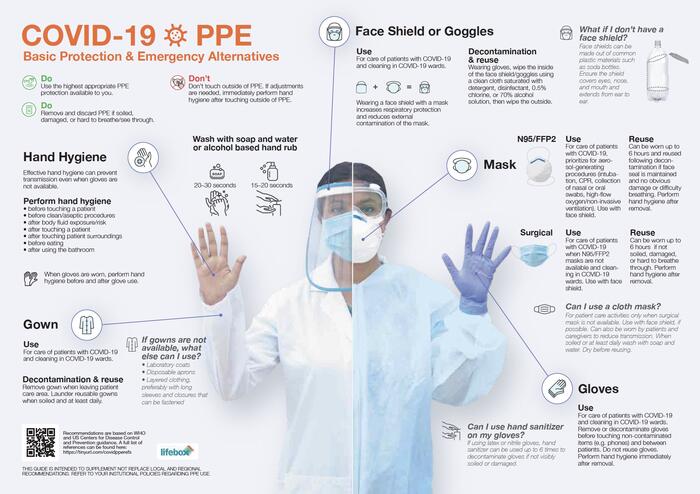
Her pandemic travels to the district hospitals and preparedness work has allowed her to gather contextual data for her colleagues back at Stanford who are working to address the lack of personal protective equipment (PPE) in low-resourced countries.

“We hope we can generate some evidence very quickly so that we can share some of this information to better protect health-care workers in other low-resource countries,” she said.

Despite her research being temporarily sidelined, Styczynski is upbeat.

“This is what I signed up for as a Fogarty fellow, to help build local capacity,” she said. “But I am also an infectious disease specialist, and these are the types of situations we run towards rather than away from. We build our career for moments like these.”

Read More

ami ricky
News

Rosenkranz Prize winner to launch microbiome research project in Africa

Rosenkranz Prize winner to launch microbiome research project in Africa
kenya rosenkranz6
News

Rosenkranz Prize winner brings statistics to rape prevention in Kenya

Rosenkranz Prize winner brings statistics to rape prevention in Kenya
Prasanna Jagannathan Rosenkranz
News

Rosenkranz Prize Winner Hopes to Develop Malaria Vaccine Targeting Pregnant Women

Prasanna Jagannathan and his lab members intend to ramp up their research in Uganda. A member of the nonprofit Infectious Disease Research Collaboration in Kampala, his team is particularly interested in how strategies that prevent malaria might actually alter the development of natural immunity to malaria.
Rosenkranz Prize Winner Hopes to Develop Malaria Vaccine Targeting Pregnant Women
Hero Image
evaluating ventilator
Ashley Styczynski (center) evaluating the set-up in one military hospital in Dhaka in preparation for COVID patients. There is only one ventilator available for every 100,000 people in the South Asian nation.
Ashley Styczynski
All News button
1
Subtitle

Stanford postdoc Ashley Styczynski will investigate the epidemiology behind the alarmingly high rate of stillbirths in Bangladesh while helping prepare for the coming onslaught of coronavirus in the densely populated South Asian nation.

News Type
News
Date
Paragraphs

As the deaths and detected cases from the COVID-19 epidemic continue to rise globally, government planners and policymakers require projections of its future course and impacts. They also need to understand how potential interventions might “flatten the curve.”

“It’s important to understand these overall effects by geographic area, demographic group, and for special populations like health-care workers,” says Stanford Health Policy’s Jeremy Goldhaber-Fiebert, who will be teaching a new class in the spring on infectious disease modeling with Stanford Medicine’s Jason Andrews. “Doing this requires mathematical models that incorporate the best available clinical, epidemiological, and policy data along with their associated uncertainties — the state-of-the-art of infectious disease modeling.”

Goldhaber-Fiebert and Andrews will debut the new course, Models for Understanding and Controlling Global Infectious Diseases (HUMBIO 154D for undergrads and HRP204 for graduate students) in the upcoming spring quarter. Stanford Provost Persis Drell announced last week that all spring courses at the university will now be taught online and pushed the start of the new quarter April 6.

Andrews is an infectious disease physician and assistant professor of medicine and Goldhaber-Fiebert, an associate professor of medicine, is a decision scientist.

The class will enable students to become critical consumers of studies using infectious disease modeling and to learn the building blocks for constructing infectious disease models themselves.

Despite the course being new and listed in the middle of winter quarter, they have seen enrollment rise from eight — prior to the rise of COVID-19 in the U.S. and its direct impacts on Stanford’s operations — to nearly 30 students as of March 22.

“Together Jason and I are leading one of several efforts on COVID-19 modeling here in Stanford,” said Goldhaber-Fiebert. “And we anticipate that the course will increase the number of Stanford students with the necessary skills to contribute to Stanford’s leadership in this area.”

Hero Image
jeremy class
Jeremy Goldhaber-Fiebert (right) talks to a student after one of his health policy classes. (Photo: Rod Searcey)
Rod Searcey
All News button
1
Authors
Beth Duff-Brown
News Type
Q&As
Date
Paragraphs

Controversies over the lack of diagnostic testing for the COVID-19 virus have dominated U.S headlines for weeks. Technical challenges with the first test developed by the Centers for Disease Control and Prevention (CDC) left the nation with minimal diagnostic capacity during the first few weeks of the epidemic, according to a new paper published today in the Journal of the American Medical Association by Michelle Mello, a professor of medicine at Stanford Health Policy and professor of law at Stanford Law School.

On February 29, the Food and Drug Administration (FDA) began allowing high-complexity labs across the country to use tests they developed in-house. On March 5, the Stanford Clinical Virology Lab deployed its own test for patients at Stanford Health Care and Stanford Children’s Health.

We asked Mello to answer some questions about the federal rollout of diagnostic testing.


You write that in the early stages, COVID-19 “spread beyond the nation’s ability to detect it.” Is there anything the U.S. government could or should have done weeks ago to get out ahead of the spread?

Adopting broader testing criteria and allowing use of a wider range of tests would have been helpful in identifying the first U.S. cases and containing the spread. Manufacturing problems like the one that arose with CDC’s test are always a risk, but the fact that CDC put all its eggs in that one basket made the manufacturing snafu highly consequential.

Also, the public messaging from Washington about the seriousness of the problem has been neither consistent nor accurate, and I worry it may have led Americans to take fewer steps to prevent community transmission than we should have. Containment was not “pretty close to airtight.” A vaccine was never going to be ready in “three to four months,” as the Trump administration claimed. The case fatality rate is not “way under 1 percent.” Part of the problem here is that as the stock market continues to plunge, the president and the task force he appointed appear to be more concerned about calming investors than stopping the virus.

We seem to be between a rock and a hard place: You write that remedying gaps in testing is imperative, yet “more testing is not always better.” How do we determine the happy middle ground?

First, the testing criteria have to be calibrated to our actual testing capacity. You can’t announce that any American who wants a coronavirus test can get one and then, within hours, announce that there aren’t enough test kits to make that possible. High priorities for testing include patients with serious, unexplained respiratory illness and contacts of known cases. From there, testing can be expanded, beginning with other high-risk groups, as capacity permits.

Second, we should consider unintended side effects of mass testing. The problem with this virus is that it doesn’t have signature symptoms. It looks like the common cold or the flu. If everyone with a cough or fever, or who has been around someone with a cough or fever, shows up in their doctor’s office demanding a test, it will quickly overwhelm care facilities that should be focusing on patients with a higher likelihood of being infected or and those who are infected and are seriously ill. It may also work against the social distancing measures that public health officials are trying to encourage, because crowded waiting rooms may spread the virus.

The CDC announced Monday it now has the testing capacity in 78 state and local public health labs across 50 states to test for the virus. There are now 75,000 lab kits cumulatively to test for COVID-19 with more coming on board by mid-March. But is there anything we could have done to roll this out earlier?

The alternative would have been to allow laboratories to deploy their own tests from the beginning, using the primers and protocols made publicly available by the World Health Organization. That’s what other countries have done. RT-PCR is a mature technology and high-complexity labs around the country are well-qualified to conduct this type of testing.

There is a public health argument for not going that route: perhaps those labs wouldn’t have done as good a job as CDC’s own lab and the state labs that it handpicked early in the outbreak. What if there were erroneous test results? We could miss cases, or we could put people into isolation, with huge social consequences, based on false-positive results. There is also a worry that some labs aren’t consistent about reporting positive test results to CDC, and underreporting could compromise disease surveillance efforts.

The counterargument is that high-complexity labs have that certification for a reason—they’re good at what they do. And of course, surveillance is also compromised when you miss cases because you don’t test.

You write in your paper that testing for COVID-19 “highlights a controversial area of public policy—the regulation of laboratory-developed tests—in which there has long been tension between the goals of access and quality.” Who should be in charge of regulating these tests?

Laboratory-developed tests are largely unregulated outside of emergencies. The FDA proposed draft guidance in 2014 that, if implemented, would have required labs to make certain showings to FDA about tests they developed in-house, with the particular evidence calibrated to the risks involved in having a wrong test result. Contrary to President Trump’s claim that an Obama-era policy constrained coronavirus testing, the guidance did not relate to emergency situations. During declared emergencies, another statute and set of regulations apply, and the FDA has broad discretion to allow or disallow use of novel diagnostics and therapies as emergency countermeasures.

As a general matter, it makes good sense to require labs to submit evidence that their in-house tests work. It’s odd that laboratory-developed tests are carved out of requirements that apply to other kinds of medical devices. It’s also sensible that our legal framework allows FDA’s regular rules to be relaxed during emergencies so we can tailor our response to the difficult and changing circumstances.

You write that diagnostic testing is critical to an effective response to the novel coronavirus. What sort of policies and guidelines should be put into place to prevent such a sluggish rollout during an emerging epidemic the next time one comes around?

The legal framework for an effective emergency response is in place. Because giving agency heads the discretion to act as potentially unforeseeable circumstances require is a linchpin of this legal framework, it only works if leaders make smart choices. Every emergency is different, and there is a danger of Monday-morning quarterbacking. But we should learn from every misstep we make, and I think the lesson here is to make better use of already developed networks of highly qualified labs to make sure we have adequate testing capacity to isolate cases and trace their contacts very early in an outbreak.

What are some innovative approaches we could be taking to speed up testing for those who really need it?

The South Koreans have set up drive-through testing stations in parking lots to avoid concentrating crowds of people indoors. Of course, that requires that you have plenty of test kits, which we don’t yet – but we should also be thinking about creative ways to address the epidemic. For example, how could video calls be used to monitor the health of people confined at home after being exposed to the virus? How can social media be used to connect neighbors to help one another when some are isolated at home? Hopefully we can find new ways for technology to bring us together when pathogens drive us apart.

Hero Image
gettyimages corona test Getty Images
All News button
1
Subscribe to Global Health