Health policy
1
PhD Student, Health Policy Alumni
marika_cusick_head-2023.jpg

Marika is a Health Policy PhD student in the Decision Sciences track. She holds a Bachelor of Arts in Statistical Science from Cornell University and a Master of Science in Information Science for Health Tech from Cornell Tech. Prior to joining Stanford in 2020, she worked at Weill Cornell Medicine, supporting the institution’s secondary use of electronic health record data for research.

Marika’s interests lie in the areas of health policy modeling, data science, and clinical policy interventions as applied to improve chronic disease healthcare delivery.

Date Label
Paragraphs

Epidemiological modeling has emerged as a crucial tool to help decision-makers combat COVID-19, with calls for non-pharmaceutical interventions such as stay-at-home orders and the wearing of masks. But those models have become ubiquitous and part of the public lexicon — so Nirav Shah and Jason Wang write that they should follow an impact-oriented approach.

All Publications button
1
Publication Type
Journal Articles
Publication Date
Journal Publisher
Journal of General Internal Medicine
Authors
C. Jason Wang
Number
2020
Paragraphs

Stanford Health Policy’s Joshua Salomon, a professor of medicine and senior fellow at the Freeman Spogli Institute for International Studies, and colleagues developed a mathematical model to examine the potential for contact tracing to reduce the spread of the coronavirus. They modeled contact tracing programs in the context of relaxed physical distancing under different assumptions for case detection, tracing coverage and the extent to which contact tracing can lead to effective quarantine and isolation.

All Publications button
1
Publication Type
Journal Articles
Publication Date
Journal Publisher
JAMA Network Open
Authors
Joshua Salomon
Number
2020
Paragraphs

In a recent perspective published by the New England Journal of Medicine(NEJM), Stanford Law student Alexandra Daniels analyzed a growing body of federal litigation brought by prisoners with the hepatitis C virus (HCV) who are seeking access to treatment for their condition. With co-author and mentor, Law Professor David Studdert — also a professor of medicine at Stanford Health Policy — Daniels documented the dire public health problem of HCV in prisons.

All Publications button
1
Publication Type
Journal Articles
Publication Date
Journal Publisher
New England Journal of Medicine
Authors
David Studdert
Number
2020
-

Title: Surviving Mass School Shootings

Prashant Bharadwaj 
University of California, San Diego (UCSD) 

Professor in the Department of Economics at the University of California, San Diego. Research interests are in development and labor economics. Research affiliations include BREADCEGACERP and the NBER. Currently a co-editor at  Journal of Human Resources and an associate editor at the Journal of Development Economics and the Journal of Health Economics. Currently, also the Vice Chair of Graduate Studies in the Department of Economics and the Program Director of the South Asian Studies minor at UCSD.


Prashant Bharadwaj
-

Title: The Value of Improving Insurance Quality: Evidence from Long-Run Medicaid Attrition

Dr. Ajin Lee
Assisstant Professor of Economics 
Michigan State University

Main fields of interest are public and health economics. She focuses on the determinants of efficient delivery of public health insurance systems and both short- and long-run effects of the early childhood environment. 
Dr. Ajin Lee received her BA in Economics from Yonsei University and my PhD in Economics from Columbia University.


Dr. Ajin Lee
Authors
Beth Duff-Brown
News Type
News
Date
Paragraphs

Stanford postdoc Ashley Styczynski was working on newborn antimicrobial resistance in Bangladesh when the pandemic hit. The infectious disease physician realized she had to switch gears and began working with the ministry of health to prepare hospitals for the onslaught of COVID-19 patients.

“During my trainings on infection control in Bangladeshi hospitals, I learned that many health-care workers were paralyzed by the fear of not knowing how to protect themselves against COVID-19 while caring for patients, especially during shortages of PPE,” she said. “I think this has substantially contributed to the large number of health-care workers becoming infected during the pandemic. In fact, Bangladesh has the highest rate of physician mortality from COVID of any country.”

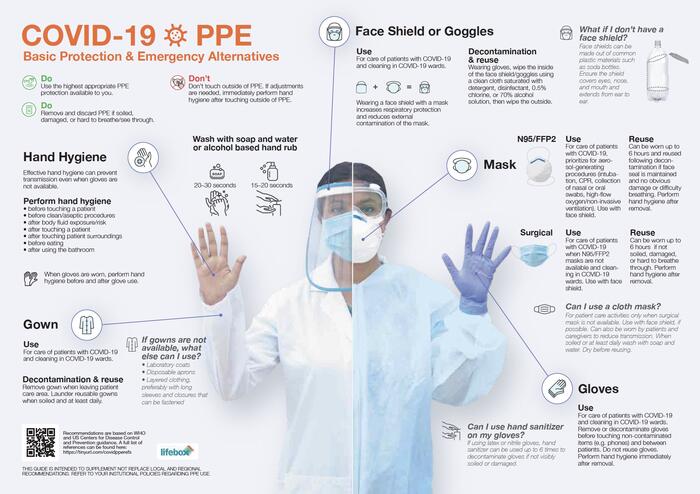
So Styczynski turned to her Stanford colleagues back home and proposed a set of infographics that could help health-care workers in Bangladesh and other under-resourced countries. Armed with a seed grant from the Stanford Center for Innovation in Global Health, they have established a website devoted to the creation and use of personal protective equipment (PPE). Bangladesh Ministry of Health has adopted their guidelines and Styczynski hopes other health ministries will do the same.

“I want them to be a tool to empower health-care workers — not just in Bangladesh but also in other low- and middle-income countries — to protect themselves with whatever resources they have access to,” Styczynski said. She said the team of collaborators from Stanford grew when researchers from other institutions heard about the research and wanted to get involved.

Image
An infographic to help health-care workers with their personal protective equipment.


The website also includes a video on PPE donning-and-doffing techniques, illustrations for building ultraviolet germicidal irradiation (UVGI) cabinets to decontaminate masks, and the PPE infographics in other languages.

Stephen P. Luby, MD, a core faculty member at Stanford Health Policy and senior fellow at the Freeman Spogli Institute for International Studies and the Woods Institute for the Environment, said the project grew out of Styczynski’s background in infectious disease epidemiology and her deep engagement with collaborators in Bangladesh.

“These scientifically sound, easy-to-understand visuals provide a clear example of how deep engagement in a high-need context allows Stanford researchers to make contributions that impact lives globally,” Luby said.

Styczynski is this year’s Rosenkranz Prize winner for her ongoing research into why Bangladesh is among the top 10 countries with the highest number of stillbirths. She believes intrauterine infections may be an underrecognized factor contributing to the stillbirths and is performing metagenomic sequencing on placental tissues of stillborn babies to examine the genetic and bacterial diversity.

She recently returned to the States to marry her now-husband, Adam Gsellman, a graphic designer who did all the infographics pro bono for the project. Styczynski met him in Bangladesh, where he was working at an IT startup focused on developing travel management software.

“After having lived in Bangladesh for nearly 6 years, he is intimately connected to the country and cares deeply about the people there as well,” she said.

Other Stanford faculty involved in the project include bioengineer Manu Prakash, one of the inventors of the cheap paper microscope, the Foldscope, now used around the world, and Thomas Baer, director of the Stanford Photonics Research Center.

During the initial planning stages, Styczynski connected with Thomas Weiser, MD, MPH, a general and trauma surgeon at Stanford Medicine and the consulting medical officer for Lifebox, a nonprofit working to improve surgical safety in resource-limited settings.

"Lifebox's work is focused on infection prevention in surgery, including decontamination of surgical instruments and appropriate PPE use for surgery,” Weiser said. "We had experience doing this in the operating room, so with Ashley's help we expanded the work to include other health-care workers at risk of infection."

He added that COVID-19 presented them with additional challenges.

"But we felt it was important to prepare the surgical ecosystem to help respond to the new demands for PPE and decontamination processes that would need to be put in place," he said.

Ashley Styczynski

Ashley Styczynski

Infectious Disease Fellow
Styczynski researches the global threat of antimicrobial resistance.
Profile

Read More

evaluating ventilator
News

Rosenkranz Prize Winner: Infectious Diseases Physician Examines High Stillborn Incidence in Bangladesh, Helps With COVID-19 Preparedness

Stanford postdoc Ashley Styczynski will investigate the epidemiology behind the alarmingly high rate of stillbirths in Bangladesh while helping prepare for the coming onslaught of coronavirus in the densely populated South Asian nation.
Rosenkranz Prize Winner: Infectious Diseases Physician Examines High Stillborn Incidence in Bangladesh, Helps With COVID-19 Preparedness
An illustration by Irene Servillo
News

An 8-Point Plan to Tackle COVID-19 Among Women in Mumbai Slums

“We’ve never been closer to each other or to those we serve," says Health Policy PhD candidate Suhani Jalota, founder of the Myna Mahila Foundation, a Mumbai-based women’s health and employment nonprofit. Its mission is to create the next generation of women leaders in urban slum communities — but COVID-19 isn't making it easy.
An 8-Point Plan to Tackle COVID-19 Among Women in Mumbai Slums
A mother and child in the fields in Sierra Leone.
Commentary

Millions of Children at Risk of Measles as Vaccination Campaigns Take Back Seat to COVID-19

SHP's Eran Bendavid Warns that millions of young children around the world are at risk of missing their measles vaccines as health-care workers focus on COVID-19.
Millions of Children at Risk of Measles as Vaccination Campaigns Take Back Seat to COVID-19
Hero Image
Ashley Styczynski shows a colleague in Bangladesh how to wear an N95 mask to protect her against COVID-19.
Ashley Styczynski shows her Bengali tutor, Marioum Akhi, how to properly use a mask during the COVID-19 pandemic.
All News button
1
Subtitle

Stanford postdoc Ashley Styczynski and collaborators build a website devoted to protecting health-care workers in under-resourced countries, using infographics and videos to show them how to create, wear and preserve personal protective equipment.

Encina Commons Room 222,
615 Crothers Way,
Stanford, CA 94305-6006

(650) 724-3545
0
Research Scholar, Health Policy
yifan.jpg PhD

Yifan Zhang is a Social Science Research Scholar at Stanford University School of Medicine. She is interested in applying statistical analysis methods in health policy research in scenarios where health risk heterogeneity exists. At Stanford Health Policy, she has participated in projects examining drivers’ accident risks, physicians’ malpractice, gun violence, and secondary insurance markets. Dr. Zhang has engaged from the beginning of a five-year collaboration among researchers in multiple institutions and government agencies to construct an extensive database of firearm purchasers that permits the analysis of risk factors of firearm injuries.

Before joining Stanford, Dr. Zhang was a Research Associate at Center for Biostatistics in AIDS Research at Harvard T.H. Chan School of Public Health. She received a BSc in Actuarial Science from The University of Hong Kong, an MSc and a PhD from Harvard University.

CV
Paragraphs

In March 2020, when many U.S. states and localities issued their first emergency orders to address Covid-19, there was widespread acceptance of the government’s legal authority to respond quickly and aggressively to this unprecedented crisis. Today, that acceptance is fraying. As initial orders expire and states move to extend or modify them, legal challenges have sprouted. The next phase of the pandemic response will see restrictions dialed up and down as threat levels change.  As public and political resistance grows, further legal challenges are inevitable.

All Publications button
1
Publication Type
Journal Articles
Publication Date
Journal Publisher
New England Journal of Medicine
Authors
Michelle Mello
David Studdert
Number
2020
Paragraphs

Vaccine hesitancy, the reluctance or refusal to receive vaccination, is a growing public health problem in the United States and globally. State policies that eliminate nonmedical (“personal belief”) exemptions to childhood vaccination requirements are controversial, and their effectiveness to improve vaccination coverage remains unclear given limited rigorous policy analysis. In 2016, a California policy (Senate Bill 277) eliminated nonmedical exemptions from school entry requirements. The objective of this study was to estimate the association between California’s 2016 policy and changes in vaccine coverage.

All Publications button
1
Publication Type
Journal Articles
Publication Date
Journal Publisher
PLOS Medicine
Authors
Eran Bendavid
Number
2020
Subscribe to Health policy