Health policy
Paragraphs

For forty years, the Tuskegee Study of Untreated Syphilis in the Negro Male passively monitored hundreds of adult black males with syphilis despite the availability of effective treatment. The study's methods have become synonymous with exploitation and mistreatment by the medical community. We find that the historical disclosure of the study in 1972 is correlated with increases in medical mistrust and mortality and decreases in both outpatient and inpatient physician interactions for older black men. Our estimates imply life expectancy at age 45 for black men fell by up to 1.4 years in response to the disclosure, accounting for approximately 35% of the 1980 life expectancy gap between black and white men.

All Publications button
1
Publication Type
Journal Articles
Publication Date
Journal Publisher
The Quarterly Journal of Economics
Authors
Authors
Beth Duff-Brown
News Type
News
Date
Paragraphs

Stanford Health Policy’s newest faculty member, Joshua Salomon, believes that one urgent need in global health research is to improve forecasts of the patterns and trends that are the major causes of death and disease.

Salomon, who is leaving leaving his position as professor of global health at the Harvard T.H. Chan School of Public Health to join Stanford on Aug. 1, works on modeling of infectious and chronic diseases and their associated intervention strategies, as well as methods for economic evaluation of public health programs and ways to measure the global burden of disease.

And he looks at the potential impact and cost effectiveness of new health technologies.

“Projections of future trends in health are crucial to formulating policy,” said Salomon, who has a PhD from Harvard. “To think strategically about the technologies and policies that would make the biggest impact on health over the next 20 to 50 years, we really need to start by understanding the range of likely trends in major health challenges over the coming decades.”

Stanford, he said, offers him a “rich collaborative environment” to better learn from advances in forecasting across a range of other disciplines, such as economics, political science, and environmental science.

“With a better picture of what the world is likely to look like over the next 50 years — and what are going to be the most pressing health problems — we can invest wisely and put ourselves in a position to respond more effectively.”

Salomon is also the director of the Prevention Policy Modeling Lab, which is funded by a five-year award from the Centers for Disease Control and Prevention. The consortium represents the collaborative research of experts from Massachusetts General Hospital, Boston Medical Center, Dana Farber Cancer Institute, Yale School of Public Health, Brown University School of Public Health, and the Massachusetts Department of Public Health and.

He will continue directing the lab from Stanford and intends to bring in new research threads from his colleagues here on the Farm. The lab works on a wide range of projects dealing with policy analysis for hepatitis, sexually transmitted infections and diseases such as HIV, and tuberculosis.

“It’s a rewarding grant for me to work on because, unlike a lot of modeling projects, the work that we do really starts from urgent public health questions that policymakers have,” he said. “All of the questions that we are working on are questions that originated directly from discussions with CDC and other public health partners.”

With Salomon’s move to Stanford, the university gains a dynamic duo.

Grace Lee joins Stanford as the Associate Chief Medical Officer at Lucile Packard Children's Hospital in the fall, 2017.

His wife, Grace Lee, MD, MPH, joins in the fall as the Associate Chief Medical Officer at Lucile Packard Children’s Hospital. As a professor of population medicine at Harvard Pilgrim Health Care Institute & Harvard Medical School, Lee has led research in vaccine safety in the FDA-funded Post-licensure Rapid Immunization Safety Monitoring (PRISM) program and the CDC-funded Vaccine Safety Datalink, which monitors the safety of vaccines and studies rare and adverse reactions from immunizations.

She has also examined the impact of financial penalties on rates of healthcare-associated infections, as the principal investigator of an AHRQ-funded study, as well as developed novel surveillance definitions for ventilator-related events in neonates and children.

While at Stanford, Lee said, she intends “to find opportunities to enhance the learning health system approach to improve patient outcomes and population health.”

Salomon has spent his entire career as a collaborator on the Global Burden of Disease project, the world’s most comprehensive epidemiological study commissioned by the World Bank in 1990, which tracks mortality and morbidity from major diseases, injuries and risks factors.

“The study has made a major contribution to global public health because before this study we just didn’t have a comprehensive, systematic understanding of the things that cause death and disability in low- and middle-income countries. But now we do,” he said. “It’s hugely ambitious and very sweeping in scope — and a lot of my work is around providing the evidence we need to inform policy.”

Much of Salomon’s work is global in nature. He’s most recently focused on older adults in one rural South African community, which has a high prevalence of HIV and one of the world’s highest levels of hypertension. His research there aims to inform urgent prevention initiatives tailored to older adults where HIV and cardiovascular risks are moderate or high, as in similar communities in sub-Saharan Africa.

“People don’t expect a high level of ongoing HIV transmission in older adults,” he said. “The double burden that we find, with a very high level of HIV, as well as the high prevalence of diabetes and heart disease, creates enormous strains on the health-care system.”

Hero Image
40 joshua salomon
Stanford Health Policy's Joshua Salomon believes forecasting new patterns and trends in global health is an urgent need.
Harvard T.H. Chan School of Public Health
All News button
1
Authors
Beth Duff-Brown
News Type
Commentary
Date
Paragraphs

Stanford Health Policy’s Michelle Mello is calling for reforms to the practice of overlapping surgery, a practice in which surgeons juggle multiple operations at the same time.

Primary surgeons who run multiple operating rooms delegate “non-critical” parts of the operations to trainees or physician assistants. Overlapping scheduling is considered an important means of giving surgical trainees hands-on experience before they enter the profession with a license to operate. But patients are often unaware about the prospect that their surgeon may be double-booked.

“As patients at a teaching hospital, we know that surgery is a team sport and trainees will be involved,” Mello said in an interview. “But learning that the surgeon we’ve entrusted ourselves to may be out of the room for extended periods while we’re under anesthesia comes as a surprise to many patients. Like other aspects of surgical care, policies and procedures need to be in place to make sure this can be done safely.”

Mello, who is a professor of health research and policy at Stanford Medicine and a professor of law at Stanford Law School, wrote in this JAMA editorial that the practice has dented patient trust in the surgical profession and that better research is needed to determine how patients are impacted by double booking. Mello wrote with co-author Edward H. Livingston, MD, of the Department of Surgery at the UT Southwestern School of Medicine in Dallas. Livingston is also deputy editor of JAMA.

For example, Mello and Livingston noted that The Seattle Times reported in February about the unusually high volume of neurosurgical operations “and reportedly poor outcomes” at the Swedish Neuroscience Institute. The top two neurosurgeons each billed more than $75 million in 2015, and clinical staffers who raised concerns were ignored. The news reports prompted federal and state investigations and the resignations of the hospital’s neurosurgery chief and chief executive officer.

Medicare regulations applicable to teaching hospitals allow surgeries to overlap, but primary surgeons can’t bill the government for an operation unless they personally perform the “critical or key portions.”

The Senate Committee on Finance, which oversees Medicare, issued a report last year that said patient safety and informed consent were key concerns raised by overlapping surgery. But they also found scant research on the consequences for patients.

Mello and Livingston write that six peer-reviewed studies have been published about the safety of overlaps, but note that they were all retrospective, single-institution studies.

“These studies suggest that overlapping surgery is not associated with increased risk of patient harm, but these observational studies have important limitations,” they said. 

For example, some studies lumped cases with just one second of overlap together with cases that overlapped significantly longer, making it hard to measure the relationship between the amount of overlap and surgical outcomes. They added that the generalizability of findings beyond the small number of institutions and surgeons studied is unknown.

In ongoing work with other Stanford Health Policy faculty, Mello plans to examine data from a large number of teaching hospitals. One issue requiring further investigation, she said, is whether the longer procedure times documented for overlapping cases mean more time under anesthesia, which elevates the risk of postoperative complications.

Citing a public opinion survey showing that 69 percent of Americans oppose the practice, the JAMA authors concluded, “Overall, the modest evidence base does not suggest that overlapping surgery is unsafe, but rather that the practice is not trusted.”

They believe patients and regulators may distrust it because of the possibility of harm to patients, lack of transparency about what is going on, and surgeons’ conflict of interest in determining on their own what aspects of operations they must personally perform.

Mello and Livingston believe restoring public trust in the surgical system requires stronger proof that overlapping scheduling is safe, including evidence from randomized studies, and better informed consent practices which ensure that patients are given full information about scheduling practices well ahead of surgery.

“The disclosure should include the likelihood that the operation will involve an overlap, a description of who will perform which parts of the operation and what their qualifications are, and the patient’s option if he or she objects to the scheduling,” they said.

Finally, hospitals have an obligation to ensure that their surgeons are performing the critical parts of an operation.

Read More


Hero Image
surgery Getty Images
All News button
1
Authors
Lee M. Sanders
News Type
Commentary
Date
Paragraphs

Recently, at each of our hospitals, a woman gave birth to a baby with a severe heart defect. Twenty years ago, these babies may not have lived. Today, after complex surgery and specialist care, each will go to school, live a normal life. The medical miracles that saved these infants — and that could save the child of someone you love — were perfected with support from Medicaid. New medical technologies for children with debilitating (and often rare) conditions are almost universally discovered, tested, and improved at hospitals and clinics that have been largely funded over the past 50 years by the Medicaid program.

Unfortunately, the Senate’s version of the American Health Care Act contains more than $800 billion in cuts to the Medicaid program over the next 10 years — cuts that will likely have negative impact on healthcare for all US children.

All children — poor, rich, and middle class — depend on Medicaid. In the United States, more than 40 percent of children are insured by Medicaid, and in many states, Medicaid covers two out of three children. Without Medicaid, children in your child’s school will have decreased access to life-saving vaccinations, autism screening, and other preventive healthcare. When they get acutely ill, children who lose their Medicaid coverage will be more likely to come to school sick, or will become dependent on costly and unnecessary emergency room services. That increases the local tax burden and commercial-insurance premiums, and diverts emergency-care resources from the patients who need them most.

Read More

Hero Image
screen shot 2017 07 06 at 9 21 26 am Miami Herald
All News button
1
Paragraphs

In December 2015, a Boston Globe investigation of Massachusetts General Hospital (MGH) sparked investigations into concurrent and overlapping surgery. Overlapping surgery refers to operations performed by the same primary surgeon such that the start of one surgery overlaps with the end of another. A qualified practitioner finishes noncritical aspects of the first operation while the primary surgeon moves to the next operation. This is distinct from concurrent surgery, in which “critical parts” of operations for which the primary surgeon is responsible occur during the same time. There is general agreement that concurrent surgery is ethically unacceptable and is prohibited for teaching hospitals under the Medicare Conditions of Participation. Overlapping surgery is common, ranging from having trainees open and close incisions to delegating all aspects of the operation except the critical parts.

All Publications button
1
Publication Type
Journal Articles
Publication Date
Journal Publisher
JAMA
Authors
Michelle Mello
News Type
News
Date
Paragraphs

Tens of thousands of Americans die from drug overdoses every year — around 50,000 in 2015 — and the number has been steadily climbing for at least the last decade and a half, according to the National Institute on Drug Abuse. Yet a team of Stanford neuroscientists and legal scholars argues that the nation’s drug policies are at times exactly the opposite from what science-based policies would look like.

Stanford Health Policy affiliate Keith Humphreys, a professor of psychiatry and behavioral science, and colleagues argue in the journal Science that basing public policy on neuroscience rather than on a desire to punish addicts would improve lives, including those of the victims of drug-related crimes.

“We have an opioid epidemic that looks like it’s going to be deadlier than AIDS, but the criminal justice system handles drug addiction in almost exactly opposite of what neuroscience and other behavioral sciences would suggest,” said Keith Humphreys, a professor of psychiatry and behavioral sciences and one of the leaders of the Stanford Neurosciences Institute’s Neurochoice Big Idea Initiative.

A central problem, the authors argue, is that drug use warps the brain’s decision-making mechanisms, so that what matters most to a person dealing with addiction is the here and now, not the possibility of a trip up the river a few months or years from today.

“We have relied heavily on the length of a prison term as our primary lever for trying to influence drug use and drug-related crime,” said Robert MacCoun, a professor of law and senior fellow at the Freeman Spogli Institute for International Studies. “But such sanction enhancements are psychologically remote and premised on an unrealistic model of rational planning with a long time horizon, which just isn’t consistent with how drug users behave.”

What might work better, Humphreys said, is smaller, more immediate incentives and punishments – perhaps a meal voucher in exchange for passing a drug test, along with daily monitoring.

Read More

Hero Image
neuronsgetty Getty Images
All News button
1
Subtitle

Keith Humphreys argues that basing public policy on neuroscience rather than on a desire to punish addicts would improve lives, including those of the victims of drug-related crimes.

Authors
Beth Duff-Brown
News Type
News
Date
Paragraphs

In the slums of Nairobi, where sexual assault is as commonplace as it is taboo to discuss, a team of Kenyan counselors is teaching kids that no means no.

The girls learn to shout — “Hands off my body!” — and throw an elbow jab or good kick to the groin. The boys are encouraged to stand up for the girls and fight against the social traditions that have normalized rape.

Perhaps most effectively, the children learn how to talk themselves out of precarious situations, use clever diversions and speak loudly when faced with potential attackers, through a series of role-playing exercises that promote healthy gender norms.

The behavioral intervention appears to be working. Observational studies have inferred that the incidence of rape has dropped dramatically — perhaps even by half.

But how do those who are devoted to protecting these girls from sexual violence prove to themselves and their donors that their efforts and dollars are making a difference?

This is where Mike Baiocchi comes in. The Stanford statistician and his team of researchers and students are conducting the largest-ever randomized trial of its kind in an effort to place rare, high-quality quantitative proof alongside the more common observational evidence.

“That’s what I specialize in: messy, real-world data where you try and prove the cause-and-effect relationship,” said Baiocchi, PhD, an assistant professor of medicine at the Stanford Prevention Research Center in the School of Medicine.

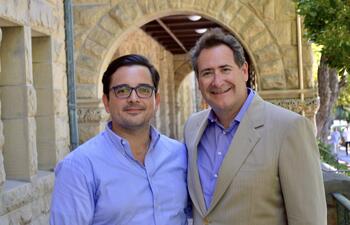
Rosenkranz Prize 2017 winner Mike Baiocchi and his partner, Clea Sarnquist, both of Stanford Medicine, conduct research on the ground in Nairobi, Kenya, to determine whether a rape prevention program is truly making a difference. Rosenkranz Prize 2017 winner Mike Baiocchi and his partner, Clea Sarnquist, both of Stanford Medicine, conduct research on the ground in Nairobi, Kenya, to determine whether a rape prevention program is truly making a difference.


Rosenkranz Prize 2017 winner Mike Baiocchi and his partner, Clea Sarnquist, both of Stanford Medicine, conduct research on the ground in Nairobi, Kenya, to determine whether a rape prevention program is truly making a difference.
 

Baiocchi and his team have designed a closed-cohort study that will track the behavior of about 5,000 girls and 1,000 boys enrolled in the No Means No Worldwide project, which is training 300,000 girls and boys in Kenya and Malawi to prevent rape and teen pregnancy.

This innovative approach to applying math to a real-world problem won him this year’s Rosenkranz Prize for Health Care Research in Developing Countries.

“The entire Rosenkranz selection committee was highly impressed both with the rigor of Mike’s work — which he publishes in top journals in the field of statistics — as well as his unconventional and potentially very impactful work on the prevention of gender-based violence in illegal settlements around Nairobi,” said Grant Miller, PhD, an associate professor of medicine and core faculty member at Stanford Health Policy.

Miller chairs the committee that selects the winners of Stanford Health Policy’s annual $100,000 prize, which goes to promising young Stanford researchers who are investigating ways to improve health care and health policy in developing countries.

Overwhelming Prevalence of Sexual Violence

In the United States, according to the Centers for Disease Control and Prevention, nearly one in five women are raped. The World Health Organization estimates that globally, one in three women experience sexual or physical violence.

In Kenya, national surveys reveal that as many as 46 percent of Kenyan women experience sexual assault as children.

“In the roughest part of the Nairobi slums, 20 to 25 percent of high school girls will be raped this year,” said Baiocchi. “This program, however, looks like it is having the ability to cut that in about half. Our job is to tease out the evidence through careful measurement and design of experiment.”

To do this, Baiocchi and other members of the Stanford Gender-Based Violence Collaborative have traveled to Nairobi to collect baseline data. His partner is Clea Sarnquist, DrPH, a senior research scholar for the Global Child Health Program in the Stanford Department of Pediatrics.

Several pilot evaluations of the program, published in 2014 in Pediatrics, found that more than half of 2,000 high school girls who had completed the self-defense course had used their newfound skills to fend off sexual harassment or rape.

But Lee Paiva, the San Francisco-based founder of No Means No Worldwide, wanted proof. She told Stanford Medicine magazine last year that since establishing training in 2010, she often wondered about the true effectiveness of the program.

“A little voice inside me said, `What did you teach them?’” she said. “What did those kids actually get? What is that money really going to do?”

She determined that she wasn’t going to move forward on the program until she could answer those questions. That is when she turned to Stanford.

Expanding on their initial work, Baiocchi and Sarnquist spent several months last year, working with their Kenyan partners, Ujamaa-Africa and the African Institute for Health and Development, in 90 schools in the poorest parts of Nairobi to establish the largest randomized trial of its kind.

They interviewed the girls who have taken part in the six-week empowerment and self-defense program taught by Kenyans who grew up in the same neighborhoods and are familiar with the local culture.

“It’s hard not to be extraordinarily excited when you watch these girls; they’re play-acting and just being kids, but you are also watching them evolving and creating new ways to deal with these situations,” said Baiocchi.The team is now tracking a fixed group of  5,000 girls and 1,000 boys, ages 10 to 16, over two years. This will give the researchers a better understanding of just how the girls are adopting the training and readapting to societal demands.

Image


“Doing a randomized trial is slow, expensive, and — if I’m being totally honest — anxiety-inducing because everything is laid so bare and you put things in motion today that won’t be resolved for another two years,” Baiocchi said. “But the reward is extraordinarily high-quality data that helps you understand what’s really going on. We need this level of evidence if we’re going to take on such a difficult problem.”

Since using math to measure the benefits of gender-based violence prevention interventions is a relatively new science, Baiocchi said the team is adopting the highest level of rigor, equivalent to what it would take to get their results through the FDA.

The randomized controlled trial is being funded by the UK Department of International Development as part of its What Works to Prevent Violence initiative, with the goal of determining whether the behavioral intervention is effective in preventing sexual assault.

A Need to Do Good

Baiocchi notes both his parents are nurses, his brother is a nurse who is married to a nurse. Public health and service runs through the family DNA.

“So, when I came out as being a math person, I knew that I also had to do good.”

Since receiving his PhD in statistics from The Wharton School at the University of Pennsylvania in 2011, Baiocchi has worked on ways to improve high-risk infant deliveries, school-based earthquake risk reduction in Nepal, bail reform in the United States, improving cardiothoracic surgical care, as well as cancer and cardiovascular disease prevention in China.

The Kenya project team, which includes eight Stanford undergraduate and graduate students, intends to share their results, putting out open-source tutorials that will explain their statistical methods and provide sample code and data.

Image

“We want to make it really easy for people in this area to start having a similar language so we can better communicate and build on this science,” he said.

The Rosenkranz funding will help to build this open-source site and support the Stanford team in their research and travel to Kenya and other countries.

The award’s namesake, George Rosenkranz, who holds a doctorate in chemistry, first synthesized cortisone in 1951, and later progestin, the active ingredient in oral birth control pills. He went on to establish the Mexican National Institute for Genomic Medicine, and his family created the Rosenkranz Prize in 2009.The award embodies Rosenkranz’s belief that young scientists hold the curiosity and drive necessary to find alternative solutions to longstanding health-care dilemmas.

Baiocchi called Rosenkranz’s work to help women take control of their reproductive health “revolutionary,” and is humbled to now be on the list of the other prizewinners, Eran Bendavid, Sanjay Basu, Marcella Alsan, Jason Andrews and Ami Bhatt.

“Our work is a continuation of the powerful changes Dr. Rosenkranz set in motion,” he said.

And what really matters, Baiocchi said, are the end results.

“There are a number of girls who are not going to get raped this year because of what we are doing,” he said. “And we know that if someone doesn’t get assaulted, that leads them to having a better life — it’s an extraordinarily virtuous cycle.”

[[{"fid":"226830","view_mode":"crop_870xauto","fields":{"format":"crop_870xauto","field_file_image_description[und][0][value]":"","field_file_image_alt_text[und][0][value]":false,"field_file_image_title_text[und][0][value]":false,"field_credit[und][0][value]":"","field_caption[und][0][value]":"","thumbnails":"crop_870xauto","alt":"","title":""},"type":"media","field_deltas":{"6":{"format":"crop_870xauto","field_file_image_description[und][0][value]":"","field_file_image_alt_text[und][0][value]":false,"field_file_image_title_text[und][0][value]":false,"field_credit[und][0][value]":"","field_caption[und][0][value]":"","thumbnails":"crop_870xauto","alt":"","title":""}},"link_text":null,"attributes":{"class":"media-element file-crop-870xauto","data-delta":"6"}}]]

Hero Image
kenya rosenkranz3 Nichole Sobecki
All News button
1
Authors
Beth Duff-Brown
News Type
News
Date
Paragraphs

End-stage renal disease makes up 7.2 percent of Medicare spending, even though those patients represent less than 1 percent of the Medicare population, according to a database that tracks chronic kidney disease.

Despite the gnashing of teeth about the runaway costs of Medicare spending, the national health-care system for the elderly, younger people with certain disabilities and chronic kidney disease appears to have found one way to lower costs.

Congress established the end-stage renal disease (ESRD) Prospective Payment System in 2008, as part of the Medicare Improvement for Patients and Providers Act. It mandated that ESRD Medicare patients treat themselves at home if able.

The new payment system introduced two incentives to increase home dialysis use: bundling injectable medications into a single payment for treatment and paying for training for patients to give themselves injections and treatment at home.

A new study by Stanford researchers shows home dialysis treatment among Medicare patients increased by 5.8 percent from January 2006 through August 2013. The researchers also found that non-Medicare patients covered by other forms of health insurance also turned to home dialysis by a jump of 4.1 percent.

“These spillover effects suggest that major payment changes in Medicare can affect all patients with end-stage renal disease,” the authors wrote in the study published in the latest edition of the Journal of the American Society of Nephrology. “One of the stated goals of the PPS payment reform was to incentivize an increase in-home dialysis use, and it appears that it has succeeded in this stated goal.”

Eugene Lin, a postdoctoral fellow in nephrology at the Stanford School of Medicine and lead author of the study, told me that most nephrologists believe the trend toward home dialysis is good for the taxpayers and for the patients.

People going through this phase of chronic kidney disease — when dialysis or a kidney transplant are the only chance of survival  — cost less to take care of at home and have similar outcomes to in-center hemodialysis patients.

“It’s hard to say if one therapy is definitively better than the other,” Lin said, “though home dialysis generally offers patients more independence and potentially better quality of life.”

Lin explained the difference between in-center hemodialysis and home treatment: At a center, blood is filtered through a machine, whereas home dialysis entails either having a hemodialysis machine at home (and having a caregiver help with the treatments) or performing peritoneal dialysis.

The latter is the most commonly used at-home treatment and involves using the abdominal compartment as a filter. The toxins in the blood get filtered through the abdominal membranes into clean fluid, which is then removed and discarded.

Similar drugs are used both in centers and at home, but they’re easier to give in the hemodialysis setting, so had a higher likelihood of overuse prior to payment reform.

“Once they bundled the drug reimbursement with the treatment, we saw dramatic decreases in the use of these drugs and a concurrent increase in home dialysis use,” Lin said.

The researchers, including senior author Jay Bhattacharya of Stanford Health Policy, noted that home dialysis remained stagnant at around 11 percent from 1983 to 1992 and steadily declined until 2008.

“While the cause of this decline is unknown, several policies made home dialysis less favorable than in-center hemodialysis economically,” they wrote.

First, the federal Centers for Medicare & Medicaid Services in 1991 revised its reimbursement policy for the erythropoietin-stimulating agent needed for functioning kidneys, making it the most profitable component of in-centers hemodialysis. Then, CMS introduced a tiered fee-for-service physician payment in 2004, providing the potential for enhanced revenues with in-center dialysis.

But the PPS bundling shifted erythropoietin from the profit side to the cost side, so it was no longer advantageous to use high doses common with in-center hemodialysis, Lin said. This paved the way for an increase in home dialysis use, which is less costly to administer.

Hero Image
gettyimages 542570322
A cross-section of a kidney.
Getty Images
All News button
1
Authors
Beth Duff-Brown
News Type
News
Date
Paragraphs

Stanford Health Policy’s Douglas K. Owens has been appointed vice chair of the U.S. Preventive Services Task Force, an independent, volunteer panel of national experts in prevention and evidence-based medicine.

Owens, the Henry J. Kaiser, Jr. Professor at Stanford University is a general internist at the VA Palo Alto Health Care System, and a professor of medicine, health research and policy, and management science and engineering at Stanford.

He is the director of the Center for Health Policy in the Freeman Spogli Institute for International Studies, where he is also a senior fellow, and the Center for Primary Care and Outcomes Research in the Department of Medicine and School of Medicine, and Associate Director of the Center for Innovation to Implementation at the VA Palo Alto Health Care System.

“Through his stellar work, Dr. Owens enables Stanford Medicine to advance its mission to precisely predict and prevent disease,” said Lloyd Minor, MD, dean of the Stanford School of Medicine. “As our country faces an increasingly diverse, aging patient population and rising health care costs, I am thrilled that Dr. Owens will contribute his perspective and expertise to this national task force.”

Owens served a previous four-year term on the independent, volunteer panel of national experts in prevention and evidence-based medicine. He will serve for two years as vice chair and then a year as chair. Members come from health-related fields ranging from internal medicine, family medicine, pediatrics, behavioral health, obstetrics/gynecology, and nursing.

The task force issues preventive care guidelines based on detailed assessment of the evidence about preventive interventions and is supported by the Agency for Healthcare Research and Quality within the U.S. Department of Health and Human Services.

“It’s humbling because the task force guidelines impact virtually every primary care patient in the United States,” said Owens, who is also past president of the Society for Medical Decision Making. “Having an unbiased, independent assessment of the benefits and harms of preventive services is very important for primary care clinicians and patients.”

The task force works to improve American’s health by making evidence-based recommendations about clinical preventive services such as screenings, counseling services and preventive medications. Its members have tackled everything from whether to screen for certain cancers, which medications should be taken to prevent diseases and reduce blood pressure and high cholesterol, and screening for infectious diseases, including HIV, HCV, TB, syphilis and other sexually transmitted diseases.

“We are honored to welcome Dr. Owens back to the task force in a leadership role,” said task force chair David C. Grossman, MD, MPH, a senior investigator and medical director for population health strategy at the Group Health Research Institute.

“His experience in guideline development, both with the task force and partner organizations, and his work in evidence-based medicine and clinical decision-making are valuable additions to our leadership team,” Grossman said.

The task force, for example, just released its draft guideline on prostate cancer screening. And some of the medical topics under development are screening for cervical and BRCA-related cancer, as well as pre-exposure prophylaxis for HIV infection.

Owens said that it was critical that the task force remains unbiased and independent. The 16 volunteer members who are nationally recognized experts in prevention, evidence-based medicine and primary care, carefully evaluate the science behind preventive interventions.

“The task force has very rigorous methods for assessing evidence, and we are fortunate to have state-of-the-art evidence reviews provided by AHRQ funded Evidence-Based Practice Centers,” he said.

Each year, the task force makes a report to Congress that identifies critical evidence gaps in research related to clinical prevention services and recommends priority areas that deserve further explanation. All their reports and recommendations are made public on the task force website and leave room for public comment.

Hero Image
22823685694 0e7d1c8ba5 o Rod Searcey
All News button
1
Authors
Beth Duff-Brown
News Type
News
Date
Paragraphs

After the 2012 mass shooting of children and teachers at Sandy Hook Elementary School in Connecticut, a leader of the National Rifle Association proclaimed: “The only thing that stops a bad guy with a gun is a good guy with a gun.”

It would seem that many Californians agreed, according to new research by Stanford Health Policy’s David Studdert and other researchers at academic institutions.

In the six weeks after the Newtown shootings — when a young man fatally gunned down 20 children and six adults — handgun acquisitions in California rose by 53 percent among first-time gun owners over expected levels.

When a couple armed with semi-automatic weapons targeted a San Bernardino County public health event in December 2015, killing 14 people in 2015, handgun purchase rates were 85 percent higher than expected among residents of the city of San Bernardino and adjacent neighborhoods, compared with 35 percent higher elsewhere in California.

In a new study in the Annals of Internal Medicine, lead author Studdert, a professor of medicine at Stanford Medicine and professor of law at Stanford Law School, writes that their findings have implications for public health as firearm ownership is a risk factor for firearm-related suicide and homicide.

“There is strong evidence linking gun ownership to risks of gunshot injuries, so any sudden boost in firearm ownership could have public health implications,” Studdert said. On their own, these two mass shootings are unlikely to have caused enough of a change in ownership patterns to have significant public health effects.

“But over time, purchasing responses to a succession of unnerving events like this — from mass shootings to terrorist attacks, to elections — could change levels of gun ownership enough to increase overall rates of gun injury and death.”

Image

The authors write that for some, mass shootings may induce repulsion at the idea of owning a weapon. But for others, they note, it may motivate acquisition.

“Mass shootings are likely to boost sales if they heighten concerns over personal security because self-protection is the most commonly cited reason for owning a firearm,” they said.

More than 32,000 people die of gunshot wounds in the United States each year, according to the Centers for Disease Control and Prevention. While mass shootings account for less than 1 percent of those deaths, they are the most visible form of firearm violence because of the extensive broadcast and social media coverage that surround them.

Using detailed individual-level information on firearm transactions in California between 2007 and 2016, the researchers analyzed acquisition patterns after two of the highest-profile mass shootings in U.S. history. They found large and significant spikes occurred among whites and Hispanics, and among individuals who had no record of having previously acquired a handgun.

Although these spikes in handgun purchases after both mass shootings were large, they were also short-lived and accounted for less than 10 percent of annual handgun purchases statewide.

“Concerns about firearm violence and the public health risks of firearm ownership should stay focused on the much larger volume of weapons that routinely changes hands, and the immense stock that already sits in households,” write Studdert and his colleagues, Stanford Health Policy researcher Yifan Zhang, PhD; Jonathan Rodden, PhD, a professor of political science at Stanford; Rob J. Hyndman, PhD, a professor of statistics at Monash University in Australia; and Garen J. Wintemute, MD, MPH, an expert on gun violence at the University of California, Davis.

“On the other hand, the cumulative effect of such ‘shocks’ as Newtown and San Bernardino shootings on firearm prevalence may be substantial,” they write. “Moreover, firearm acquisitions seem to be sensitive to a range of other events that are also common, such as federal elections, new firearm safety laws, and terrorist attacks.”

Taken as a whole, they said, these events may drive significant increases in overall firearm prevalence, which may, in turn, increase the risk for firearm-related morbidity and mortality in the long run. The authors urge further research should explore the cumulative effects and temporary shifts in acquisition patterns, their causes, and their implications for public health, crime and social cohesion.

Hero Image
buying a gun
A woman checks out a handgun as a Christmas on December 23, 2015. FBI statistics indicate gun sales have increased dramatically and firearms are a popular choice for a holiday present.
Getty Images
All News button
1
Subscribe to Health policy