Health Care
-

Does Diversity Matter for Health? Experimental Evidence from Oakland

Abstract:

We study the effect of diversity in the physician workforce on the demand for preventive care among African-American men. Black men have the lowest life expectancy of any major demographic group in the U.S., and much of the disadvantage is due to chronic diseases which are amenable to primary and secondary prevention. In a field experiment in Oakland, California, we randomize black men to black or non-black male medical doctors and to incentives for one of the five offered preventives - the flu vaccine. We use a two-stage design, measuring decisions about cardiovascular screening and the flu vaccine before (ex ante) and after (ex post) meeting their assigned doctor. Black men select a similar number of preventives in the ex-ante stage but are much more likely to select every preventive service, particularly invasive services, once meeting with a doctor who is of the same race. The effects are most pronounced for men who mistrust the medical system and for those who experienced greater hassle costs associated with their visit. Subjects are more likely to talk with a black doctor about their health problems and black doctors are more likely to write additional notes about the subjects. The results are more consistent with better patient-doctor communication during the encounter rather than the differential quality of doctors or discrimination. our finding suggests black doctors could help reduce cardiovascular mortality by 16 deaths per 100,000 per year - leading to a 19% reduction in the black-white male gap in cardiovascular mortality.


Marcella Alsan, MD, MPH, PhD

Associate Professor of Medicine and Core Faculty Member at the Center for Health Policy and Primary Care and Outcomes Research, Stanford University

Marcella Alsan, MD, MPH, PhD, is an Associate Professor of Medicine at the Stanford School of Medicine and a Core Faculty Member at the Center for Health Policy / Primary Care and Outcomes Research. Alsan received a BA from Harvard University, a master’s in international public health from Harvard School of Public Health, a MD from Loyola University, and a PhD in Economics from Harvard University. Alsan trained at Brigham and Women’s Hospital - in the Hiatt Global Health Equity Residency Fellowship - then combined the PhD with an Infectious Disease Fellowship at Massachusetts General Hospital. Alsan attends in infectious disease at the Veterans Affairs Hospital.

William J. Perry Conference Room

2nd Floor, Encina Hall

616 Serra Mall (Address changed due to construction)

Stanford, CA 94305

Seminars
Paragraphs


We study the effect of diversity in the physician workforce on the demand for preventive care among African-American men. Black men have the lowest life expectancy of any major demographic group in the U.S., and much of the disadvantage is due to chronic diseases which are amenable to primary and secondary prevention. In a field experiment in Oakland, California, we randomize black men to black or non-black male medical doctors and to incentives for one of the five offered preventives — the flu vaccine. We use a two-stage design, measuring decisions about cardiovascular screening and the flu vaccine before (ex ante) and after (ex post) meeting their assigned doctor. Black men select a similar number of preventives in the ex-ante stage, but are much more likely to select every preventive service, particularly invasive services, once meeting with a doctor who is the same race. The effects are most pronounced for men who mistrust the medical system and for those who experienced greater hassle costs associated with their visit. Our findings suggest black doctors could help reduce cardiovascular mortality by 16 deaths per 100,000 per year — leading to a 19% reduction in the black-white male gap in cardiovascular mortality.


All Publications button
1
Publication Type
Working Papers
Publication Date
Authors
Number
24787
-

Humanitarians in Crisis: Lessons from the Battle for Mosul, Iraq

The Battle of Mosul was one of the largest urban sieges since World War II. From October 2016 and July 2017, Iraqi and Kurdish forces fought to retake Iraq’s second largest city, which had fallen to ISIL in 2014. They were backed by U.S.-led coalition forces. More than 940,000 civilians fled during the siege, and thousands were injured as they sought safety.


Paul H. Wise, MD, MPH

Professor of Pediatrics, Director, Center for Policy, Outcomes, and Prevention, and Richard E. Behrman Professor of Child Health and Society, Stanford University

Paul H Wise, Richard E. Behrman Professor of Child Health and Society, Professor of Pediatrics, and Senior Fellow at the Freeman Spogli Institute for International Studies, was part of a small team tasked to evaluate the health response to the fighting in Mosul.  Their report has raised serious questions regarding the continued utility of traditional humanitarian health responses to violent conflict.  This presentation will convey the findings of the report and the profound challenges the lessons of Mosul have generated for physicians, humanitarians, and war-fighters around the world.


RSVP is now closed.

LK130 Conference Room

Li Ka Shing Center

291 Campus Drive

Stanford, CA 94305

Seminars
Authors
Beth Duff-Brown
News Type
News
Date
Paragraphs

When a close relative dies, the stress can be overwhelming. But for many adults and children, mourning and grief often give way to healing.

A pair of Stanford scholars now focuses on the impact that loss has on often-overlooked family members: babies. A new publication by Petra Persson and Maya Rossin-Slater indicates that losing a loved one during pregnancy may actually impact the mental health of the child as he or she grows into adulthood.

“We find that prenatal exposure to the death of a maternal relative increases take-up of ADHD medications during childhood and anti-anxiety and depression medications in adulthood,” the researchers wrote in the April edition of the American Economic Review.

Petra Persson

Both are faculty fellows at the Stanford Institute for Economic Policy and Research (SIEPR); Rossin-Slater is an assistant professor of health research and policy with Stanford Medicine and Persson is an assistant professor of economics in the Department of Economics.

“Of course, you cannot prevent family members from dying, and we certainly do not want our findings to constitute yet another source of stress for expecting mothers, who already face rather intense pressure to eat the right foods, avoid activities deemed harmful, and experience an avalanche of health advice,” Persson said. “But our findings potentially point to the importance of generally reducing stress during pregnancy, for example through prenatal paid maternity leave and programs that provide resources and social support to poor, pregnant women.”

Their research focused specifically on singleton children in Sweden born between 1973 and 2011 whose mother lost a close relative during her pregnancy. They used population registers to construct family trees that span four generations, from the children to their maternal great-grandparents. Their sample included all children whose mother lost a close relative — a sibling, parent, maternal grandparent, the child’s father or her own older child — in the nine months after the child’s date of conception or the year after the child’s birth. The study did not account for the quality of those relationships.

Their analysis compared the outcomes of children whose mothers experienced a relative’s death while they were pregnant with those of children whose maternal relatives died in the year after birth. They were thus able to isolate the impacts of fetal exposure to maternal stress from bereavement from all other consequences associated with a family member’s passing, such as changes to family resources or household composition, which affect all children in their sample.

Additionally, by considering the deaths of different relatives, their approach presents a new measure of intensity of stress exposure: the closeness between the mother and the relative who passed in the family tree.

The researchers merged the Swedish data with information about the children’s health throughout childhood and into adulthood, using birth and medical records. They were aided by Sweden’s novel prescription drug registry, which contains all prescription drug purchases and the exact substances and doses prescribed in the country.

“Our research suggests that policies that can reduce stress during pregnancy can have substantial benefits for the next generation,” Rossin-Slater said in an interview. “Moreover, since poor families are more likely to experience stress than more advantaged ones, our results imply that stress-reducing policies that target low-income pregnant women could play a role in mitigating the persistence of socio-economic inequality across generations.”

Persson and Rossin-Slater said they were initially inspired by two recent economic studies using data from Uganda and Iraq, which found that fetal exposure to malnutrition has adverse consequences for adult mental illness.

“Our study offers complementary evidence linking early-life circumstance to adult mental health, but breaks new ground by focusing on stress,” the authors wrote, “which may be more pertinent than malnutrition in modern developed countries such as the United States and Sweden, and by tracing health outcomes throughout the time period between the fetal shock and adulthood.”

Mental illness results in great financial and social costs. In 2008, the market for prescription drugs treating depression totaled $9.6 billion in the United States alone, a sales volume exceeded only by cholesterol and pain medications.

In 2013, one in seven school-age boys were treated with prescription drugs for Attention Deficit Hyperactivity Disorder, fueling a $9 billion market, five times larger than the $1.7 billion market just a decade earlier. The authors note that estimates also suggest that mental illness accounts for more than one-half of the rise in disability costs among men in the last two decades.

Moreover, in Sweden — the setting for their paper – mental illness accounts for a larger share of health expenditures on prescription drugs than any other therapeutic class.

The scholars said that their study contributes to the research in this area by documenting a causal link between fetal stress exposure and mental health later in life. Moreover, by following the same children from birth to adulthood, they were able to observe the onset of adverse effects of exposure to maternal bereavement in utero.

“In sum, our results show that the death of a relative up to three generations apart during pregnancy has far-reaching consequences for mental health during childhood and adulthood,” Persson and Rossin-Slater said.

Their findings suggest large welfare gains of preventing fetal exposure to severe stress: For example, based on the 2008 figure for the U.S. market, the 8 percent decrease in the consumption of prescription drugs treating depression alone can be valued at around $800 million annually.

They conducted a back-of-the-envelope calculation to understand how exposure to economically induced stress during pregnancy might affect the mental well-being of the next generation by relying on past research estimating cortisol responses to grief and to economic shocks like unemployment and poverty.

“Our calculation suggests that in-utero exposure to stress from unemployment may lead to a 17.3 percent increase in the likelihood of ever purchasing a drug to treat ADHD in middle childhood,” they concluded, “and a 9 percent and 5.5 percent increases in the likelihoods of ever purchasing drugs to treat anxiety and depression in adulthood, respectively.”

The newly published findings can inform one way by which policymakers and the medical community can tackle the prevalence and rising costs of mental health issues: by considering ways to make pregnancy — an inherently stressful time — a little easier to manage.


Hero Image
pregnancy Getty Images
All News button
1
-

Changes in Clinical Practice Among Physicians with Legal Problems

David Studdert, LLB, ScD, MPH with Co-Authors Michelle Mello, PhD, JD & Matthew Spittal, PhD

Recent evidence indicates that a small group of physicians accounts for a surprisingly large share of all malpractice claims and patient complaints.  Next to nothing is known about the career trajectories of these claim-prone physicians.  Do they continue to practice, and if so, do they alter their clinical load?  Do they cut ties—voluntarily or involuntarily—with hospitals and large practice groups?  Do they seek to put their checkered history behind them by relocating—interstate or to areas where clinicians are in short supply?  We explore these questions in a large cohort of US physicians. 

RSVP is now closed.

Seminars
Authors
Beth Duff-Brown
News Type
Blogs
Date
Paragraphs


As millions marched against gun violence across the country on Saturday, research by Stanford Health Policy experts about the impact of gun ownership on public health was also in the spotlight.

The Washington Post published an in-depth story about how the work of gun researchers is finally getting attention — an unfortunate consequence of the recent mass shootings in the United States.

David Studdert — a professor of medicine and law — and Yifan Zhang, a biostatics and data analyst with Stanford Health Policy, along with seasoned gun researcher Garen Wintemute of UC Davis’s Violence Prevention Research Program, are trying to answer the question: Are you more or less likely to die if you own a firearm?

“The explosion of national interest in the problem of gun violence since the Parkland shooting has been remarkable,” said Studdert, who is also a core faculty member at Stanford Health Policy.  “And it is inspiring to hear students’ voices — that is definitely a new twist in the politics around this issue. I think there is momentum for change, but I remain pessimistic that we will see the enactment of any substantial reforms at the federal level.”

The Post wrote:

Studdert’s group is using a data set unique to California because of the state’s strict gun laws. Every time a gun is sold in California, a background check logs the purchase and purchaser with California authorities, who also have been unique in their willingness to share such politically fraught data with academic researchers.


Using a sample of 25 million people (taken from California’s voter registration records), Studdert’s team plans to identify handgun owners with the firearm sales records, then compare that against state death records.


The resulting data in theory will help them determine the relationship — whether good or bad — between gun ownership and death.


They call the project LongSHOT, a nod to the project’s scale and ambition.


Academic researchers who were studying the impact of gun violence on public health were dealt a huge financial and political blow in 1996, when the so-called Dickey Amendment was passed by Congress under pressure from gun lobbyists. The law forbids the Centers for Disease Control and Prevention to fund research that might be seen as advocating for gun control. This choked off federal grant money and essential data-gathering on gun violence.

But tucked into the government spending bill in Congress last week was language that indicates the CDC now has the authority to conduct research on the causes and effects of gun violence. Though gun researchers are skeptical that the change in tone will lead to any significant support or funding, some believe that it’s a start. The $1.3 trillion government funding measure also includes efforts to improve state compliance with the national background check system, as well as funding for school counseling and safety programs.

Again, from The Post story:

Yifan Zhang was finishing her PhD in biostatistics at Harvard five years ago when news broke of the Sandy Hook Elementary School shooting.


As a graduate student from China, specializing in highly technical design of clinical drug trials, she had little connection to America’s long-running debate over gun violence. But even now, she said, the anguished faces of those parents she saw on television remain seared in her memory.


So when she heard about a gun-violence research project at Stanford University that could use the statistical skills she had honed on pharmaceuticals, she jumped at the chance.


“I have a son who just turned 1,” said Zhang, 31. “When I think about what I will need to teach him about protecting himself, I think about that school shooting.”


Zhang hopes the Stanford team can one day have an impact.

“I think there are going to be some big decisions that the whole country has to make together, and I’m hoping that our research can help provide evidence and information for the decision making,” she said.


Hero Image
gettyimages bullets Getty Images
All News button
1
Authors
News Type
News
Date
Paragraphs

At age 94, with an extensive collection of health policy research and publications under his belt, Victor Fuchs has a lot to say about the health care system.

The high cost. The uninsured. The fragmentation.

During a speech at the Stanford Institute for Economic Policy Research (SIEPR), the pioneering health economist narrowed his gaze to whether a single-payer system is the fix to those problems.

The answer is complicated, and it depends on the questions behind the question, said Fuchs, a SIEPR Senior Fellow and the Henry J. Kaiser, Jr., Professor of Economics and Health Research and Policy, emeritus. He is also a senior fellow at the Freeman Spogli Institute for International Studies and a core faculty member at Stanford Health Policy.

Recent challenges to the Affordable Care Act have rekindled a debate over the merits of a single-payer health care system — where one entity, namely the federal government, would foot the bill for essential services for all — and Fuchs spoke at SIEPR to succinctly explain what a single-payer system could achieve, what would probably never happen, and why.

The problem, Fuchs pointed out, is that the United States spends the most of any high-income country on health care, yet Americans are not achieving better health outcomes. Part of the solution would have to address the nation’s higher administrative costs, higher prices for prescription drugs, and the expensive increasing mix of services and specialists.

[[{"fid":"229865","view_mode":"crop_870xauto","fields":{"format":"crop_870xauto","field_file_image_description[und][0][value]":"","field_file_image_alt_text[und][0][value]":false,"field_file_image_title_text[und][0][value]":"The audience listens to a talk by Victor Fuchs about the viability of a single-payer health insurance system.","field_credit[und][0][value]":"Steve Castillo","field_caption[und][0][value]":"","thumbnails":"crop_870xauto","alt":"","title":"The audience listens to a talk by Victor Fuchs about the viability of a single-payer health insurance system."},"type":"media","field_deltas":{"2":{"format":"crop_870xauto","field_file_image_description[und][0][value]":"","field_file_image_alt_text[und][0][value]":false,"field_file_image_title_text[und][0][value]":"The audience listens to a talk by Victor Fuchs about the viability of a single-payer health insurance system.","field_credit[und][0][value]":"Steve Castillo","field_caption[und][0][value]":"","thumbnails":"crop_870xauto","alt":"","title":"The audience listens to a talk by Victor Fuchs about the viability of a single-payer health insurance system."}},"link_text":null,"attributes":{"title":"The audience listens to a talk by Victor Fuchs about the viability of a single-payer health insurance system.","style":"height: 214px; width: 300px; float: left; margin-left: 0px; margin-right: 15px; ","class":"media-element file-crop-870xauto","data-delta":"2"}}]]

Fuchs contended a single-payer system would lower costs. For one, it would create the bargaining power needed to offset the monopolistic powers of those providing the drugs, medical services and equipment.

To control costs, “we must move to something like a single-payer plan, but that alone will not be sufficient,” Fuchs said. “It will depend on what kind of single-payer plan it is.”

Even as it provides for universal health care insurance coverage, a single-payer system could take on various forms, including a blend of private and public controls.

And to have any chance at success, Fuchs said, the single-payer system would have to be simple, require minimum bureaucracy, and provide choice.

Then comes the rub, of course: The political will has historically tread against single-payer.

Americans are not willing to provide subsidies for those too poor to afford health insurance; neither do they have a compulsion for everyone to acquire coverage and contribute to those subsidies.

“The country as a whole has not been willing to fully embrace these two principles,” he said. “And I feel you need to have a strong majority of both if you’re going to have universal coverage.”

And unfortunately, Fuchs added, he does not believe universal health coverage would necessarily improve health outcomes. Many other socio-economic and environmental factors also play a role there.

In leading a brief discussion with Fuchs, Mark Cullen, a SIEPR Senior Fellow and professor of medicine, asked what makes him think the federal government would work to control costs under a single-payer system — when it has thus far chosen to exert little buying power under the current structure.

“I have not discussed the political feasibility of this, deliberately,” Fuchs quipped.

You can learn more about Fuchs’ viewpoint in The Journal of the American Medical Association.

Image
fuchs groupies

 
Hero Image
vic side
Victor Fuchs talks about the viability of a single-payer health insurance system at a Feb. 5, 2018, talk at the Stanford Institute for Economics Policy Research.
Steve Castillo
All News button
1
Authors
Beth Duff-Brown
News Type
News
Date
Paragraphs

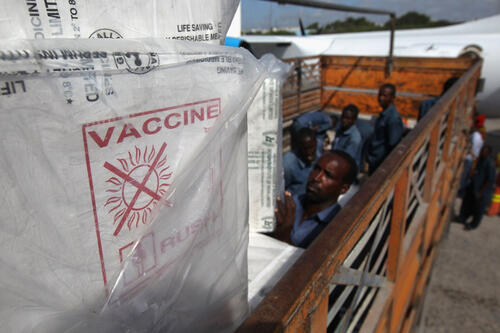
As global health assistance for developing countries dwindles, a Stanford student working on her PhD in health policy has developed a novel formula to help donors make more informed decisions about where their dollars should go.

Donors have typically relied predominately on gross national income (GNI) per capita to determine aid allocations. But using GNI is problematic because it effectively penalizes economic growth. It also fails to capture contextual nuances important to channeling aid effectively and efficiently.

So Tara Templin, a first-year Stanford PhD student specializing in health economics, and her Harvard colleague Annie Haakenstad, have developed a framework that estimates funding based on needed resources, expected spending and potential spending into 2030. They believe the more flexible model makes it adaptable for use by governments, donors and policymakers.

“We've observed development assistance for health growth attenuate over the last seven years,” said Templin, who was a research fellow at the Institute for Health Metrics and Evaluation before coming to Stanford. “There are difficult trade-offs, and this entails honing in on the specific challenges and countries most in need.”

Their research published in the journal Health Policy and Planning outlines how their “financing gaps framework” can be adapted to short- or long-run time frames, between or within countries.

“Depending on donor preferences, the framework can be deployed to incentivize local investments in health, ensuring the long-term sustainability of health systems in low- and middle-income countries, while also furnishing international support for progress toward global health goals,” write the authors, who also are Stephen Lim of the University of Washington, Jesse B. Bump of Harvard and Joseph Dieleman, also at the University of Washington.

The authors developed a case study of child health to test out their framework. It shows that priorities vary substantially when using their results as compared to focusing mainly on GNI per capita or child mortality.

The case study uses data from the Global Burden of Disease 2013 Study, Financing Global Health 2015, the WHO Global Health Observatory and National Health Accounts. Funding flows are anchored to progress toward the U.N. Sustainable Development Goals’ target for reductions in the death rates of children under 5. More than six million children die each year before their fifth birthday, so the United Nations set a goal to reduce under-5 mortality to at least 25 per 1,000 live births.

To build their child health case study, the authors relied on a 2015 study that estimated the average cost per child-life saved is $4,205 in low-income countries, $6,496 in lower-middle income countries and $10,016 in upper-middle countries.

The framework considers three concepts. First, expected government spending is constructed from national health accounts, which are standardized financial reports from countries around the world. Second, ability to pay is estimated by looking at countries with similar levels of economic development and looking at associations with country investment in the health sector. Lastly, needed investment considers a health target, the country’s current health burden, and average costs to save children’s lives in each country.

“Our focus is on the gap between the resources needed to reach critical health targets and domestic health spending,” the authors wrote. “We highlight two facets of domestic health resources—expected spending and potential spending—as critical. While donor preferences may vary, basing aid allocation on expected or existing spending levels incentivizes countries to spend less on health. We therefore propose the use of potential spending, which is a measure of a country’s ability to pay, as the domestic resource benchmark.”

Image
vaccines loaded truck

Instead of the gap between expected spending and need, their framework focuses on the gap between potential spending and the health resources needed to meet global health targets. In the framework, policymakers can choose which gap they want to target, since this decision can involve many factors.

“By focusing on that gap, donors can catalyze sustained domestic spending while also addressing the resource needs critical to reaching international health goals,” they wrote.

They then looked at 10 countries with the most need for additional child health resources. The gap between expected spending and potential spending was highest in Afghanistan, at 79 percent, and lowest in Cameroon, where expected spending exceeded potential spending.

“Fifty years ago, GNI was the best proxy for countries’ ability to finance their own development and health,” the authors wrote.

But today, more empirical data and technology are available, allowing donors to incorporate a broader set of health financing measures into their decision-making process.

“The flexible but targeted nature of our framework is critical in the current era of global health financing,” said Haakenstad, the lead author. “Our framework helps to ensure the poor and disadvantaged, the majority of which now reside in middle-income countries, are reached by development assistance and other public financing. This funding is critical to reducing death and disability and reaching global targets in health.”


The authors’ research was supported by the Welcome Trust (099114/Z/12/Z).

Hero Image
getty child vaccine Oli Scarff/Getty Images
All News button
1
Authors
Beth Duff-Brown
News Type
Q&As
Date
Paragraphs

In April 2016 the Equal Employment Opportunity Commission (EEOC) sued Mission Hospital, a large North Carolina health system, after it denied employee requests for religious exemptions from an influenza-vaccination requirement. The lawsuit, which alleges that the hospital violated Title VII of the Civil Rights Act of 1964, is one of a trio of lawsuits in the past two years in which the EEOC has intervened to challenge vaccination mandates for health-care workers. Facing a full-blown trial in February, the hospital agreed to settle the case on January 12, compensating the employees and revising its vaccination mandate policy.

Michelle Mello, PhD, JD, a professor of health research and policy and professor of law, and her colleague James A. Sonne, JD, an associate professor of law and director of Stanford Law School’s Religious Liberty Clinic, write in this week’s New England Journal of Medicine that the EEOC litigation “is cause for unease” among the growing number of hospitals with mandatory influenza-vaccination policies. Their article is co-authored with Douglas J. Opel, MD, MPH, an assistant professor of pediatrics at the University of Washington.

“These policies are an important public-health strategy since vaccination rates for health-care workers continue to fall short of the Healthy People 2020 target of 90 percent,” the authors write. “But they create thorny problems when it comes to exemptions. In particular, when and how must health-care workers’ religious objections be accommodated to conform to the law?”

The paper comes during what could be the worst flu season since the 2009 swine flu pandemic. The Centers for Disease Control and Prevention reports that this influenza season has claimed the lives of 37 children and is on track to rival the 2014-2015 flu season. The CDC estimates that 34 million Americans got the flu that season; more than 700,000 were hospitalized and about 56,000 people died.

So far this season, an influenza A virus called H3N2 has been the most common form of influenza. Preliminary estimates suggest that this season’s influenza vaccine is about 40 percent effective. Yet antibodies made in response to vaccination with a certain set of influenza viruses can sometimes provide protection against different but related viruses.

Stanford Health Policy asked Mello and Sonne questions about their research and findings.

Q: What prompted you to undertake this research and write about the subject?                                   

Mello: More and more hospitals are mandating their employees get vaccinated against influenza. This is good policy: influenza is a serious disease and voluntary programs have had disappointing results. Having a policy that requires health-care workers to be vaccinated helps protect employees themselves but also the patients they take care of, who are often at high risk of serious complications from influenza. We wrote this article to help make hospitals aware of potential legal challenges based on religious discrimination claims and help them ensure their own mandates are well-written and reasonably applied in order to avoid legal challenge and maintain a healthy and productive workplace. 

Q: Did anything surprise you while conducting your research?

Mello: Yes. First, the Equal Employment Opportunity Commission filed the three latest lawsuits on behalf of the employee. That’s unusual; the EEOC typically only injects itself into an individual employee’s dispute when it perceives that the employee’s case presents an issue of public concern.

Second, there have been about 15 cases filed between 2011 and 2016 that have challenged hospital influenza vaccination mandates on religious grounds, and most of them didn’t get thrown out by the judge—they were settled, or are heading toward trial. This indicates a need to understand the claims made by these lawsuits so that hospitals can avoid future legal challenges. When we looked at the plaintiffs’ grievances, we saw some pitfalls that can be easily avoided if hospitals are attentive to what the law requires and what seems to provoke employees to sue. For example, some hospitals were unduly rigid, to the point of seeming arbitrary, in enforcing deadlines or reviewing exemption requests.

Q: Is it common for hospitals to have influenza vaccination requirements for their employees?

Mello: Many hospitals do, and some states require it. Evidence suggests that these requirements are effective at increasing vaccination rates of their employees. However, hospitals’ requirements vary, with some allowing their employees to opt out of getting the influenza vaccine for religious reasons and others only allowing opt-outs if the employee has a medical contraindication to influenza vaccination, such as having experienced a severe allergic reaction to a prior dose of the vaccine or having an allergy to a component of the vaccine.

Q: Why allow religious exemptions to employer vaccination requirements at all?

Sonne: One reason might simply be to defuse perceptions of coercion and enhance the sustainability and acceptability of the requirements. In addition, Title VII of the Civil Rights Act of 1964 requires employers to reasonably accommodate employees’ religious practices unless doing so presents an undue hardship for the employer. Carefully crafted religious exemptions to influenza-vaccination requirements are a strategy that employers might need to use to avert religious-discrimination claims.

Image

A small proportion of workers may want to serve in the health-care field but nonetheless feel very strongly about not receiving the vaccine as a matter of their religious faith. Depending on the context, accommodating those sincere beliefs doesn’t necessarily impact public health and, arguably, it’s a better use of hospitals’ time and resources to focus on getting the vaccine to the vast majority of unvaccinated workers who don’t object but just haven’t gotten around to being vaccinated. Again, we’re not talking about a large group of people who both work in the industry and have these religious conflicts.


Q: A new civil rights division at the Department of Health and Human Services aims to protect health-care workers who refuse to provide services that violate their religious beliefs. Will there be more support now for health-care workers wanting to opt out from influenza vaccine for religious reasons?

Sonne: This is a good question, but the answer is unclear so far. The “Conscience and Religious Freedom Division” will be part of HHS’s already-established Office of Civil Rights. It will be charged with enforcing laws in the health-care field that forbid religious discrimination or require accommodation of religion—which certainly expresses an enforcement priority in this area of law. That said, the division doesn’t appear to create any additional legal duties but is meant only to enforce existing laws. And its creation also appears to have been motivated more by concerns about having to provide services that some clinicians find morally objectionable, like abortion, which arguably is a different situation. We’ll see.

Q: Are health-care organizations struggling to get their employees vaccinated against influenza?

Mello: HHS’s Healthy People 2020 goal is to have 90 percent or more of health-care personnel vaccinated against influenza. Recent estimates show that only about 78 percent of health-care personnel got vaccinated during the flu 2016-17 season, so we are falling short of that goal. The CDC recommends that all health-care personnel receive an annual influenza vaccination.

Image
Michelle Mello
Q: Why do some health-care personnel choose not to get vaccinated against influenza?

Mello: Studies have shown that some of the primary deterrents to immunization are concerns related to the safety and efficacy of the influenza vaccine, despite the fact that each year the vaccine undergoes a review by FDA to assure its safety and potency before it is approved for immunization of the public.  Health-care workers also may underestimate their risk of getting the flu or the risk they pose to their patients if they get sick—or they may simply be busy enough that they don’t prioritize getting vaccinated.

The fact is that healthy adults can pass the influenza virus to someone else one day before symptoms begin, and they can continue to infect others up to five days after getting sick. Therefore, it is possible for a healthy adult to unknowingly spread the virus to patients at high risk for serious complications from influenza.

Q: What did you find in your analysis of the lawsuits?

Mello: We found some clarity regarding the type of belief that qualifies for a religious exemption under Title VII. One court that dismissed a lawsuit, for example, stated that a religious belief can't simply be a personal moral code or something specific to vaccines. Rather, it must relate to ultimate questions about life, purpose and death. Providing a religious belief definition in hospital policy and explaining what does and doesn’t qualify should help reduced misguided requests and lawsuits.

Sonne: We also found that employers can satisfy their legal obligation to reasonably accommodate workers’ religious beliefs in a variety of ways aside from granting exemptions from vaccination, but should try to find the least onerous option that still protects patients. Tailoring accommodations to the specific individual based on, for example, how much contact they have with patients is good policy.

Finally, we found that, as in so many other litigation contexts, lawsuits in this area are often inspired by a feeling by the affected employees that the processes used to weigh their opt-out requests just weren’t fair. Hospitals can, therefore, avert problems by affording employees a reasonable opportunity to explain their deeply held religious beliefs, avoiding unnecessary or overly rigid administrative procedures and rules, explaining their reasons for denying exemptions and treating religious objectors with respect.


Hero Image
doc and nurse Getty Images
All News button
1
Authors
News Type
Q&As
Date
Paragraphs

The high cost of prescription drugs in the United States came under scrutiny in a new report from the National Academies of Sciences, Engineering, and Medicine, “Making Medicines Affordable: A National Imperative,” co-authored by Stanford Law Professor Michelle Mello, who is also a professor of health policy and a core faculty member at Stanford Health Policy. Published on November 30, the report aims to increase both affordability and accessibility to crucial—often lifesaving—drugs for Americans, with recommendations such as better government negotiated prices, quicker turnaround for generic drugs, and increased financial transparency for biopharmaceutical companies.

In the discussion that follows, Mello explains some of the key challenges facing Americans in need of prescription drugs and key recommendations in the report.

You note in the report that Americans are paying significantly more for their healthcare but are significantly less healthy when compared to developed countries. Do we also pay more for prescription drugs?

Yes. In fact, many countries use “reference pricing” schemes, through which the price that their national health programs pay for prescription drugs is actually calculated as a percentage of what we pay!  One of the ethical issues that weighed on the Committee as we deliberated was that interventions that tamp down prices in the U.S. could have ripple effects in other, less wealthy countries if drug makers seek to recoup their losses by giving fewer price concessions elsewhere.

What is the most important factor leading to higher prescription drug costs in the U.S.? 

The old adage that “every system is perfectly designed to get the result it gets” really came to mind as we investigated why drugs cost so much.  It’s not just one factor, but a whole ecosystem in which multiple actors and factors are contributing.  At the root of it, though, is that there are distortions in the market for drugs that permit things to happen that wouldn’t occur in a truly competitive market.

Which of the 27 action points recommended in the report stand out to you as a priority—and achievable? 

We view our recommendations as a package that should be implemented together, but there are three that we think are especially promising. First, the federal government should directly negotiate drug prices on behalf of all federal programs (and any state programs that want to join in). To create leverage in these negotiations, federal programs should have the flexibility to exclude certain drugs, such as when less costly drugs provide similar clinical benefit.  Second, to improve transparency about where the money is going and where opportunities exist to recapture some of it, biopharmaceutical companies and insurance plans should make public information about the net prices they receive and pay for drugs, including discounts and rebates. Third, insurance plans—especially Medicare plans— should provide better protection against out-of-pocket drug costs. There should be limits on total out-of-pocket costs, and patients’ deductibles and coinsurance payments should be based on the net price of the drug, not the list price.

Image
michelle at nprc

A number of the recommendations seem quite procedural, such as eliminating misapplication of funds and inefficiencies in federal discount programs, ensuring financial incentives are not extended to widely sold drugs, and increasing information sharing about reimbursement incentives. Is part of the high cost we pay due to bureaucracy and inefficiency?  

We identified ways in which federal programs are being misused, to the detriment of consumers. One example is what is known as the “340B program,” which was intended to ensure that hospitals and other facilities that serve low-income populations receive deep discounts on drug prices, but is being used by a broad range of facilities that don’t necessarily pass those savings on to patients. Another example is the orphan drug program, which provides very valuable financial incentives for manufacturers to develop drugs for rare diseases.  Companies have obtained these rewards even when they also sell their drug for other indications for which there is a huge market, and in some cases have gotten the rewards multiple times for the same drug.  These problems aren’t about bureaucracy, they’re about gaming the system.  These programs were good ideas that have been very successful in achieving their goals, but have had unintended effects that need to be addressed.

Biopharmaceutical companies have gotten a bad rap in the press, but you note that the cost of developing drugs is very high, and success rates low, with 9 out of 10 investigational products never making it to market. So there is an acknowledgment of the high stakes, high-cost nature of the sector. The report recommends accelerating market entry and use of generic and biosimilar drugs. How can this be implemented without discouraging development of new drugs?

Ensuring affordability of drugs while not discouraging innovation is the central tension that our committee had to grapple with. It’s not easy.  The recommendations in the report strike a balance between these two important objectives.  With regard to generics, our patent system creates a workable deal with drug innovators: create a useful new product, and we’ll give you a period of market exclusivity; generics can’t enter until after that period is up. One problem that our report addresses, though, is that companies have developed ways to extend that period of exclusivity. One is to pay generic companies to delay market entry. Another is to seek follow-on patents on incremental changes to their drug. For example, one company got a new patent by demonstrating their drug could be administered by crushing it up and mixing it with applesauce. The use of this tactic, called “evergreening”, should be curbed.

One recommendation in the report is that the federal government consolidate and apply its purchasing power to directly negotiate prices with the producers and suppliers of medicine, and strengthen formulary design and management. Do government-sponsored medical plans, such as Medicaid and Medicare, already do this? 

By law, the federal agency that runs these programs isn’t allowed to negotiate directly for drug prices for Medicare patients. Instead, all the individual, private plans that provide drug coverage under Medicare Part D do the negotiating. They get discounts, but we think the discounts would be deeper if the bargaining was consolidated in one mighty purchaser.

You noted that private investment is increasingly important to drug development. How much of drug development is supported by public funding, via grants to universities, etc., that then go on to become small startups with private investment? If it is significant, does the public get a good deal on its seed investments?

American taxpayers foot the lion’s share of the bill for the basic-science research that generates information about which molecules are promising to pursue. Private companies pay most of the development costs—that is, testing the molecule in clinical trials to see if it’s safe and effective. The public has gotten a great return on investment in the sense that the industry, particularly in the last decade or so, has been turning out a lot of very innovative, useful products. The work that remains to be done is ensuring that those products are financially accessible to everyone who needs them.

One recommendation is that biopharmaceutical companies and insurance plans disclose net prices received and paid, including all discounts and rebates, at a National Drug Code level. Would this cover all international transactions too, so that we could see costs/prices in other countries? 

No, our recommendation relates to the drug supply chain in the U.S., which is highly complex and highly opaque.

Can you talk about this a bit—why this transparency is important?

One of the things that was frustrating about studying drug affordability is that the various players in our system—such as drug manufacturers, health insurance plans, and intermediary organizations called pharmacy benefit managers, or PBMs—all point fingers at one another when you ask them who is responsible for consumers’ high drug costs.  Yet, there’s very little information available by which to assess their claims. Is the problem that drug makers launch their products at excessive list prices? Or that PBMs buy them at a discounted price, which is kept confidential, and don’t pass those savings along to health plans? Or that health plans get drugs at a deep discount but make subscribers pay cost-sharing (for example, the 20% coinsurance you pay at the pharmacy) as though the drug’s cost was the list price?  Nobody will cough up the data necessary to make these judgments.  Our recommendation addresses that problem.

Are there any next steps for you and the authors of this report? Will there be subsequent research by the group—or coordination with policy makers?

We are working hard to make sure policy makers, journalists, and key stakeholders understand our recommendations and the evidence behind them.  This week, for example, our report was presented to a packed room of Senate staffers.  We have also identified some areas where additional research is needed, and hope that research sponsors will respond to that need.  There is a lot of work to be done.

Hero Image
panel michelle cropped
(Left to right) Eliseo Pérez-Stable, director, National Institute on Minority Health and Health Disparities; Stanford Health Policy's Michelle Mello, professor of law and professor of health policy; former U.S. Senator Jeff Bingaman, New Mexico; and Charles Phelps, professor and provost emeritus, University of Rochester, address a panel on Nov. 30 at the National Press Club on their report, "Making Medicines Affordable: A National Imperative." They sat on the committee for the National Academies of Sciences, Engineering, and Medicine.
Noel St. John/National Press Club
All News button
1
Subscribe to Health Care