
Rosenkranz Prize Winner Nathan Lo Develops New Methods to Tackle a Neglected Global Infectious Disease
Rosenkranz Prize Winner Nathan Lo Develops New Methods to Tackle a Neglected Global Infectious Disease
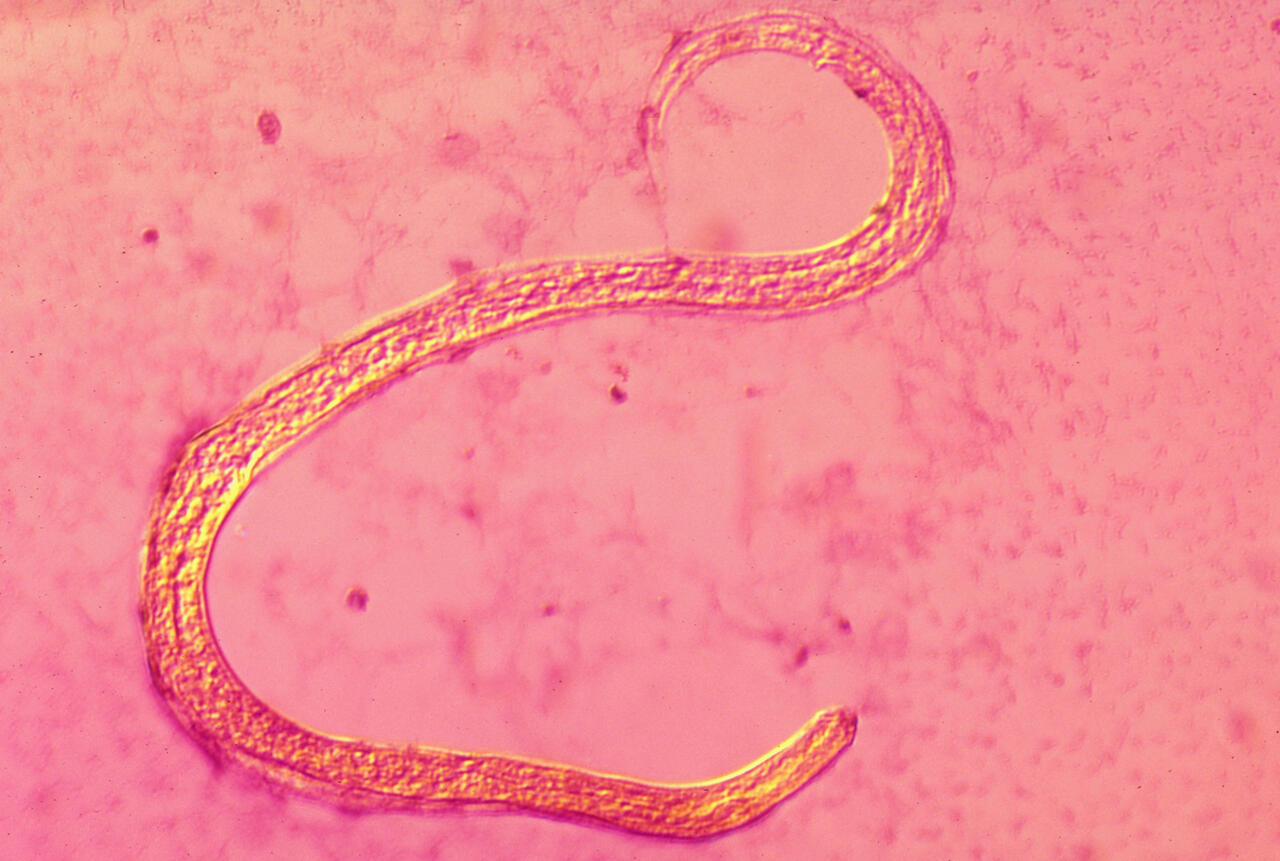
Strongyloidiasis: a widely ignored yet dangerous tropical disease that can kill when immunity fails.

The 2026 Rosenkranz Prize winner is tackling a tropical disease most people have never heard of—yet it infects some 300-600 million people worldwide.
Strongyloidiasis, caused by a microscopic parasitic roundworm, mostly impacts people in low- to middle-income countries in Africa, Southeast Asia, and South and Central America. While it typically causes mild symptoms such abdominal pain, diarrhea, hives—the Strongyloides stercoralis parasite can be a ticking time bomb and can rapidly replicate in infected people who become immunosuppressed, leading to disseminated disease that has more than a 60% fatality rate.
“My research has long focused on neglected global infectious diseases due to the magnitude of disease burden they cause around the world—and since scientific investigation can lead to tangible public health impact,” said Nathan Lo, MD, PhD, an assistant professor of medicine in the Division of Infectious Diseases and Geographic Medicine and (by courtesy) of epidemiology and population health at Stanford University.
The physician-scientist was the lead writer of the World Health Organization guidelines on schistosomiasis, another neglected parasitic disease, and served as lead writer of the first-ever WHO guidelines on the control of strongyloidiasis, published in 2024.
“Since then, it’s been a priority to address the scientific gaps that became apparent during that guidelines process,” Lo said, adding that current mapping approaches to identify locations at risk of strongyloidiasis are too expensive, laborious, and have many challenges.
So as this year's Rosenkranz Prize winner, Lo is taking aim at a disease that can persist for a lifetime—and in some cases, prove deadly.
Mapping Disease
Lo intends to develop and evaluate a novel approach to efficient precision risk mapping for this disease. To do this, he will combine statistical predictive mapping with targeted testing to identify where the parasite is most likely to be found. Using that information, Lo will design more cost-effective surveys that require fewer samples than traditional surveillance methods while still accurately estimating how widespread the disease is and where treatment is needed. This will create a much-needed method to identify the locations most at risk for this parasite in order to deploy new WHO-recommended public health interventions.
The project will focus on developing and evaluating this new surveillance method in the West African nation of Côte d'Ivoire, as the parasite is endemic there and it’s a WHO priority region. Once the predictive analytics are designed, the research team will draw on a decade-long collaboration with Dr. Jean Coulibaly, where the team has already collected thousands of dried blood samples as part of a NIH-funded study on schistosomiasis in Côte d'Ivoire. The study will evaluate the performance of the method using these dried blood spots that provide information on exposure to this parasite.
The ultimate goal, Lo said, is to create a free, open-source tool that helps public health officials pinpoint where the disease is most concentrated—so that testing and treatment efforts can be directed where they're needed most.
Lo is also a faculty fellow at the Center for Innovation in Global Health (CIGH) and a faculty affiliate at the King Center on Global Development.
Prize Devoted to Public Health
The $100,000 Dr. George Rosenkranz Prize is awarded by the Freeman Spogli Institute for International Studies and Stanford Health Policy to researchers doing innovative work to improve health in low- to middle-income countries. It is endowed by the family of the late scientist who devoted his career to improving health-care access across the world.
This year’s prizewinner was announced at the 5th annual Rosenkranz Global Health Policy Symposium, which was headlined by a conversation between Secretary Condoleezza Rice, secretary of state under President George W. Bush and the Tad and Dianne Taube Director of the Hoover Institution, and Jennifer Kates, senior vice president and director of the Global and Public Health Policy Program at KFF. The panel was moderated by Eran Bendavid, professor of health policy and of medicine.
“You know, we have this saying here at Stanford: discovered here and used everywhere,” said Stanford School of Medicine Dean Lloyd B. Minor, MD, as he opened the symposium. “And I think the research that Nathan is doing, and so many others are doing—looking at mechanisms of disease, looking at prevention of disease, looking at better treatment of diseases that disproportionately affect the developing world—is a great example of that mantra: discovered here and used everywhere.”
Michele Barry, MD, senior associate dean of global health for Stanford Medicine and CIGH director, said in her letter supporting Lo for the prize that his project is highly innovative and should have a significant impact on public health.
“Nathan has an exceedingly stellar track record in global health research,” Barry said. “Strongyloidiasis causes a tremendous disease burden in global health, with estimated prevalence of 500 million people globally. Despite the morbidity and mortality (due to disseminated disease) caused by this parasite, this disease remains neglected with limited research.”


