
A Weeklong Intensive at Stanford to Transform Health-Care Strategies
A Weeklong Intensive at Stanford to Transform Health-Care Strategies
SHP faculty will be among those teaching at an intensive weeklong workshop for health-care leaders to learn how to take what they know and turn it into real, measurable change.


Stanford Health Policy’s Sara Singer, PhD, MBA, will head up an intensive, weeklong workshop for health-care leaders to provide them with effective strategies for transforming their organizations and patient care in today's health-care landscape.
Other SHP faculty are also presenting during the weeklong Stanford Medicine Leadership Intensive. Developed by faculty from Stanford Medicine and the Graduate School of Business, the five-day program is designed for experienced health-care leaders in charge of shaping the future of their organizations.
“Leaders in health care today face an unrelenting combination of financial pressures, workforce strain, regulatory complexity, and rapid technological change,” said Singer, a professor of health policy and of medicine, and professor (by courtesy) at the GSB. “Understanding these challenges is necessary, but not enough. This program moves you from diagnosis to action.”
Singer and other Stanford faculty will help mid-to-senior health-care leaders learn how health systems operate at the financial, regulatory, organizational, and interpersonal level, while helping them build leadership capabilities to influence culture, strategy, and execution within their own organizations.
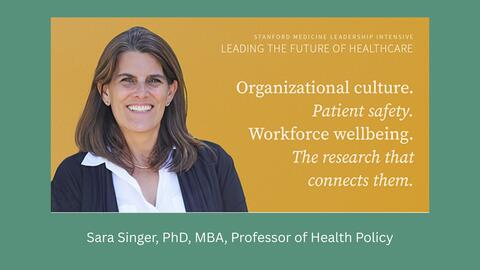
The interactive curriculum is designed specifically for health care, covering the financial, regulatory, and cultural realities that shape how health systems work today. Faculty come from three Stanford schools (Medicine, Business, and Law), giving participants access to expertise that spans clinical delivery, organizational behavior, health economics, and policy.
“And a capstone project ensures participants will leave with a plan for their own organization—not just concepts,” Singer said.
The other course directors are Daryl Oakes, MD, associate dean of post graduate medical education and clinical professor, anesthesiology, perioperative and pain at Stanford Medicine, and Jeffrey Pfeffer, PhD, the Thomas D. Dee II Professor of Organizational Behavior at the Stanford Graduate School of Business, and professor of health policy (by courtesy.)
Other Stanford Health Policy faculty who will be teaching during the weeklong intensive include Alyce Adams, Loren Baker, Michelle Mello, Maria Polakova, Marissa Reitsma, Maya Rossin-Slater, Lee Sanders and Natalia Serna. Kurt Snyder, executive director of the Stanford Center for Continuing Medical Education, will offer a session, and Amir Rubin, CEO and founding managing partner of Healthier Capital, will also be a guest lecturer during the week.


